The most famous water works in Iowa is located in Des Moines. It sits on a campus of 50 or 60 acres or so, on an oxbow which juts into the course of the North Raccoon River. It was arguably made most famous by LD “The Flood Stud” McMullen. It has a different director now, whom may not have a nickname, but by now has had several t-shirts dedicated to him.
Why its the most famous I don’t know. We have much larger ones in the state. My home county of Madison has one thousands of acres in size, and it rarely gets any press. Perhaps it needs a spokesman with a more fanciful mane. Perhaps it needs its own t-shirt. Showmanship has always been second nature to it, though. What it does, it does quietly.
The Des Moines Water Works lies on piece of land resembling a thumb that’s laid on top of the North Raccoon. It makes for great drama. In Madison County the situation isn’t nearly as dramatic. We lie over the watershed like a blanket.
I get to witness this blanket in action. Late June rains recently left the soil at home saturated, and on June 30th, we received a couple of inches in 30-45 minutes or so. A couple of inches of rain is hardly a big event most times, but on this particular time it came with no place to go. When the rain ended, I set out with my camera, and found a few things to give it some press.
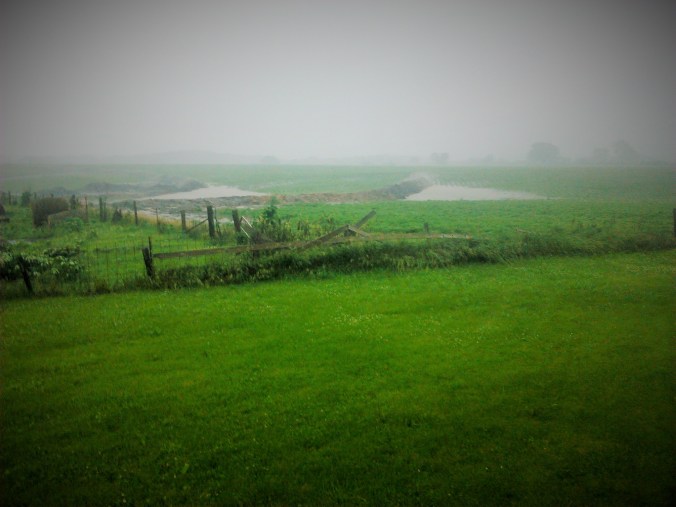
Two new terraces doing their job.
We were in the process of building some terraces over the summer, and had two completed off my back deck. In agriculture we tend to take for granted that everyone knows what a terrace is, but I’ve found over the last year this isn’t the case. A terrace simply stops water from running down a hillside, forcing to funnel out through a drainage pipe, letting go of the sediment it would have carried off the farm during its wait.
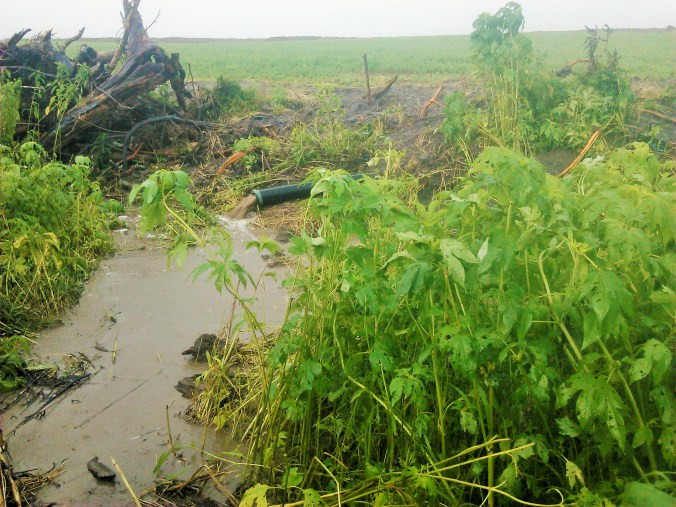
Drainage water being released slowly from an outlet.

Last year’s residue and this year’s crop.
Above the terraces lie other lines of defense for controlling erosion. This field was no-tilled, leaving last year’s corn residue on top of the soil. You can see the stalks still standing underneath this year’s bean crop. Most ground is no-tilled in our area.
The additional residue helps slow down runoff, allowing the water extra time to try and soak in. Here, on top of the ridge above our new terraces, were a good 2-3 inches of water still laying on top of the ground looking for someplace to go. One of the basic ideas of any conservation effort is to encourage that water to take its time.
Farmers sometimes tile fields to help with the situation shown above. In order to have runoff, you need to have excess water in the first place. Tile works to increase infiltration of water into the soil, reducing the amount sitting on top, as well as reducing runoff and anything that runoff might carry.
While excess nitrogen from the tile can be a concern, how we apply nitrogen, the use of cover crops, ways in which we outlet the tile, and managing when the tile operates can all work to reduce this while maintaining the above benefits. Eliminating tile due to nitrates, eliminates it’s positive impact on all the other areas mentioned above.
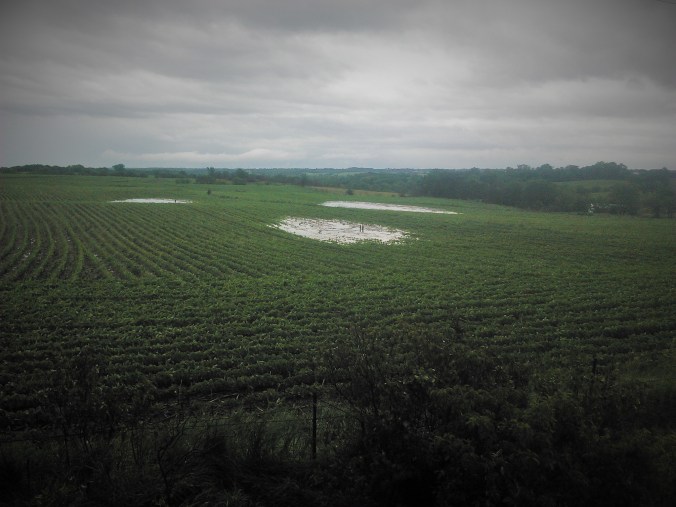
Long established terraces the new ones compliment.
While the two terraces above are new, the practice goes back much farther. A bordering field features terraces built in the early 80’s, still doing their job on the landscape. These older conservation structures mark the conservation efforts of a previous generation, and are the foundation subsequent ones build on.
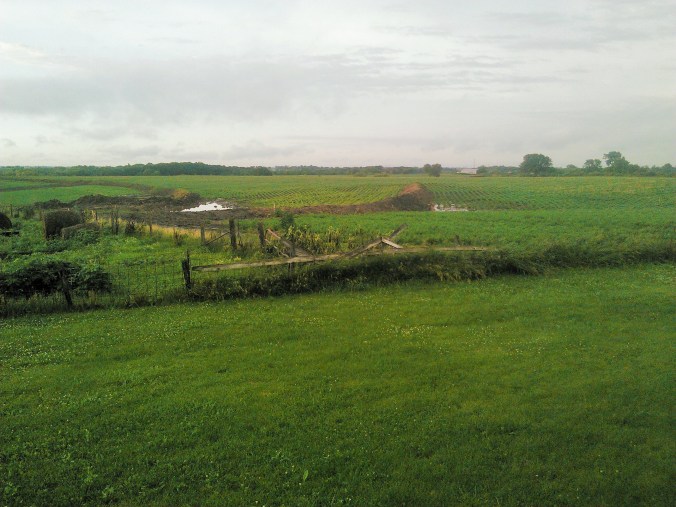
7 hours later.
At the end of the day, shortly before sunset, I took one last picture of the new terraces. They were still 1/2 to 1/3 full. Water which would have washed its way off the field in minutes was still being released after hours.
Conservation doesn’t make much noise, I guess. It isn’t designed to. If only it sported a more flamboyant mane.
 True Stories and Tall Tales