Tree at my window, window tree,
My sash is lowered when night comes on;
But let there never be curtain drawn
Between you and me.
Vague dream head lifted out of the ground,
And thing next most diffuse to cloud,
Not all your light tongues talking aloud
Could be profound.
But tree, I have seen you taken and tossed,
And if you have seen me when I slept,
You have seen me when I was taken and swept
And all but lost.
The day should put our heads together,
Fate had her imagination about her,
Your head so much concerned with outer,
Mine with inner, weather.
Tree at my Window -Robert Frost
At one time, while this place was still being settled, people would plant trees in their yard. They say it was for the shade mostly, but seldom have I ever seen anyone sitting in the shade of the tree in their yard. I suspect it was to make a new home homier, for a tree is nearly as fine a thing to come home to as a house is.
Some people still plant trees, but the country is settled now. The existing ones go along with the houses they are attached too. Whatever dreams were to have taken root with them, whatever hopes and longings, they are now simply included in the purchase price. “Thrown in” as they say, given the fact that they never impact the price in the least. It seems the highest hopes and the highest dreams trade at the same rate as the lowest of them.
All our hopes and dreams appear to be of equal value. If not to us, then to the next ones.
One evening last week I got home in time to take my daily hike to the mail box and see if I got anything of note beyond the political mailings, limited time offers, and bills the day typically offers. I had not. I seldom do. I thought of taking the mailbox down altogether but then thought I might get something of note someday. So I left it up. As I walked back, I glanced at the oak in the corner of my yard.
There, in the light of the early evening, I found half the tree a magnificent gold and speckled in green. The other half was a dark, somber green speckled in yellow. It seems the tree was at odds with itself on whether to embrace the current season upon us, or hold on to the summer that had passed. I too get at odds with myself on such matters, and think I might make a fine tree someday. That is if one should someday take me up and relieve me of being part of the plain, ordinary grass.
I wouldn’t help its value none, but I wouldn’t hinder it either, I suppose.
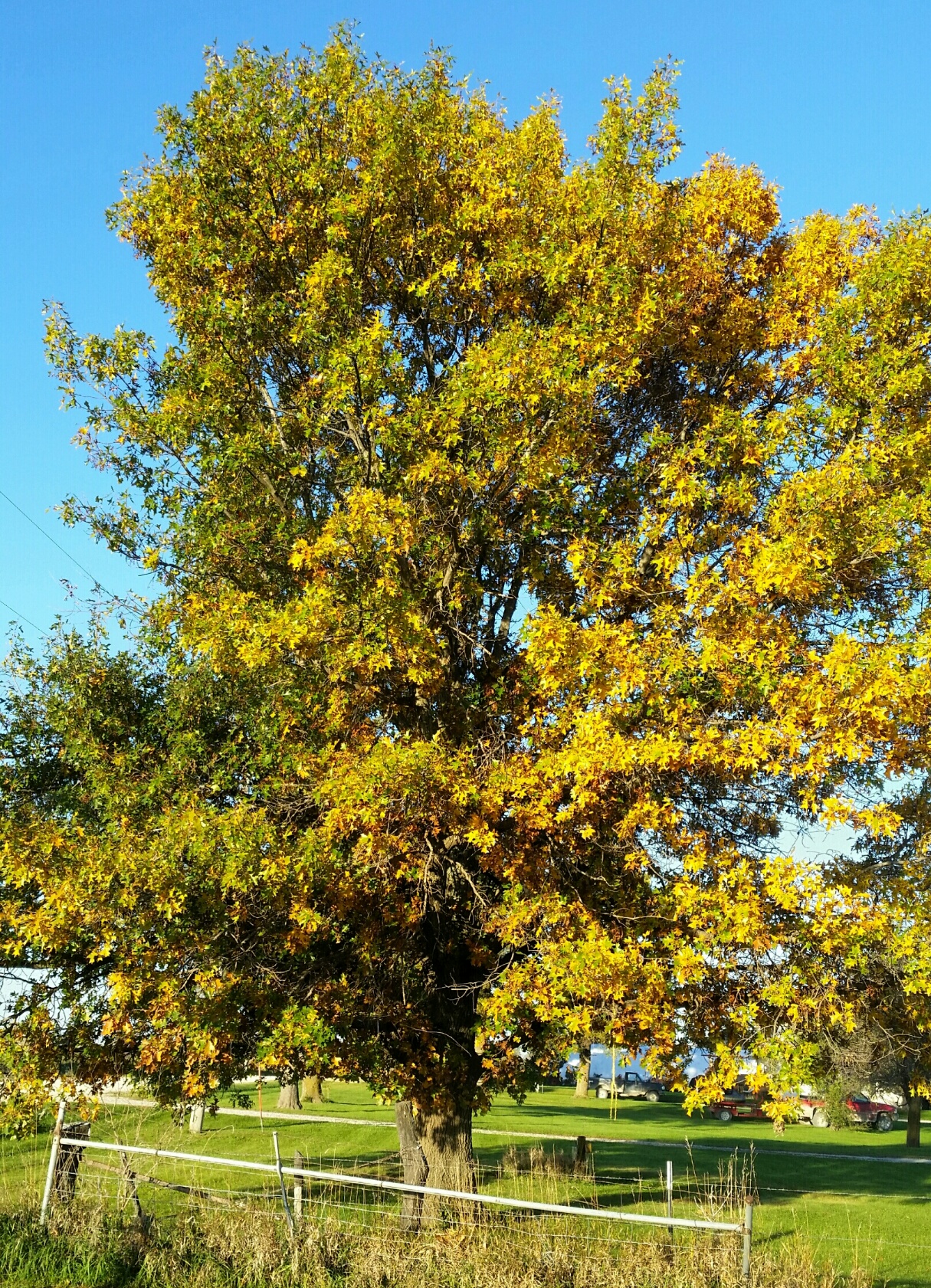
Taken the next morning, and already decidedly more yellow.
Across the way, at my parent’s home, stand a row of pine which witnessed the rise and fall of the family that planted them, and still hang around, ever green, for whatever it is that will happen next. Not being native, they shed a few needles in the fall and make an attempt to fit in. This is the tree equivalent to crocodile tears, however, and as winter arrives and their neighbors disrobe, revealing the spindly and knotted nature their leaves had been concealing, the pine attempts to keep its dignity.
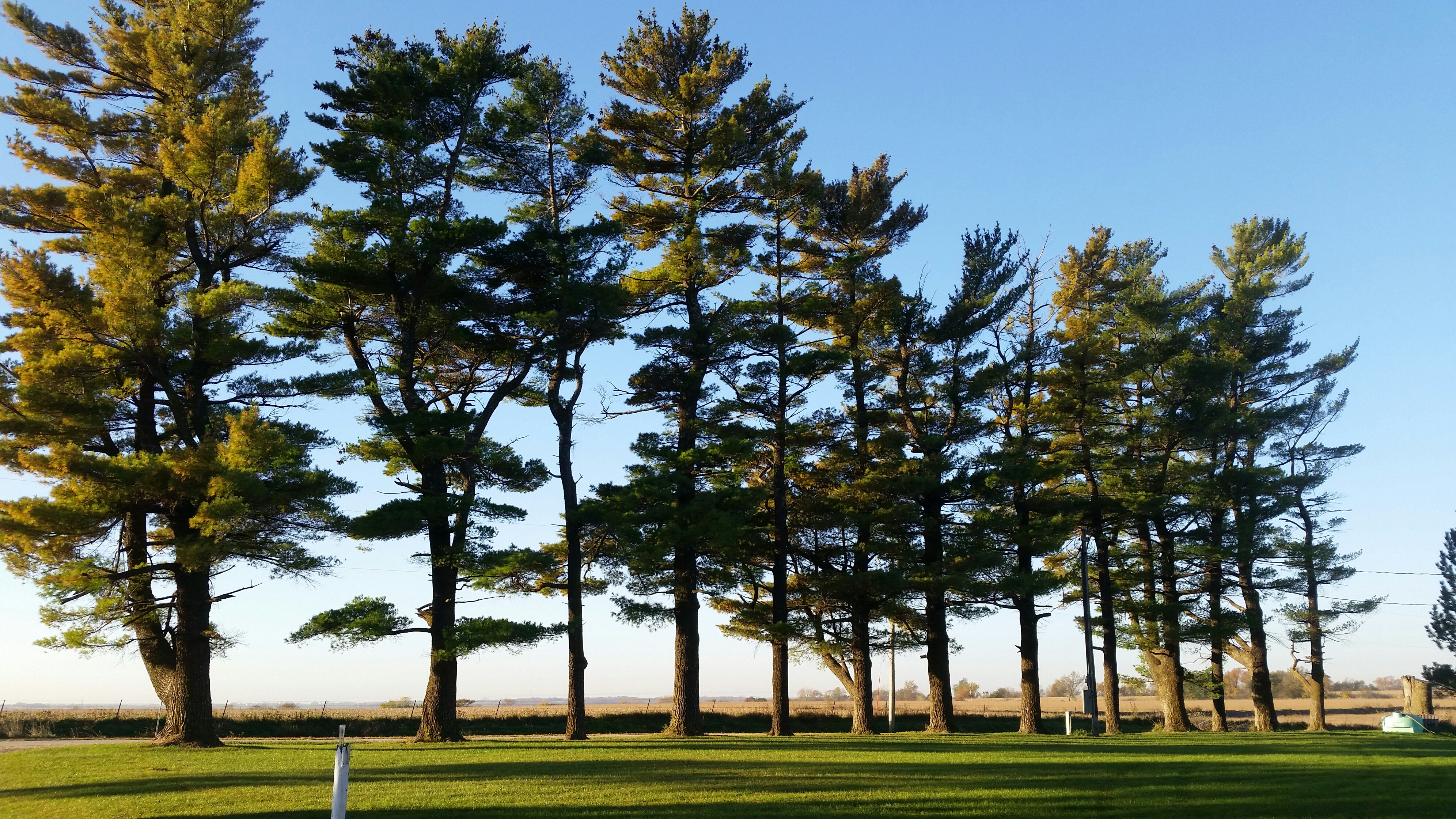
Planted by the Breen family around 1885. They were to have had an abundance of potatoes in their cellar, and so they threw a few in the bottom of each hole.
It keeps so much of it, though, at times it looks down right gaudy. In trying to maintain dignity’s appearance, it forsakes most of it. This not unlike the new neighbor, coming over and partaking in your Busch Light, only for you to visit him one day and find his fridge stocked with various micro brews.
In my yard, though, sat a red oak. This is the tree which keeps its dignity. Its leaves would turn, even if half of them didn’t know it yet, and what will happen when they do gives the oak the dignity denied the pine. Instead of discarding the old, dried out remembrances of what was, the red oak keeps clothed in them until it catches a glimpse of spring. It neither throws what happened to the wind, nor maintain a false green countenance to suggest nothing did.
This particular tree was planted in 1975, when my grandfather and grandmother built a new home, leaving the old to Mom and Dad so they would have a house big enough to raise a family in. During the drought of 1977, it seemed the tree had died, but in three shoots showed up at its base in the spring of 1978. The new shoots became small talk between my Dad and Grandfather as the latter battled cancer.
“You should pick the strongest one,” he told my father, and so my father did.
I suspect the other two’s leaves would have been as much at odds as this one’s was, and I suspect they would linger just as long as this one’s will. What then was it that made this one the strongest? I don’t know, and no one will ever price it.
 True Stories and Tall Tales