
Mike Collinge (right) gets ready to address the Madison County Cattlemen on a cool, Saturday morning in the Kansas Flint Hills
In the United States it is estimated that less than 4% of the original tall grass prairie remains. 80% of what remains lies in Kansas. Most of it lies in Kansas’ Flint Hills region, carpeting hill after rolling hill. Recently the Madison County Cattlemen sponsored a trip to that area for member families. They met area ranchers, ate good food, and got to roll over a few of those hills in a tour bus. One producer they met was Mike Collinge.
“The tall-grass prairie evolved because of fire and because of grazing. Removing either changes it into something else,” the Greenwood County rancher said. “What we primarily use for grazing in the Flint Hills are ‘stocker cattle.’ These are calves weighing 550 pounds or so in April, and we will run them to mid-July. During this time they will gain 150-275 pounds.
There are not many of the cow/calf operations you guys are familiar with in Iowa. The reason is our grass. When it is good it is really good, and when it is not it requires the supplementation of protein. That cost is a challenge to carrying a cow year long here.”
He had cattle when the grass was fit for cattle, and when it wasn’t, he didn’t.

Touring Dalebanks Angus, one of the operations running cows and calves in the Flint Hills.
The calves in the Flint Hills are usually from the southeast region of the country. Typically these cattle are considered “high risk” by the industry and sold at a discount. Some of them will wind up here before they arrive in the feedyards of the north. The role of the Hills is to add value back.
“We burn every spring if we can. It’s good for the grass and keeps invasive species out. If we didn’t continue this once natural process, deciduous trees would take over. It is also good for the cattle. Burning will create an additional 30 lbs per head.
It also maintains our diversity. It may all look green out there, but there is a wide range of plants. Maintaining that is like insurance. Our weather is highly variable, and different plants excel for different climates.”
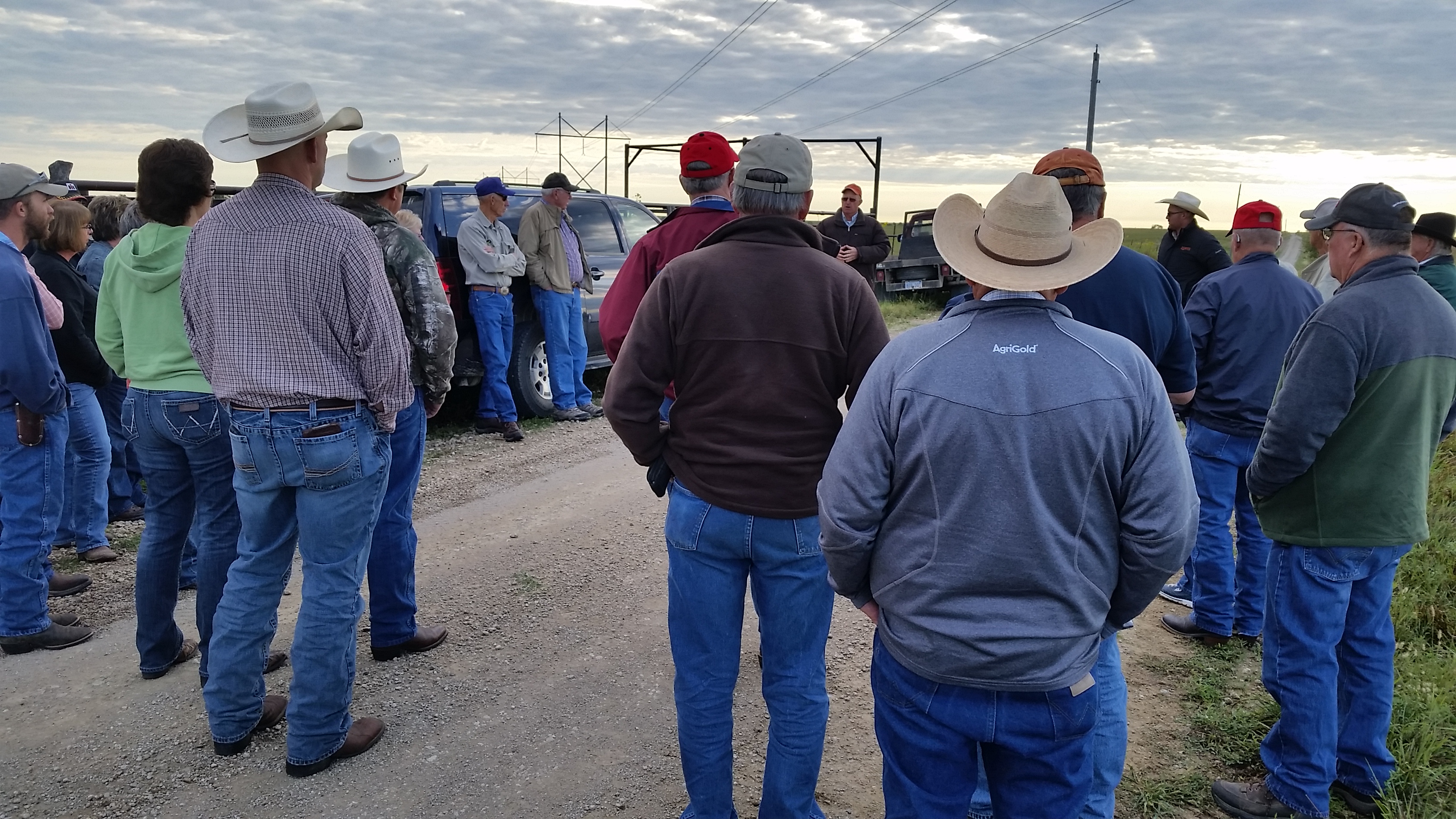 Collinge estimated that nearly 85% of the area is owned by absentee landowners. Ranchers, like Collinge, might use their own ground, but lease additional acres from these landowners. They function as caretakers, not just on behalf of the landowners, but also for the families that own the cattle they run.

The Greenwood Hotel in nearby Eureka. The relationships Collinge spoke about go all the way back to here, where once cattle and oil barons mingled with railroad men in its lobby. They all played a role in impacting not only the local families of that time, but the ones of today.
“How we charge is all over the board,” Mike explained. “Some of us charge per head, some by gain, some by hundred weight, and some per day. Typically it would cost someone $90 to $110 dollars per head to run 550 pound steers from April to mid-July.
What it is really about, however, is relationships. Relationships with landowners, relationships with the cattle owners, and relationships with where the cattle will wind up. It needs to work for all of them in order for it to work for us.”
Several area producers had joined us at Collinge’s ranch, and continued on with us for the other stops on the morning’s tour. As we looked out at a different land than we were accustomed to, with operations different in their makeup and structure, engaged in such a different part of the industry we share, we were reminded that in the end the cattle business is a people business. And that’s the same as it always has been.
 True Stories and Tall Tales