Reports of a potential blizzard began a week ago. They always seem to set in motion basic human instincts that remain intact no matter how many generations we might be removed from the farm. Last night in the milk or bread aisle of any Des Moines grocery store one could find the proof.
The instincts are just as alive on the farm. Cows fan out over the corn stalk fields they’ve wintered on to dine on the leaves and husks they’ve passed over many times. Choice alfalfa hay awaits them in a ring, but they lose interest to devote themselves to finding whatever goodies the snow might cover up.
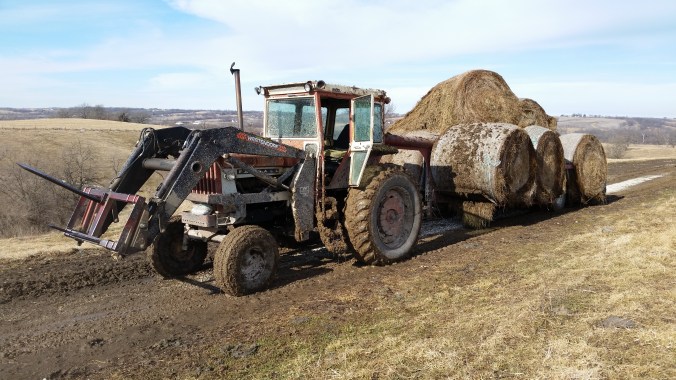
We were gathering too, making sure we had plenty of feed on hand. Since this storm was coming a month and a half prior to calving season, we took Saturday to sort our way through the various groups of cattle and regroup them according to age and need.
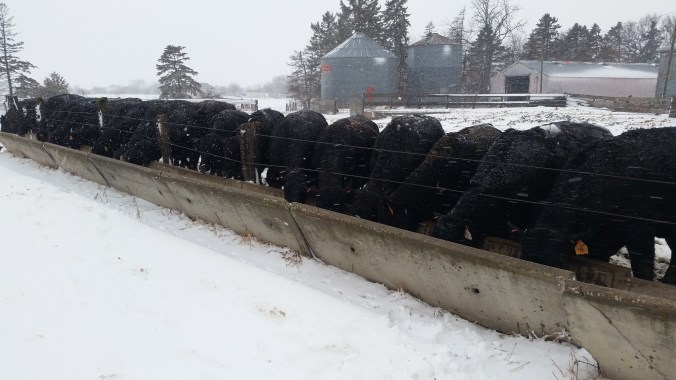
First were the 2 year old bred heifers above. They will begin to have their first calves after the beginning of March. They are faced with the nutritional demands of continuing to grow, carrying a calf to term, and successfully getting bred back this summer. Current nutrition will impact all of that, and right now they are enjoying an extra 3 pounds of corn each.
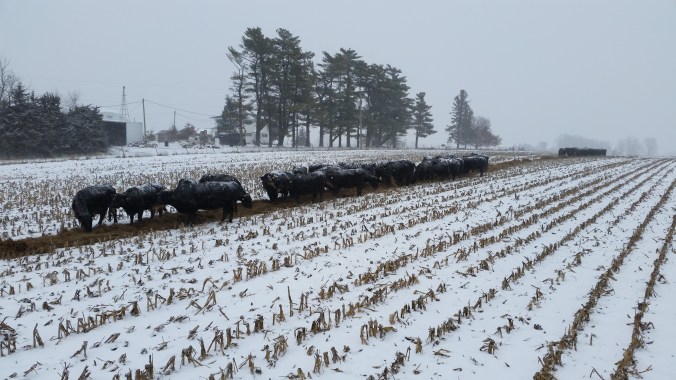
We sorted through our largest group of cows, made up of those that have had two calves or more. We looked for any that could use a little more “condition” or fat cover. While all of them were adequate, we like to send them into calving 80-100 pounds above their average weight of 1350. We feel it aids them in raising healthier calves, helps to ensure healthier mamas, and sets the foundation for a successful breeding season.
We moved 5 head of older cows off this group and placed them with the 3 year old cows getting ready to have their second calves. Like the 2 year olds, the 3 year olds are still continuing to grow. Often raising their first calf left them with less condition than their mature counterparts.


The forecast called for a mix of rain and snow coupled with heavy winds. A cow’s hide will loose most of its insulation value when it is wet, and this places a great nutritional demand on the cow to burn enough calories for heat. During these conditions or periods of extremely cold temperatures, we will put out a week’s worth of a self-fed supplement, helping to cover any caloric deficit.


Finally, the cattle will naturally seek out cover provided by the environment. On the left, our heifer calf crop takes advantage of the windbreak behind the farmstead, while on the right, our mature cow herd takes advantage of one across the road. I don’t know what amazes me more, some of the places they pick, or how consistently they pick the same places year after year.
In the end, the blizzard was a bust. The cows and I didn’t mind. Here’s a link to a year old Des Moines Register video with yours truly talking about taking care of cows in winter and setting the ground work for the topic of this blog next week: http://www.desmoinesregister.com/videos/money/agriculture/2014/11/30/19700233/
 True Stories and Tall Tales