The Elevator Speech

The Market

The Market

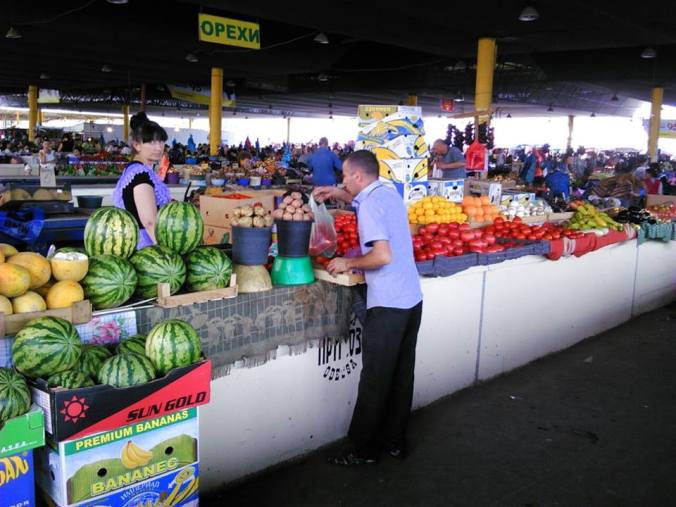
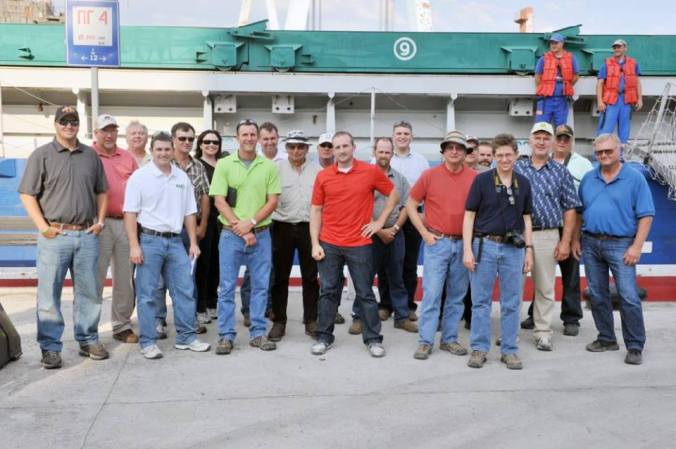
It was the end of the third day of Iowa Farm Bureau’s 2013 Market Study Tour of Ukraine.  The days that had passed and those left to come on the trip would all be the same.  We got up early, had breakfast, boarded a bus, and saw things most of us had never seen in our lives and might not see again.  In the evening we would get to the hotel late, we’d eat dinner late, and then we’d find a place to hole up, have a cheap beer or two, and try to decompress.  In four or five hours the process would repeat itself.

That night we were staying in a hotel in a river port known as Mykoliav.  It was after midnight.  The tour participants had just finished checking in on their email.  Dirck Steimel was trying to get the Spokesman ready for publication back home.  Across from me sat Tim Kaldenberg from Albia.

“I’m beginning to think one of the most enjoyable parts of the trip are the people we are traveling with,” I said.

“You know, that’s the one thing about my experience with Farm Bureau.  Wherever you go, whatever you do, the people you meet are first class.”

Tim didn’t know it at the time, but he wrote my elevator speech on why people should get involved in whatever connects them to something bigger than their self.  I’ve used every time I’ve asked people to become involved or spoke to those getting involved in Farm Bureau.  I’ve used it for becoming involved in other organizations.  I’ve used it to entice people to step just outside their comfort zones.

When I came home, I found just talking about it wasn’t enough to sort through all the thoughts the trip produced.  I began to write to try to make sense of it, and I suppose the rest of my days will look the same in that regard.  I also continue to get out of my comfort zone.

In doing so I’ve continue to meet first class people, found new audiences for old stories, and am continually supplied with the people and experiences needed to build new ones.  I guess it is something about the way life works.  When life works in a way to become more connected and better understanding of those we share it with, it’s working pretty well.

In less than two weeks I’ll see some of my original travel companions as well as friends I’ve met since on a Farm Bureau trip to Japan.  It will be a much larger group and with an easier pace.  Amongst those familiar faces will be the old stories, and together we will find new faces and new stories to tell.

Someday I’ll have to get off this elevator.  God willing there are a few more floors to go, and all kinds of first class people to share the ride with.
The Group

The 2013 Group

Fine Things in the Dark

“You know the other night she asked me wouldn’t it be fun if you came over?

I told her, ‘We’ll be going to bed soon.’

She said, ‘I know. Just for an hour or two.’

We were both in bed before 9 o’clock.  That’s how the two of us live it up.”

It was dark and we were headed home.  I watched the pavement rush under the headlights and said little.  I wanted to tell her how much the story meant to me, but I didn’t.  We hadn’t been dating long.  I was trying to keep my heart together.  It had been ten years.  In the end I changed the subject and deflected.

The week had began with the two of them bringing pizza out.  Her daughter was tall, kept her long hair in a ponytail, and sported a headband to keep watch for stragglers.  She made me think of how her mother must have looked when she was that age.

The girl spoke like lightning, with words coming hard and quick.  The subjects they described were a free for all.  She spoke of softball, school, her plans on life, her mother, and the dogs.  She freely gave her opinion on anything I asked and reigned over all of it as daylight rained through my picture window.

As she spoke I snuck glances at her mother, and between the two of them I got a glimpse of the way others must live.  For a moment, the place and time were right.  In this world that is something, and there are no guarantees.

I marveled at the way the girl so fearlessly divulged her hopes and dreams.  Her mother and my words came in starts and stops, as we cycled through what was broken, doubled down on that which was guarded, and found the right ones elusive.  Age does funny things I suppose.

“Do you mind if I ask you a question?  When were you happiest?”

“The day I first held my daughter.”

I smiled.  Sometimes us adults talk about such fine things in the dark.

Father’s Day

Where the days go? I don’t know.

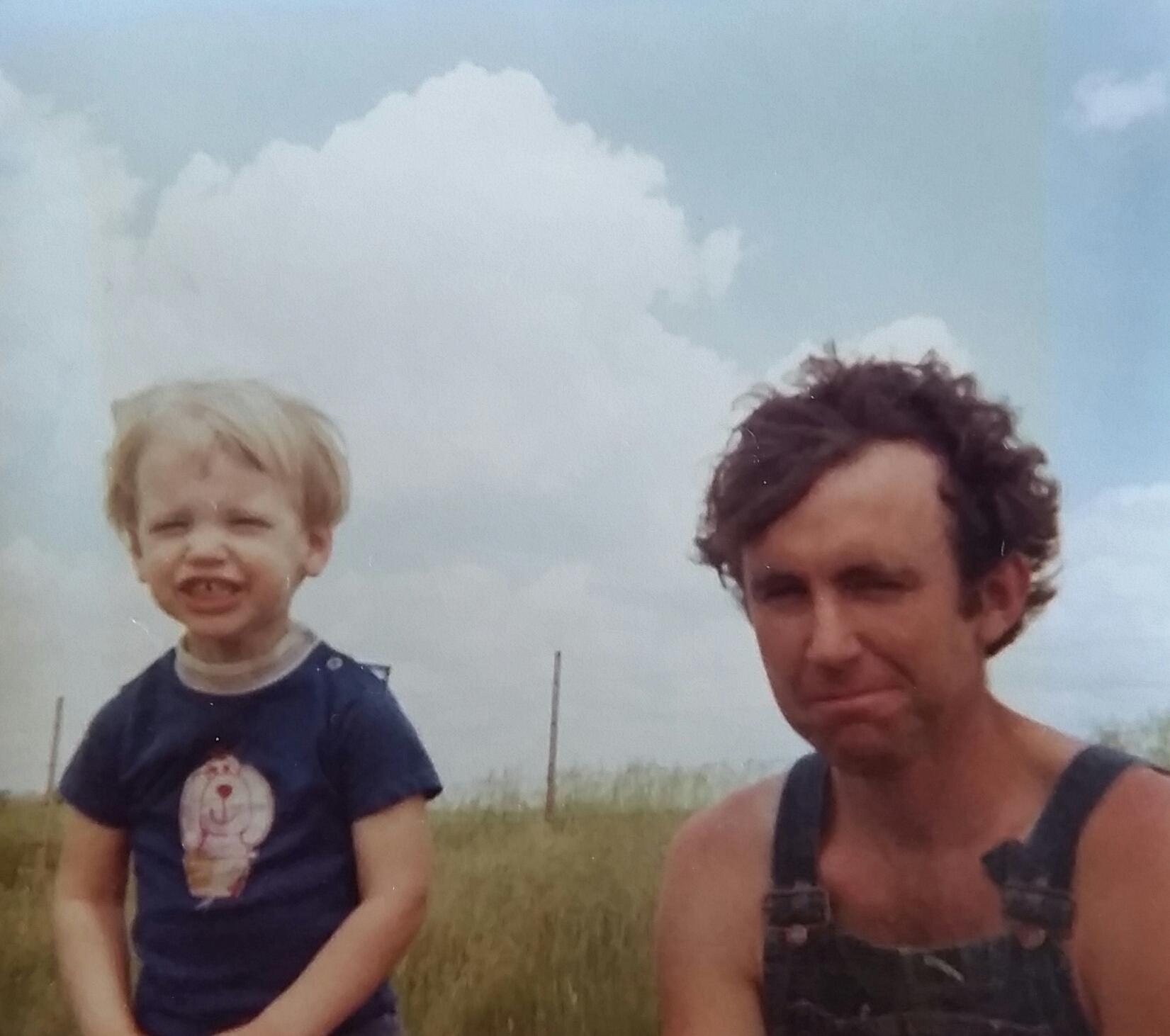
I see my friends and family, and I think they look the same as they always have. Sometimes, though, through an old photograph I realize we do not. I get caught looking at it, and I wonder: Who is that man? Who is that boy?

Perhaps wonder is the proper work for a lifetime.

There are those who seem to have the world figured out at the ripe old age of 20, or 30, or so on. Their rest of experience is spent reinforcing what they think they already know. What a waste of the world and those we share it with, accepting a world and people of illusion in their stead, and offer our lives to their shadow.

We think our relationships are a product of our feelings, rather than our feelings being a product of them. To change the relationship, we strive to change the feeling and push a little harder on the rope.

We think we know what our relationships are supposed to look like, if only the other person would play along. And that somehow that relationship isn’t as important to us as it is to the other: “us ourself in the summer heaven godlike.”

Maybe the biggest illusion is that we’ve figured out who that other is and who we are, never realizing what might be discovered of us both in our relationships. Halls and passageways and great gardens go untouched like gifts unoppened.

It’s not by chance that some of these gifts have the same name as our parents. Sometimes, what we do with it is embarrassing, and sometimes it’s a draw, but sometimes it leaves you in wonder, and a life’s proper work.

Who is that man? Who is that boy?

The Turkey Shoot

20160615_182951

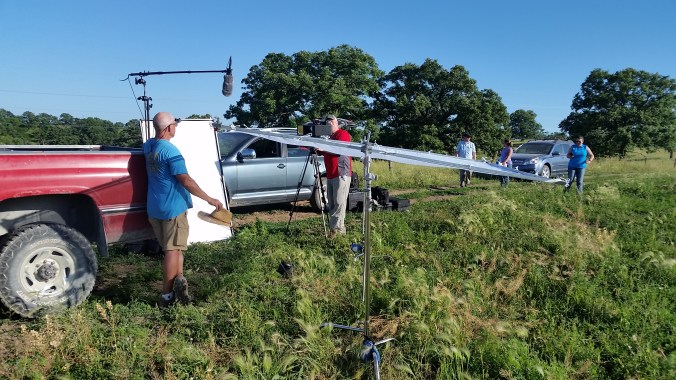
Setting Up the Shot


It is estimated that 2.5% of those involved in the labor force today are farmers.  150 years ago it was over half.  100 years ago it was 1/3.  50 years ago it was just under 1/10.

As one of those farmers, I don’t have any particularly feelings one way or another about the trend.  It is a subsequent trend, riding the coattails of this one, that concerns me.  Most people don’t know a farmer.

There’s no longer a connection with the family’s farm couple over the holidays.  Kids no longer venture to the farm for the summer.  Unless random chance places you beside one on an airplane, you can go your entire life and never once have a meaningful conversation with the people involved in producing your food.

There is a gap, then, a meaningful one, existing in between the farmer and the consumer.  While local farmer markets can put you in touch with those that raise the tomatoes you buy there, I’m a little uncertain the role that truly plays in bridging this gap.  It certainly provides an emotional connection to those raising the produce, but I wouldn’t know enough to comment on the connection it provides to everyone else in our varied agricultural community.

20160615_183010

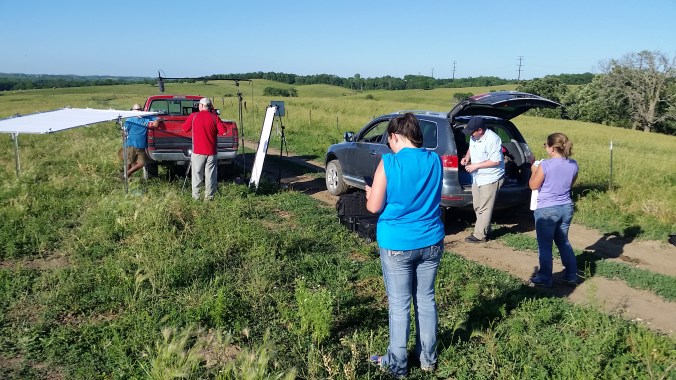
The Backdrop


Yesterday, just before 6 in the morning, I began working with a film crew hired by the Iowa Beef Industry Council that was to document the day in a life of three families involved in raising cattle from across the state.  We wrapped things up just before 8 last night.  We spent 14 hours for a few minutes of video, a chance to tell a little of the story of the 20,000 Iowa farms with beef cows, and to partly bridge the gap I wrote about above.

There will never be a postcard made of our family farmstead.  No equipment manufacturer is in danger of shooting a commercial here.  It’s simply a farm.  I have no idea what the view was like on the other end of the camera, but it didn’t bother me any.  Like everyone else which makes up these farms, we’re simply human.

Hopefully, it will show one of those human faces.  Hopefully it will remind someone that agriculture today is not some cold, mechanical thing producing the food you purchase at the grocery store.  Hopefully in the unknown someone somewhere finds the familiar.  Hopefully someday you get that airplane seat by a farmer.

20160615_085338

The crew had no airplane ticket.  They had Dad, though, and maybe that’s close enough.


Time After All

“What’s your name?”  I asked in a rather aggressive, booming voice.

She lowered her eyes to her knobby knees and her feet as she leant against the side of a pickup.  For my part, I could see I would have to try a different tactic.  For hers, I supposed she hoped I would go away.  I feel the same sometimes.

Eventually she looked in my general direction.  I tried again.  “What’s your name?”  I asked, softer this time.

“Lola.”

“How old are you, Lola?”

“11”

20160611_132857

The Onset

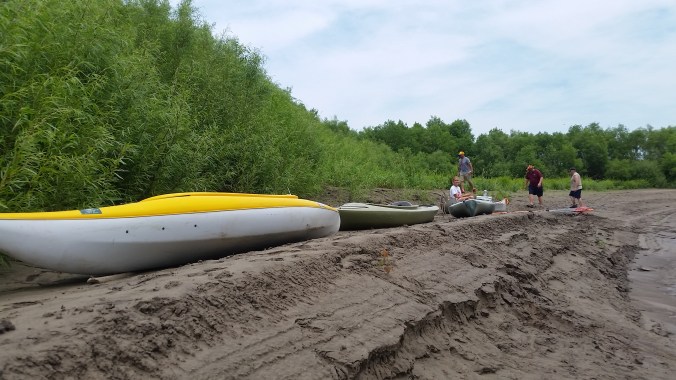
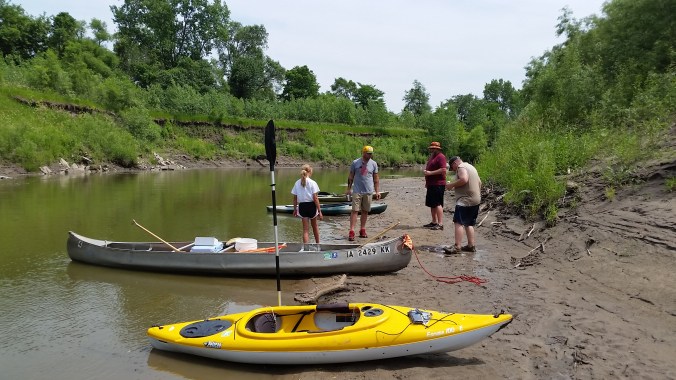
We were getting ready to put three kayaks and a canoe in Middle River.  Had it not been for Lola, we would have been a grizzled group of beer drinkers with our shirts off talking like truckers.  The presence of the 11 year old, then, added some maturity.

It was Saturday.  We would float a few miles of river and look for a few deep holes to set poles on.  We’d return on Sunday to see if we caught anything.

20160611_143725

Setting a Pole

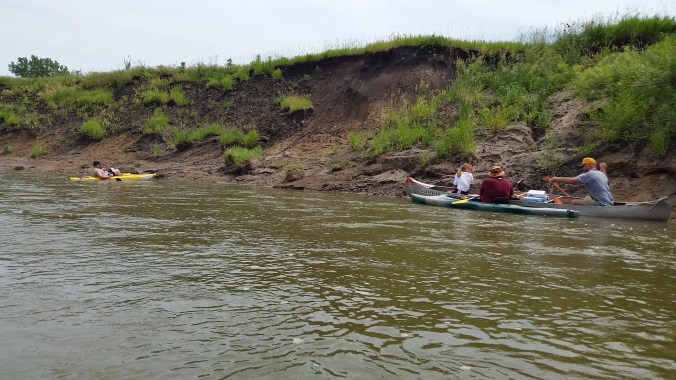
Generally the crew would select a site on the outside of a river bend, driving the pole into the bank that was stratified with the deposits left by time and exposed to us because of what time was taking.  On the pole was several feet of line, a sinker, and a hook that would go through the tail of a live bluegill.  Generally I would try not to drown, nor let my beer get warm.

Half way down we stopped at a sandbar.

20160611_145447

Indian Talk

“Banks, have you told Lola about the Indians yet?”

“Indians?”  She asked.

“I don’t know if we should tell her about that yet.”

“What Indians?”

“A little farther down there’s a large creek that comes into Middle River, called Clanton.  At the junction used to be a favorite Indian campsite.  They say if you look along the bank you’ll sometimes find arrowheads or pottery shards.”

“Will we go there?”

“Yea, it’s just a little farther.”

Had it been a week earlier, I would have thought of another girl, about her age, to take there.  She was gone, though.  Complicated thing, this time of ours.

20160611_162520

Father and Daughter


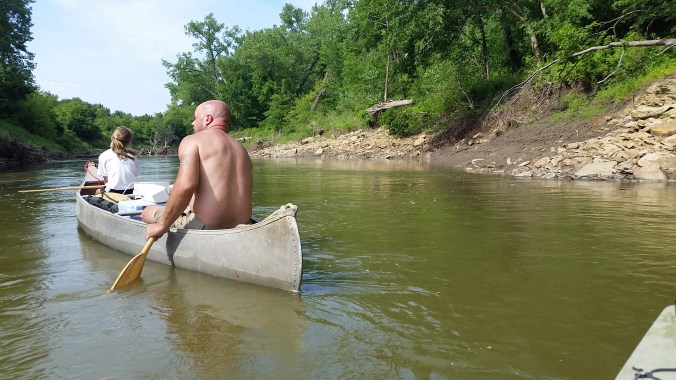
We hopped back in, continuing to set poles and making our way to the junction.  The music of Sturgill Simpson came from her father’s speaker.  Over it I could hear him softly give her instruction as she sat in the front of the canoe, sharing with her the things time had given to him.

“Do you see that ripple up there?  Place the oar on this side.  Good.  See how it did that?”

We would scour the banks where Clanton and Middle came together.  We found nothing but time.  In time, though, is room for everything.  May it be kind to Lola.  May she learn to float it regardless.  May the rest of us figure it out too.

20160611_152031

The Crew

Django

“Glorious kind, always on time, pearls on a string.”

Seated at the bar in Django, I was drinking a local brew and waiting on a woman who was running late.  I had no complaints.  There’s hardly a better reason to be seated at a bar alone.  Though it was a first date, I thought I could get use to the idea of having someone to wait on.

At the far end of the oval bar, oysters were getting prepped for the evening.  Open shelving split its length, displaying the bottles in duplicate that waited to be served.  Back to back they sat, each proudly boasting its label to those seated across from them.  Two bartenders joined the bottles, back to back.  Similar in stature, they tended to move down the bar in unison as they checked on their patrons.

Each had only one.  He and I sat directly across from each other, facing in.  A ballgame caught my attention from a small television.  I would watch it as the bartenders worked, and the corner of my eye would be begin to be drawn into the illusion of a mirror.  Instead of duplicates, there was only a reflection.

My eyes would leave the television.  My thoughts would run where they wanted to go.  I would stare blankly at those on the far side of the bar, confusing what was ahead of me with what was behind, caught between the future and the past.  Expecting a look of familiarity, they would make their way to the face of the man across from me.  Instead they found a gray face that wasn’t mine.  They’d revolt back to the television, and after a few minutes the process would repeat again.

Perhaps we spend most our lives wondering if we are looking forward or back, between the past behind us and our hope of how the future might be.  Perhaps we can’t help turning what exists into a reflection.

Suddenly, she walked in, tall and with her curly, blonde hair straightened.  Beautiful.  We exchanged a greeting, grabbed a table, and began the work of figuring out if the two of us would have anything to talk about.

We were nervous and hesitant.  The couple beside us sat uncomfortably close.  I let loose with what a dumb ass I had been at the bar, and she let loose a kind and genuine smile.  We managed to go on from there.

Her eyes gleamed, and beneath the round bottom of her nose, her lips moved in the way that began to let me in.  When they weren’t moving, the same smiled returned, and I managed to keep them doing one or the other for the length of the evening.  It was long enough to wonder how I might get to see her again.

Django means, “I awake.”  I did.  I had forgotten how good the present could be.  Maybe she had too.

“Tomorrow is on it’s way, and there’s always new songs to sing.”

Climbing Mountains

The first two summers after high school, I got to work with Brad Pritchard.  Two of my grandparents have since passed.  Their voices have largely escaped me, but Brad’s I still remember.

“No hill for a climber,” he’d say at whatever obstacle the day presented us with.

In some ways, I suppose, I’m a fool for the unbridled optimism of that quote.  A fool because at some point you realize they aren’t hills.  They are mountains.  Some of the ones we have to climb in life aren’t going to be surmountable.  But is there any other way but up?

A favorite passage of mine from C.S. Lewis is about two men.  The first Lewis described as handsome, affable, and well liked.  People judge this man good and can’t help but enjoy being around the “golden boy.”  The second Lewis described as down-trodden, short tempered, miserable to be around.  People judge this man bad and do their best to avoid him.

Would it be any surprise, Lewis asks, if God saw things differently?  The first man God gave gifts to, but the man lives his life believing he, himself is responsible for them, never understanding the obligation he has to make use of them.  The second man God gave a cross to bear, and he lived his life stumbling along the best he could with it.

Would it be any surprise, Lewis asks, if when the two men died, and God took back what he had given them, it was the second man, doing something none of the rest of us even noticed, that impressed God the most?

Would it be any surprise, I’ll ask, if sometimes our burden and our gift is the same thing?  I think often what those we care about are most up against, is the very thing we take the most pride in.

In my case what seems to make for good writing, being sensitive enough to life around me that I can string together a couple of sentences people enjoy, has a byproduct in the intensity I engage life with.  Others, in response to the same sensitivity, take a stance of distance.

If either makes for good writing, it’s doesn’t seem to bode as well in the relationships with the people we care about.

What do you do with it, though, except try to climb a little higher, garner just a little more perspective, and live at a little cooler of an altitude?  Somewhere on top, at a peak I’ll never see in this life, is whatever heaven is.  Perhaps it looks the same for me as it does for those climbing the other side of this mountain.  There our departed loved ones, whose voices we can’t remember, look down on us with the curious interest I can’t maintain.

Making the difficult climb ourselves, removes all judgement for those climbing impossible peaks of their own.  It’s more than a hill, but what else is going to make a climber out of you and me?