Late in the spring, it is always the same. The rush of trying to finish, so the world can grow again. Often, at the conclusion of a day, my old pickup winds up parked in the machine shed of the farm.
It’s dark by then, and the way across my parent’s yard to my place either lies lighted by a moon, or nestled in darkness broken by footsteps too long in knowing the way. This is what people never realize about free will. We see the world dimmly, in a light not our own, and we follow the footsteps we made long ago, back when we were just trying to get from point A to point B and had never considered the possibility of what such a precedent we might set.
It is one thing to have free will. It’s quite another to actually use it. He who hasn’t figured that out yet, doesn’t know shit.
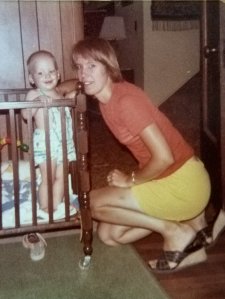
Occasionally, my footsteps will take me into my parent’s home. Checking to see if on the kitchen table lies a note from my mother. “Dan, there’s a sandwich for you in the fridge.”
It’s odd now, past 40, but I will find that sandwich with dirty hands and eat it in the dark that marks the rest of the way to my home. Just inside the front door, I will kick my dirty clothes off, hop in the shower, and collapse into bed. Having been saved, due to the thought of my mother, from having just a beer for dinner.
My mother is the oldest of her siblings. Over the years I’ve come to better appreciate the power that fact works in our relationship. I am an oldest too.
Most of us tend to seek approval from those much older than us. The world we first knew was theirs after all. We have had a lifetime of orienting ourselves to them.
I think it would make being a mother even more challenging. Instead of embarking on that period of your life with friends your own age, finding your own way together, step by step, you are looking for validation from those who have already done it before. If motherhood is like everything else, I suspect those who have done it are nearly as free with their opinion as those who have never attempted it.
If the latter seldom let the fact they haven’t interfere with them giving their opinion, then the former, particularly if they have been successful, seldom properly account for the role mere luck played.
Beyond the opinions of others, lie the expectations. Just a few generations ago we all expected our mothers to attain nothing short of sainthood. Now, in our expectation that they provide unconditional love, we want them to have nothing short of the power of God, Himself.
I expected that of my Mom once, and spared her martyrdom for a kind of crucifixion. In recent years, I’ve come to suspect they have a word for my expectations. They call it “immaturity.” I’ve been working on it. It takes longer to shake it than one might think. Meanwhile, in letting go of expectations, I get a better grip on who it actually is I suppose I’ve been trying to impress all along.
If you want something in life, you general have to plan for it, work at it, and set goals. That is if you want anything other than a family. Most families seem to simply start with little more than good intentions. Neither mother nor child really knowns what they are getting themselves into, especially not the first go around.
It takes a little free will to move past our intentions and expectations. In their place we find a daily reality that surpasses them, the plan one didn’t start out with, goals to strive for, and an education of a lifetime.
Sometimes, in the middle of the night, we might even find a sandwich.
 This week marks Soil and Water Conservation Week here in the state of Iowa. It also marks the beginning of May is Beef Month. The fact that these two overlap shouldn’t come as a surprise. It doesn’t for me. Cattle have helped us achieve our conservation goals for some time in the northeast corner of Madison County.
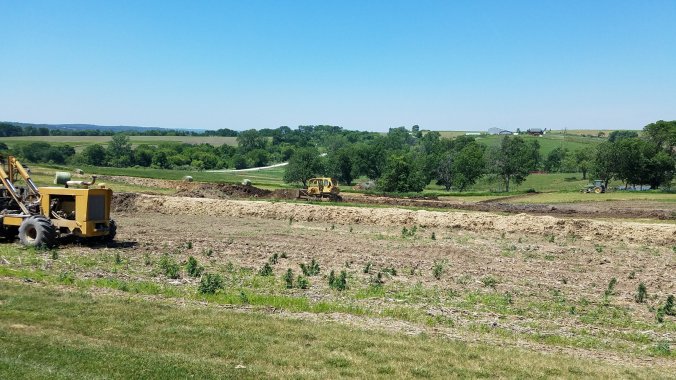
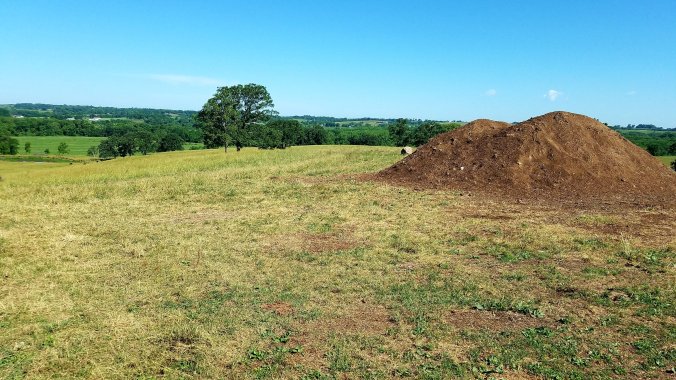
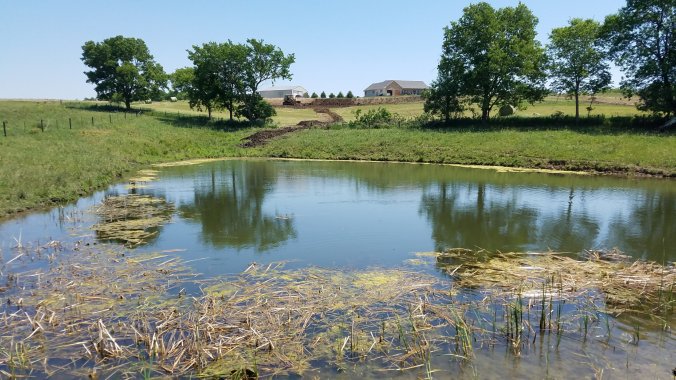
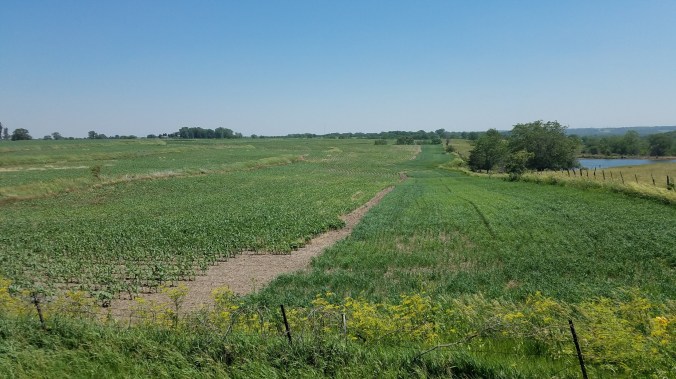 Here beautiful ridges of corn and soybeans break into the rolling hills of grass our cow herd calls home. The transition between the two has long been where our family has focused their conservation efforts. Initially, acres not fully suited to continual crop production would be seeded down in rotation, providing corn or soybeans some years and providing forage for the cows during the rest of them. My father and his brother terraced this farm in the 1980’s, extending the good ridge that ran through it down a series of three steps in the landscape. In doing so, more acres could sustainably be moved into continual crop production.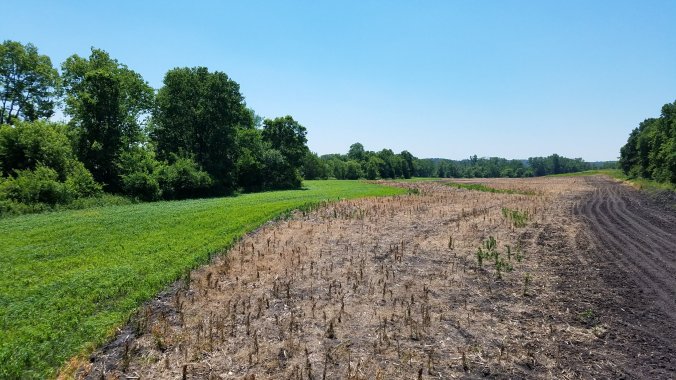


 True Stories and Tall Tales