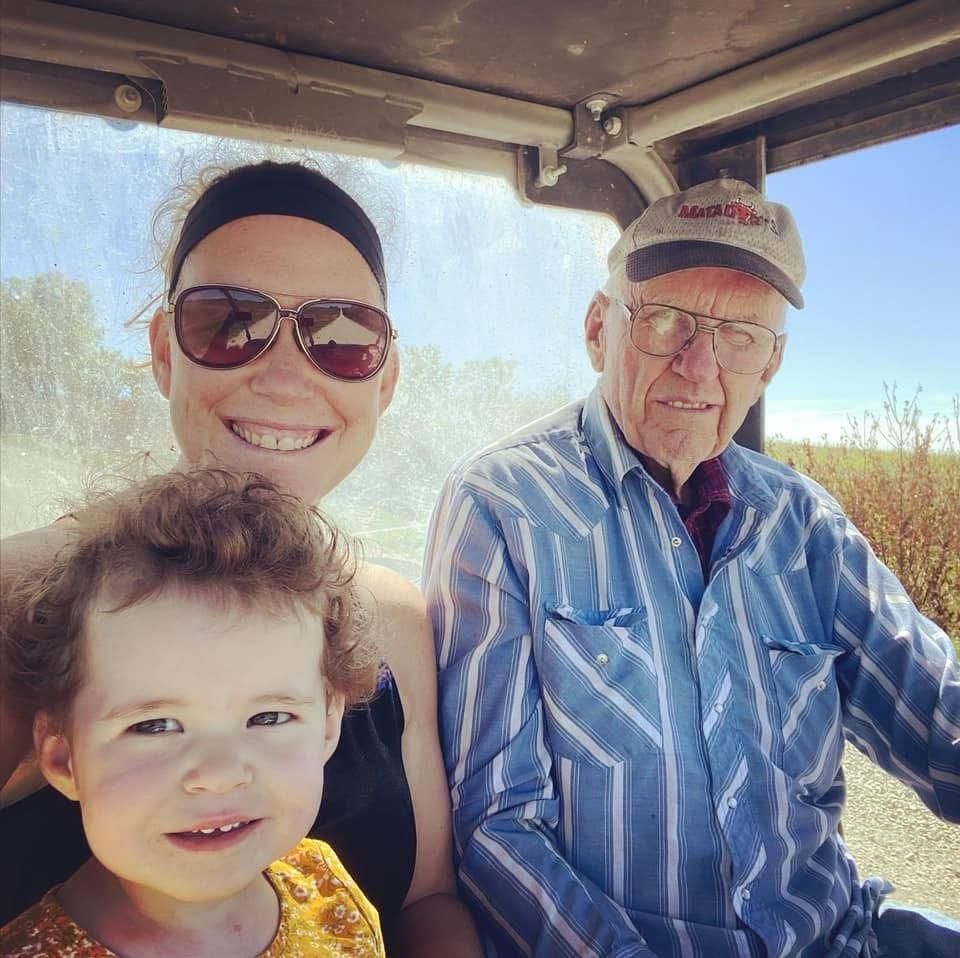
At my father’s funeral, I wanted to give a eulogy. I told those in attendance that I had prepared a more traditional biography, but felt a more fitting tribute was a story. One that started out, meandered around a bit, made everyone wonder where it was going, that brought it all together in the end.
Along the way, I hope it conveyed a few important things about my Dad, and left folks with a couple ways to remember him in their own lives and with their own loved ones.
I had been asked a few days prior, what my father had taught me about faith. I suppose the following was my response.
In 2013, shortly after his diagnosis, my father and I set out to see the gulf coast. We would come up a little bit short, and Mom and him would visit it later.
We were in Vicksburg, Mississippi. It was a Sunday, and Dad and I wanted to go to mass. We found a Catholic Church called St. Marys. It was brick but sort of reminded you of the old St. Johns in Cumming both in the size of the structure and the size of the congregation.
The gospel that day was from John, and it was about the apostle Andrew, who was a follower of John the Baptist and the first to recognize Jesus as the Messiah. He runs off to get his brother, Simon Peter.
The priest was a black man, who, according to his obituary, would have been around 82 years old. He walked the aisle with a decided limp. His name was Fr. Malcom O’Leary.
His homily was that although Andrew was the first to recognize Jesus, it’s the apostles that come after him that get to witness many of the important times in Christ’s life. In fact Andrew, he said, only gets mentioned a dozen or so times in the New Testament, and half those times, after telling us his name, they immediately mention he is Simon Peter’s Brother, as if his own name doesn’t carry enough weight.
“Andrew,” Fr. O’Leary said, “doesn’t get a great speech, nor some great deed, but he is never bitter or small. He just shows up every day and goes to work.
Andrew is like you and me. He’s an ordinary man, and that’s no easy thing. But Christ knows how difficult it is to be ordinary, and he loved Andrew for it.”
Driving away, I thought of a religion class in college. The professor was spoke about the disciple Jesus loved, repeatedly mentioned in the Gospel. Everyone says that disciple was John. But the professor was a little more hesitant about that.
I do not want to rewrite our theology, but there was something about how that professor mentioned this mysterious disciple is so often in the company of Simon Peter, and there was something about the sincerity the Fr. O’Leary had when he spoke about Christ’s love of Andrew.
Why is it that it is so much easier for us to believe Christ would love a great talker or mover and shaker more than an apostle most like you and I? Think about the transformative power of kind of love could have.
My father would have described himself as an ordinary man. That might be. But for a lot of us he reminded us of the extraordinary things ordinary people are capable of.
He loved god. He loved the family he was born into, he loved the family he started, his wife, his kids, his grandkids, and he loved it here with all of you. He believed he was born in one of the best spots on earth. He believed you all made it that way.
What are you and I to believe? Did he believe this was a special place because extraordinary people just keep springing up generation after generation? Or is it a special place because ordinary people make an extraordinary commitment to each other in celebrating our strengths and going easy on our weaknesses?
My father would tell you a weakness of his was he tended to worry about the people and the things he loved. We are in a time where some believe faith is some antidote to worry or anxiety. We are in a time that wants to place such a premium on certainty.
My father looked out his window and could see the world didn’t look the way God wants it to. He knew we didn’t always do what He wants us to do. He knew that God’s feet are our feet and that God’s hands are our hands.
He knew if we want to move in the direction God wants us to go, we need to exercise great discernment in not mistaking what God wants for what we want.
Maybe sometimes those that worry but become engaged anyway, exercise a faith much larger than we give them credit for.
In mid-April, my father was on the 6th floor of Mercy, and he was quite ill. It seemed unlikely he’d get out of it. One night, in a weak voice, he told the nurse a story. One he said his father told.
I was going through all the ones I thought it might be when he trotted out a story I had never heard before.
“My father told a story about two friends,” he began, “who died just a few minutes apart. In fact, they were so close together in time, there were only a few people separating them when they got to the pearly gates. When the first friend got up to St Peter, there arose such a commotion that the second came up to see what was going on.
‘Did you know they charge a dollar to get in here?’ said the first.
‘What’s the problem?’ asked the second.
‘The problem is that I only want to pay $.50,’ replied the first.
‘My God,’ replied the second. ‘Inside those gates there’s a spread like you’ve never seen before, and it has no end. What the hell is $.50?’
Throughout the last few weeks, we’ve witnessed our father taking the hurdles and the obstacles in his way and using them to grow into the person God called him to be, paying his fifty cents again and again, and inviting us to do the same.
To love and double down on those around you, to worry about the happenings outside your window, to have the faith to become engaged, to grow as God desires, and to pay the small fee that brings eternal life.
My family thanks each of you for your support, and we thank God for Dad and the generous gift of time.
 True Stories and Tall Tales