Noah and Jonah Walk into a Bar (Part One)

Charlie was 12, and while his father waited at the top of the stoop, outside the large, dark door of St. Martins, Charles was content to stand in the grass. The church sat in the middle of downtown. On either side of it were four lanes of traffic, four headed north and four headed south. Together the church campus and the streets served to create an opening among the downtown buildings, allowing the young Charles a view north to an unobstructed sky.

It was a hot July day, and while the sky directly north of him was blue and cloudless, a large line of storms were beginning to fire. He could see thunderheads quickly billowing on either side of the clear patch ahead of him, poking out from the tall buildings of the downtown skyline which framed his view. Down the backside of the west thunderhead glimmered a shimmering silver sprung from the sun behind it, as though a lightning bolt had got caught and hung along its edge. The upper reaches of the east cloud were in full sunlight.

The boy stood fascinated by the scene before him and took it all in, the expansion, the juxtaposition of the light and dark, and the absence of all in the clear blue expanse at the center. In the seconds before the door opened, his father, Francis, turned to look at him, saw where his son’s gaze was, and had his eyes join in. As they did, they were drawn further and further in, until they became focused solely on the mad billowing of the clouds.

How unearthly, he thought. It hardly looks real.

Yet he knew it was real, and that the realness of it had been present many times.  And many times had he neglected to take the time to look.

“Hello, Red,” said the aged priest as the door swung open and Francis turned back to where it used to be. “I see you’ve brought someone along with you. Hello, Charles.”

The boy was small for his age. He wore glasses, and though they were wire rimmed, it still looked like his ears would fail under their pressure and send them slipping down the long, slender slope of his nose. The priest may have called him Charles, but his father still called him Charlie. His mother called him seldom, though frequently, when she did, she had been drinking.

His mother had drank for as long as he could remember, and he knew if he could remember back farther she be drinking even then.

“Well come on in, Charles. I just got done with Wednesday evening mass. I’m about talked out by now, perhaps you could do some of it for me. How old are you?”

“Twelve.”

“I should think a young man of twelve would have all kinds of things to talk about. We will be just fine, Red. I’ll see you in an hour.”

Along one end of the sacristy ran an old church pew and drawn up next to it was an old dining room chair with a cane seat. Tom chose the pew, and the priest chose the other.

“Did your father tell you why he wanted us to talk, Charlie?”

“Yes. He wants me to talk to you about my mother.”

“Do you want to talk about your mother?”

The boy shrugged his shoulders and looked at his shoes. “Yes. We could, I suppose.”

“Yes, well if you want to talk to me about your mother, then you should think of talking to me as talking to a friend, Charlie. Someday I might be that to you, if you wanted. Of course there are people who think all priests ought to be their friends. They forget we are just like everyone else.” Then, after pausing and looking over his shoulder, he dryly added with a wink, “There’s even one or two I can’t stand myself.”

Charles smiled. So did the old man.

“I might give you my thoughts as we go along, but they are only my thoughts, Charles. You’ll find it’s the tendency of the old to give their thoughts to the young. I don’t know what we do it for. I figure at my age I’ve wore them all out, and what good are old, worn out thoughts? Perhaps they will fit together with yours, or perhaps they’ll just fall straight out of my mouth to the floor. It’s of no matter.  The latter has happened many times, quite a few of them have been right back here.  I suspect the floor is used to it by now.

As we go along, I want you to remember one thing. If things seem particularly overwhelming, or difficult for you to make sense of, there are others you can talk to who might be better able to relate to a young man of your age, than this old man, who’s never been married and has no children of his own.”

At that remark Charles looked back up at the slate blue eyes across from him and dropped down to the square jaw sitting just above the white collar. The mouth above it, which had been parallel to this jaw, broke into a slight smile. Charles smiled a second time.

“If you decided you want to talk to someone like a therapist, someone who has training in these matters, I can help you with that. There is no shame in it, and I know some good ones.”

“Okay.”

“Well then, Charlie, tell me, why did your father feel you and I should speak?”

“It’s not much of a story really. Last Monday I was supposed to spend the afternoon with Mom. Dad was there when she came for me, and he thought he could smell that she had been drinking. He apologized, but told her that I couldn’t go with her. She asked why not, and Dad told her and said it wouldn’t be safe for me to get in the car.”

“Was your father angry?”

“No. He said it all in his very matter of fact way.”

“How did your mother respond?”

“She’s the one that got angry. She said it was her time to see me, and Dad was just making an excuse so she couldn’t. Dad invited her to spend the time at our house, and she said he had lost his mind if he thought she was ever going to step back in there again. Dad said he wasn’t denying her the opportunity to see me, but he wasn’t going to let me to get into a car with her. Anyway it ended with Mom saying if he didn’t let me go she was going to call the police.”

“Did she?”

“Yes.”

“What happened next?”

“They wound up arresting her in the driveway for drunk driving.”

“Not exactly how your mother envisioned things, I suppose.”

Again he saw the corner of his mouth lift into a slight smile, but Charlie didn’t return it.

“No.”

“Have you spoke with your mother since?”

“Yes.”

“Did the two of you talk about what happened?” Charles nodded. “What did she tell you?”

“She told me the cops didn’t know what they were doing and how they had just taken Dad’s word for everything. She said she had hired a lawyer, and somebody was going to have to pay for all of this.”

“I see. Well, what do you think of all of that?”

“I guess I wouldn’t expect her to say anything different, Father.”

“And the rest of it? How do you feel about that?”

“I didn’t want to go anyway, Father.  As far as the rest of it, I wish a lot of things were different.”

“Well there is no problem with that, Charles. Do you think your mother might feel the same way?”

“No. It’s what she wants.”

“Are you sure about that, Charles?”

“Yes. It’s been like this forever.”

“Hmm. Sometime I need to tell you about all the horrible parts about me that have been that way forever too.”

“But you are a priest.”

“There you go, Charlie, thinking we are different than everyone else. Do you know who the first drinker in the Bible was?”

“No.”

“Noah.”

“Noah?”

“Noah. He gathers everyone and everything up, gets them on the boat, and sails and sails until he hits dry land, never once questioning God. The boat must have smelled like a zoo, and why that never drove him to drink is beyond me,” said the priest with a twinkle in his eye.

“What drove him to drink then?”

“The Bible doesn’t exactly say. Some speculate he was wondering whether or not he was any different than all of those men, women, and children who drowned. Personally, I think that is a compliment to old Noah. Usually we reassure ourselves of our own righteousness, don’t you think?

As I said, the Bible doesn’t mention Noah’s thoughts on this, but it does mention another story right before his drinking.”

“What story is that, Father?”

“Well the author tells us that God had already decided in His heart never to destroy the world again, but our man Noah doesn’t know that. All God tells Noah is that He won’t do it by a flood again, and then He adds that as a sign He will place His war bow in the sky to serve as a reminder.

It had to have been unsettling to Noah to think God would need a reminder. More unsettling was that the reminder, a rainbow, only comes once the rain is over. And more unsettling still is the fact that some translations seem to have God saying to Noah, ‘Oops.’ God seems to be having a little fun at Noah’s expense. Noah fails to see the humor in it.

What do you think Noah wanted?”

“What we all want, I suppose.  A better promise and perhaps a better justification for what had happened.”

“A promise about what?”

“About what the future will be like and that what had happened in the past won’t happen again. We all want that, Charles, and more often than not, we are all denied it. As near as I can tell, that can drive good people to drink.”

“Well it’s wrong, Father.”

“Charlie, I’ve heard a lot of confessions back here in my time, an untold number. Many confess the same things over and over again all the time I’ve been here.”

“Well they need to quit doing whatever it is that they are doing, Father.”

“You’ll find out it’s harder than it looks. But you are right, they haven’t, but they know it. It bugs the hell out of them.  God bless them, Charlie. They’ve taken the terms “right and wrong” and instead of applying them to others, they applied them to themselves.

Do you know what ‘relativism’ is Charles?  They say it is the thought that there is no right and a wrong anymore. I wonder if that is any less relative than all the time we have spent using the actions of others to define those terms for us? We’ve been doing that for years, I think, and the Pharisees for years before us.

Now you think you know what’s in your mother’s heart, and that this gives you license to judge her. I’ve never spoken with your mother, but my experience, back here in this room, is that rarely do we know what lies locked up in the heart of another. In that light, perhaps we ought to have some compassion for old Noah, ‘the only righteous man of his time,’ the Bible tell us, and perhaps we could find some for your mother.”

“But there is wrong, Father.”

“Oh most assuredly, Charles. There is wrong.  Sometimes I think that’s what the other great sea story of the Bible is about. You may think your mother is hell on wheels, Charles, but she’s got nothing on the old Assyrians.”
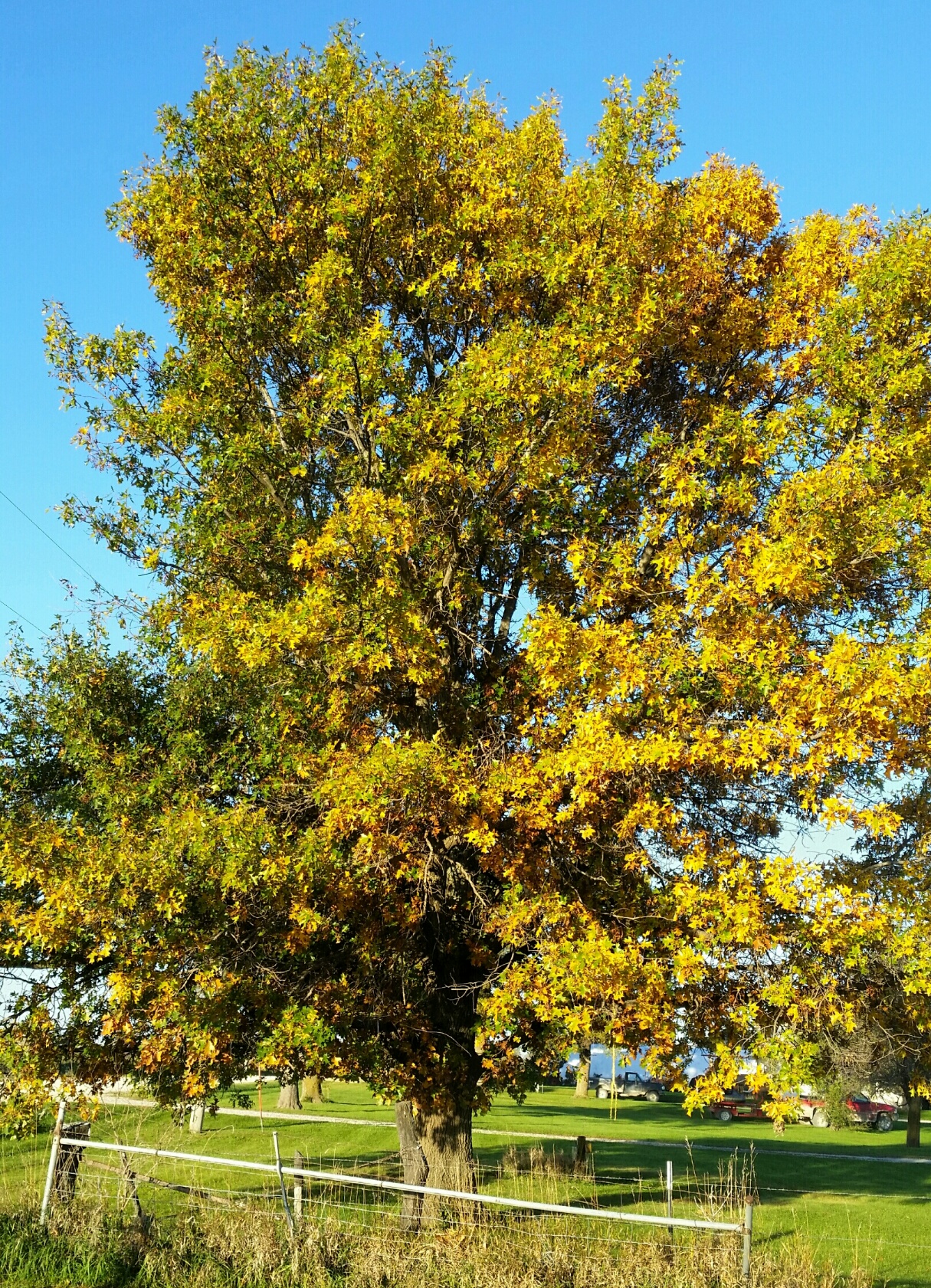
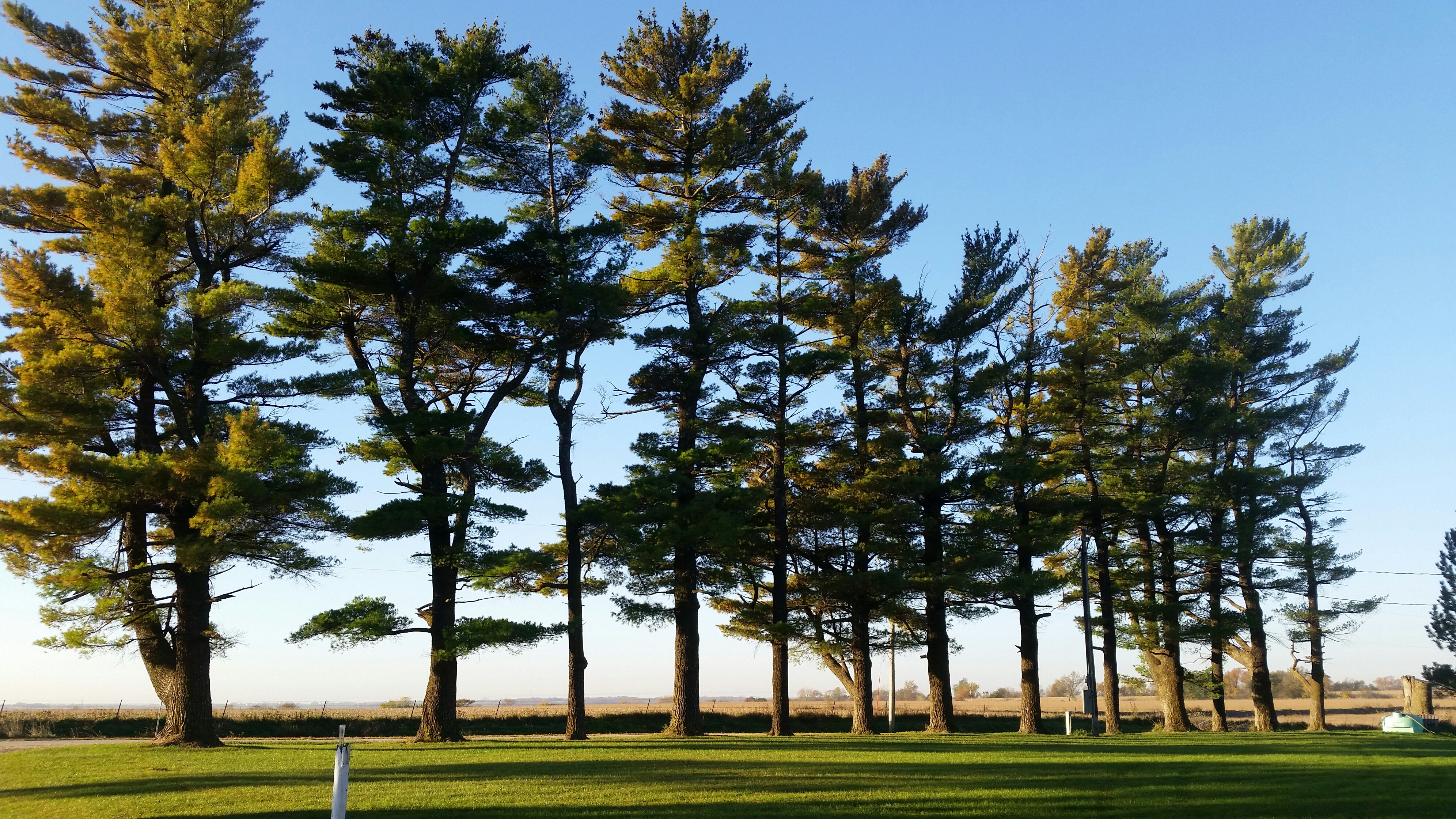
Fall in Northeast Iowa (Complete with an Artist’s Interpretation)

“The gentle reader will never, never know what a consummate ass he can become until he goes abroad. I speak now, of course, in the supposition that the gentle reader has not been abroad, and therefore is not already a consummate ass. If the case be otherwise, I beg his pardon and extend to him the cordial hand of fellowship and call him brother.”   -Mark Twain

This past Sunday my mother and her sisters were down in Missouri, visiting extended family. I had read, someplace, that it was now peak season to see the leaves in Northeast Iowa. I had been up there before, on a similar trip, when I was married. A few years later we got divorced. I hoped for better results this time.

Now when I travel to see the leaves in Northeast Iowa, it generally places me in proximity to a couple groups of people I disdain. The first are those who drive around in cars with bikes attached to them. These people must be terribly poor at making up their minds.  Perhaps they are first cousins to those I see in the grocery store wearing exercise clothes.

They are not to be confused with those driving around with canoes on top of their cars. While they can be annoying too, I chalk this latter group up to those the Almighty has either blessed with an abundance of prudence or cursed with a particularly acute fear of water. The best I can muster for those in cars with bikes is either that they haven’t gotten around to fixing the fuel gauge or their spare.

The second group falls under the mantle of the term “bird watchers.” I’ve nothing against actual bird watchers, mind you, but I would be surprised if we apply the term accurately to any more than one out of ten. This leaves the other nine armed with all the tools of the trade required to be a peeping Tom, and us having disarmed our suspicions, at least until now.

Particularly troubling is that I’ve yet to meet anyone that can tell difference. Since we can’t tell which is which, it seems the only natural thing to do is to let the Big Guy sort it out. This same thinking has given rise to Crusades and Indian Wars, and it is my hope I should live long enough to see the Gates of Hell unleash its fury once more on anyone dressed outdoorsy like with binoculars around their neck or a camera with a lens big enough to need its own case.

You may object, and that is your right, but tread softly, gentle reader. You tread on my dreams.

Now a fine gateway to any such trip in Northeast Iowa is to see the mill on the Wapsipinicon in Independence. It sits smack dab in the middle of town, stands several stories high, and lies up against the bridge on the main thoroughfare.  This is where we started, but given that I had a better mill in mind, I passed on a picture.

Downstream, towards the town of Quasqueton, is Frank Lloyd Wright’s Cedar Rock. It is a beautiful home sitting in the trees on the bank of the river. Dad and I had each seen it a couple of times and decided against another.  I mention it, though, because there I first became familiar with the legend of how the Wapsipinicon got its name.

The legend tells of Wapsi, a young Indian brave, stumbling upon and falling in love with the daughter of another tribe’s chief. Her name—you guessed it—was Pinicon, and the star-crossed lovers soon made plans to elope. (The next tribe west had a Justice of the Peace, whom looked remarkably like Elvis.) Their respective tribes, realizing they were gone, soon gave chase.

Coming to the banks of the river, the lovers clasped hands, kissed, leapt, and subsequently drowned because neither had a car sporting a canoe on top of it.   I truth, I don’t think they were lovers at all. I think they got caught bird watching.

We made our way through Strawberry Point, and headed up to the town of Elkader, which sits nestled on the banks of the Turkey River. Outside of town was the mill I was most anxious to see, and after a few miles of gravel we finally found it. Parked by it was the customary Subaru with two canoes on top.

Motor Mill2

We turned our sights as far northeast as we could go and traveled to the armpit of Iowa, New Albion. This is not to be confused with Albion, which we had already driven through coming past Marshalltown. In my opinion, when comparing the two, that to term this one “new” was stretching it. They sported a slogan of some sort or other.  Seeing that it did not mention “armpit,” I paid no attention to it. Its omission, combined with their use of the adjective “new,” told me all I needed to know about them. Old Albion was full of liars.

South of Albion lies Lansing. Lansing sports a bridge across the Mississippi. Dad and I stopped along the road, pondering what exactly it was that kept the bridge from falling into the Mississippi. We had been studying it for several minutes when I noticed that behind us, looking out over the river, was a bar. In one window I could see an elderly local, quietly drinking his beer and looking at the same bridge we were.

Lansing Bridge

I figured if he’d been looking at it his whole life and hadn’t come up with anything yet, we were not bound to fare any better, and so we continued on to Effigy Mounds National Monument.

It’s about a mile walk to get from the visitor’s center, up the steep bluff, and to the first substantial mound. Dad didn’t figure he could make it, but encouraged me to go ahead. Part way up, I wasn’t sure I was going to make it either, but I did my best not to make a scene about it and quietly restrained my huffing and puffing whenever I happened upon someone else going up or down.  That is until I passed a guy in a winter coat with gloves on.  It was 52 degrees, and I figured I, huffing and puffing, could look like no more of an ass than he did.

The first thing of interest I came to was this:

Bladdernut

There had been several signs noting the various plants and trees along the way and what the Native Americans had used them for. Now they were noting the ones the Native Americans had no use of. There are going to be a lot of signs, I thought. Seeing the name of the plant, I wondered if it wasn’t a clue as to the natives’ lack of interest. I could offer a guess on what the fruit of the bladdernut might taste like. In fact I could offer two particularly good ones.

On the way to the top, I’d meet kids running ahead on their way down. I would smile and later offer their parents a “hello,” “look like you’ve got your hands full,” or “I had them clocked at 55, and they were still gaining.” Occasionally I would meet other families a little more anxious, warily clutching their children’s hands. To them I said, “It’s all right; I’ve no binoculars. I’m not a bird watcher.”

If you are not familiar with the mounds, they were built by the Native Americans. The National Monument to them is just outside of Marquette and right above the Mississippi. Some of the mounds have animal shapes, and the first one you come to is that of a little bear, maybe 45 feet long.

I call it a bear because the sign said it was a bear.  I am convinced were they to mow the grass a different way they could just easily claim it was anything from a tortoise to a kangaroo. Still, they said it was a bear, and I didn’t see how believing them was going to cost my anything; so I did.

Right behind Little Bear Mound, even with his feet, you’ll note the appearance of a second mound. This one has no name, but given its location I thought of a couple.  Both were based on whatever I suspected the bear had consumed as his last meal. My best guess is that Bob the Brave was buried in that little mound, and the bear that ate him was in the first. That’s because I don’t believe these mounds are as shrouded in mystery as our more learned scholars.  It’s my belief their purpose was quite simple.

“Suzy, don’t you remember what I told you about bears? You don’t want to wind up like Bob the Brave do you? Do I need to take you up on the bluff again?”

As I continued along the trail, I soon found I wasn’t the only one offering interpretations. On my way to the scenic overlook, I passed the first interpretive sign. It told about the native builders and referenced the image above the words by saying: “This is an artist’s depiction of what they may have looked like.”

As I walked on, I thought to myself how we use the term “artist” as though it gives the depiction greater objectivity. In reality what they did was go to an individual whom was well known to be predisposed with an over-active imagination and said, “Draw us a picture.” Any thought to the contrary was quickly dispelled when I reached the next sign, pictured below.

The Dead

The particular sign is an artist’s depiction of a tribal burial. What caught my immediate attention, of course, were the bare breasted women dumping dirt over the deceased.  I also noted a hint of a smile on his face. There are many things I think the Native Americans were ahead of us on, and after viewing the above artist’s depiction, I added their concept of proper burials to the list.  In fact, I placed it near the top.

When I returned to the car, I was going to tell Dad what all I had seen, but wound up keeping it to myself.  He’d never believe it, I thought.

Since Prairie Du Chien was just across the river, we ran over to stake claim on a couple of six packs of Spotted Cow beer, one for me and one for my mother. I was looking for the first place that might sell beer, when we passed a liquor store that had a sign out front claiming over 500 different wines. The store was called Stark’s Sport Shop, and when I went in I was greeted by the 500 kinds of wine, a liquor sectioned that dwarfed the wine section, a cooler from which I selected my beer, rows of lures, fishing poles, ammo, guns, sausage, pickled eggs, and cheese curds. There was a line of ten people waiting for one of two cash registers, and as quickly as one sale rang up, someone else took their place.

“You guys always this busy?” I asked.

“You think this is something, you should have been in here yesterday.”

I didn’t know if I would be able to leave such a den of manhood, but I pulled myself together and wept my way back to the car. Had they sold lazy boys and big screens, I probably would have filled out an application.

Spotted Cow

We crossed back over and continued down through McGregor, which is the closest thing Iowa might have to Deadwood. We stopped at Pike’s Peak State Park, named for Zebulon Pike, the same early explorer Colorado Pike’s Peak is named after. In 1805 he identified the site as an excellent spot for a fort.  They built it in Prairie Du Chien instead. It’s hard to compete against a place selling guns, liquor, fishing supplies, and pickled eggs.

A couple of years later he headed for Colorado on horseback. I have it on good account that he had a jackass strapped across the back of it. It’s a shame. I could have understood a dugout canoe.

Pike’s Peak looks out onto where the Wisconsin River enters the Mississippi. It was there that Louis Joliet and Father James Marquette became the first white men to set their eyes on the Mississippi.

Pikes Peak

The Wisconsin River runs along the bluff on the right side of the picture.

Our final stop was Balltown, where we ate at Brietbach’s Country Dining, Iowa’s oldest restaurant and bar. How it maintains this designation is unknown to me. The original owners were not named Brietbach, and the original building burnt to the ground in 2007. Ten months later it did so again. It seems they change their restaurant as frequently as the oak changes its leaves.

The thought that the designation of ‘oldest’ needed neither permanent establishment nor name, let my thoughts naturally wander to ancient Adam. He was separated from me by more names than even the Bible could inventory. Each one of those names was on a building which sprang up and was gone, only to have a new one take its place. If I was eating in Iowa’s oldest bar, I was doing so as the oldest man alive.

Jonah in the Countryside

For the last two weeks I guess I have had a case of writer’s block. I’ll sit down to write, and partly do so, but soon discover a hour and half has passed by and the only thing I’ve really done is move some sentences around and change the order the paragraphs are in. The accomplishments of the following evening are generally confined to moving everything back. The feeling has a claustrophobic quality to it, but it is a rainy morning, and so I’ll try again.

Somewhere I had seen the sentence, “It’s a blessing and curse to feel things so very deeply.” I had been thinking of my grandfather, John Walker, and for whatever reason linked that quote to him. In such regard I have started and stopped a hundred times, a few on a computer screen but most in my mind.

My grandfather was his family’s only son and would become its only male. His father skipped out never to be seen or heard from again, and in that regard he proved himself to be a true “Walker.” They say my grandmother, Margaret, would tell a story that while they were living in Cherokee a man stopped by the house one day asking for John. He wasn’t home, but she invited him to come back around later. He never did. She’d later remark she had a strong feeling it was his father, and that he bore a striking resemblance to him.

Whether it was or not, who knows? I do know we spend part of our life wondering who some of those closest to us are. I see nothing wrong with devoting a little speculation to who a stranger is.

My earliest memories of my grandfather find him seated at the end of grandmother’s long dining room table, with his elbow resting on it, his fingers straight up, and a lit cigarette between them.   He’d sit there in silence, thinking, while behind him, through the haze of smoke, a police scanner made intermittent noise. Occasionally he’d raise an objection about one thing or another, with grandmother replying, “Oh, hubba,” from the kitchen.

By this time he had worked long enough to retire twice. The first was from the railroad in Cherokee. The second was from Firestone Tire in Des Moines. The cigarettes would have been a companion to him at both places and at the latter one would have dangled from his lips while his hands were busy wrapping and unwrapping asbestos from the pipes he worked on. These pipes were his specialty, though from time to time he was asked to work on others.

There was a story that a toilet clogged in one of the restrooms at Firestone. My grandfather was asked to see what he could do to unplug it. Evidently, one could use air to back pressure the lines, and he did–using a great deal of it. The end result was that he blew two men through their stall doors and re-plastered the ceiling. I was inclined to think the story had some stretching done to it. But when my grandfather passed after my senior year of high school, I heard the story mentioned several times by his former coworkers during the visitation.

I don’t know why he smoked his first cigarette. There are all kinds of reasons to be allured to it. I remember a few myself, but once the habit is acquired I suppose there are only a couple which maintain it. For some it seems to calm their nerves, and for others it is a subtle form of defiance. The latter was the case with my grandfather.

They owned the house right next to Highland Park Funeral Home on Sixth Avenue. He was told by the banker when he borrowed the money that he’d never be able to pay it back. He did, and the same persistence that bought it refused to give in and sell it as the neighborhood lost its shine. While some of his coworkers succumbed to the asbestos they had handled in their job, he kept smoking his way to his mid-eighties, and he kept driving too.

Often they drove out to the farm, and he would take up residence on the porch swing or on a folding chair beneath the large cedar next to it, tucked away in the shade, smoking, and thinking. All these years later, I wonder what it was he was thinking about. All those years ago, I never thought of asking him.

There exists a concept of the “invested child,” which simply states that in any family one child is going to be more sensitive to the happenings within the family than the others. Generally, this child is the oldest or the youngest, the only child of a particular sex, or a child which had a heightened focus from the rest of the family (due to a health issue, for instance).

The claim is that this child feels things deeper and more intensely than the other children and has a harder time bringing the feelings to a state of resolution. They may elect to try and stumble their way through those feelings, or they may get bottled up in themselves. Either way, it can be more difficult for the invested child to “function” in the day to day activities of their contemporaries.

The unspoken assumption, of course, is that the day to day functioning of our contemporaries is what we should be striving for. I don’t believe the contemporaries will mind when I say that any proof of that I find circumstantial at best.

If he was an “invested child,” if from time to time he was locked up in his own thoughts, I also know there was something about him his contemporaries could readily relate to. I remember he would haul us as kids to the mall with my grandmother, and as we grew older our family would meet them in there. Grandma would go about her shopping while he found a place out in the open to sit and smoke. Never did we return to find him unaccompanied, instead he would be there, chatting away with whomever happened by, and as we left he would tell us about all those he had been talking to.

Somehow, more often than not, when we get that sense of loneliness, we wind up spending time with those who have an even better acquaintance with it. Many times we find them without even knowing their story at first.

The final few times he was out, on the porch or under the tree, I remember him with his loafers on, socks pushed down, pant legs pulled up, and his tired and swollen legs running between them. The cigarette now dangled between two fingers of a drooped hand, whose elbow was resting on a knee, as though the weight of the cigarette had finally worn them all out.

“Don’t get old, Danny. Don’t ever get old,” he spoke as he rubbed his legs. I remember him saying that as though it was yesterday, as though his defiance was finally starting to give out. I’m sure it will still seem like yesterday whenever tomorrow shows up. He had a gripe, and even I, who could only stand and watch from the perspective of uneducated youth, could see that there was validity to it.

He wasn’t the first man to sit in the shade with a gripe. The biblical Jonah did. I bet Jonah would have been smoking too, had he any cigarettes, but that is another story for another time. And while the fact that he married a woman from Faith, South Dakota, shouldn’t be a surprise, it too will have to wait.

The Walkers

The Candidate

Young

David Young on the left, ICA CEO Matt Deppe in the center, and Isaiah Shnurman on the right.

When David Young and Staci Appel met for a debate last night, in their battle for Iowa’s 3rd Congressional District, I thought that both candidates might alter their appearances.  Up to this point, David Young seems always immaculately well dressed:  sharp glasses, sharp suit, and sharp shoes. One looks at him and thinks “businessman,” or, worse yet, “politician.” The connotation for either is that he is quickly capable in making assessments of both what you want to hear and how to make it sound like he’s saying that. Staci Appel, on the other hand, generally looks like the overly anxious mother you can’t carry on a conversation with because her mind is occupied with all the potentially dire outcomes of the actions her children haven’t even conceived of taking yet.

If I thought they might alter their appearance, I thought wrong. You can find numerous photos online this morning, and for the most part, the two will look exactly as I described them. Appearances can be deceiving, however, and the actual experience of either can move us well past them.  I’ve never spent any time with Appel, and I doubt she is as she appears to me.  I did spend a little time with Young, though, and found he wasn’t either.

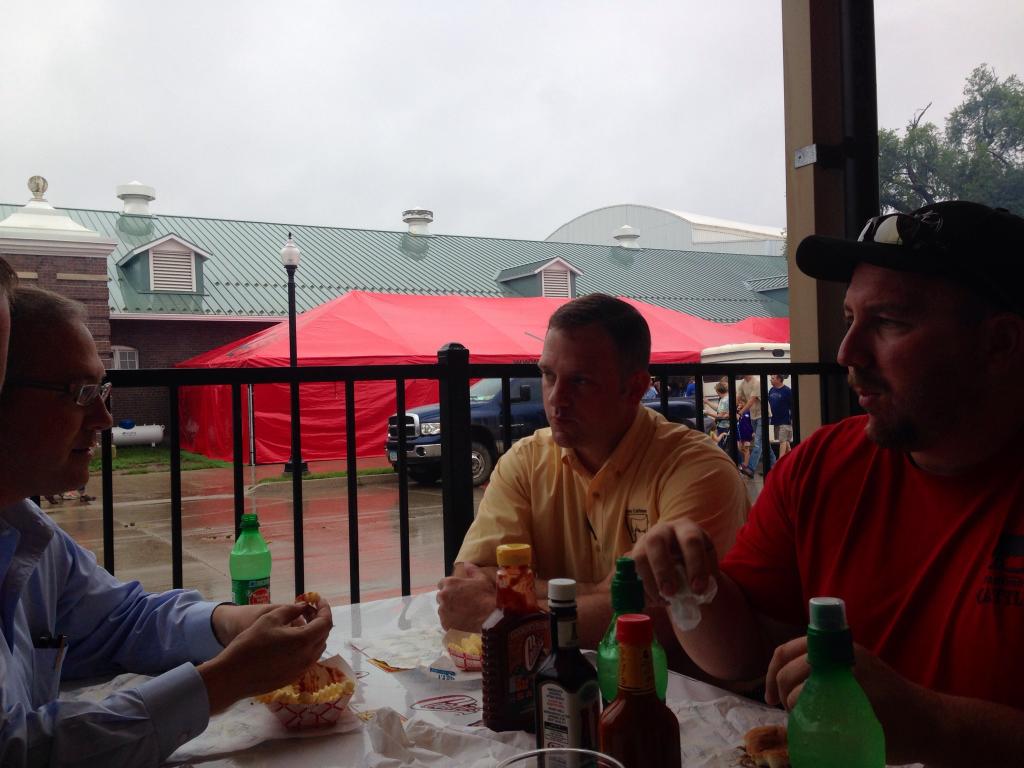
I met with David Young the first day of the Iowa State Fair. He had contacted the Iowa Cattlemen’s Association about wanting to meet with cattle producers in his district during the fair’s opening day. Since the Madison County Cattlemen always help staff the Iowa Beef Quarters the fair’s first afternoon, I received a phone call asking if two or three of us particularly interested in legislation could meet with him. Two of us were able to, myself and a young producer named Isaiah Shnurman.

I have about 60 cows, and run them with another 60 my family owns. Isaiah has a few head as well, and has recently started a business providing ultrasound services to other cattle producers. He’s hard working, he’s sharp, and he’s articulate. In short, he’s everything you hope the future of agriculture looks like, and I’m sure when he’s my age he will have much more to show for it.

I mention our backgrounds, because if all you know of the ICA is what you read as articles and comments in the paper, then you would probably suspect Isaiah and I were a couple of the corporate heads of “big agriculture,” or at the very least somehow related to CAFOs.

(As an aside, I always have trouble remembering if “CAFOS” is meant to dehumanize the multi-generational family farm cattle feeders in the state or dog owners. When I think of “confinement,” I think about how it must mean the tight quarters of a kennel more so than the open lot of a feedyard. Then I remember the “f” stands for feeding and that nearly no owner feeds their dog in their kennel.)

Given the above, you might have also expected for us to meet in an oak paneled backroom someplace, smoking cigars and drinking scotch provided by the Koch brothers. Instead we were out in the open, at the Cattlemen Beef Quarters, eating roast beef sandwiches and drinking iced tea. Alas, life appears so much better in a Bruce Braley commercial.

Next to me was David Young, whom I was seeing for the first time. He was wearing what I had described to you above, save that he traded the suit for jeans and a nice button down shirt.  I was wondering what I had gotten myself into while the two of us told him about ourselves. The funny thing was, though, I never did have the feeling he was making a quick and sly assessment during the process.

When it was his turn, he started, “I grew up around Booneville. Do any of you know the Forretts, or the Golightlys, or the Wallers.” I told him I considered them neighbors. “I worked for most of them as a kid.” He briefly continued about who he was and where he had been, and then he did something I wouldn’t have guessed. He listened.

He listened to Isaiah talk about the hurdles facing a young person trying to get established in the cattle business. He listened to our concerns with the Farm Bill, and our concerns about the impact the Conservation Reserve Program appears to have had on some of the economies of southern Iowa. He was generally reserved, and when he did speak he was soft-spoken. I began to wonder how he had got the gumption to run for office in the first place, and in the end I thought in some ways he embodied the public persona of his old boss.

I suppose he could have slipped on the new cowboy boots and white straw hat so many feel obligated to don when they talk to farmers. He could have really leaned into the table and told us about some other sob story he had heard, which is the accepted substitution for empathy and understanding these days. But he did none of that, and the absence of those things made you feel as though you were in the presence of someone genuine.  It crossed my mind that perhaps this was a guy who knew who he was and where he came from, and was thus free of the insecurity of wondering what he looked like.

Before we could break out the cigars and scotch, we were surrounded by a class of first graders. I was about to push ahead anyway, never leaving home without either, but I remembered the cardinal rule of first grade, “Only if you brought enough to share.” I wished I had. It would have been quite a photo op.

As we left, Young said something about having to appear on the Register Soapbox on the main concourse at the fairground in a few days.

“God, I bet that’s fun. Standing up there on the podium while anybody can shout whatever they feel like at you,” I said.

“Oh, it’s part of the process, you know?” And on that matter of fact note, the conversation came to a close without him ever once having practiced his stump speech or setting foot on a soapbox. Neither did he utter so much as a joke towards the other candidate or her party.

A week later, having concluded the interview with Van and Bonnie, I walked through the door only to find Young there, waiting to take be interviewed when Jan Mickelson came on. He knew the fellow I was with from when Andrew had worked for the Romney campaign, and they talked a little while. I didn’t expect him to remember me, when he wheeled, extended his hand, and said, “How are you, Dan? Haven’t seen you in a while.”

“I see you survived the soapbox.”

“Yea. It went great actually. You know, we’re going to do this.”

And even in his final comment to me, I sensed no trace of the over the top bravado that one might expect from an individual in politics. Nor was it the speech of a general, out to rally the troops. Rather it was as though he was confiding in you what he felt to be true. In his absence of swag and once worn cowboy boots, and in the presence of the sharp glasses and shoes, I find myself agreeing with him.

The Ballad of the ’62 Ford

Somewhere south of Emporia Kansas, after Interstate 35 joins up with the Kansas Turnpike, you come upon the Flint Hills. It’s a sudden thing. You round a corner, and there you are–some place different. As far as the eye can see is nothing but the undulating hills of tall grass prairie. I have seen the Sandhills of Nebraska, found them beautiful, and judged these their equal.

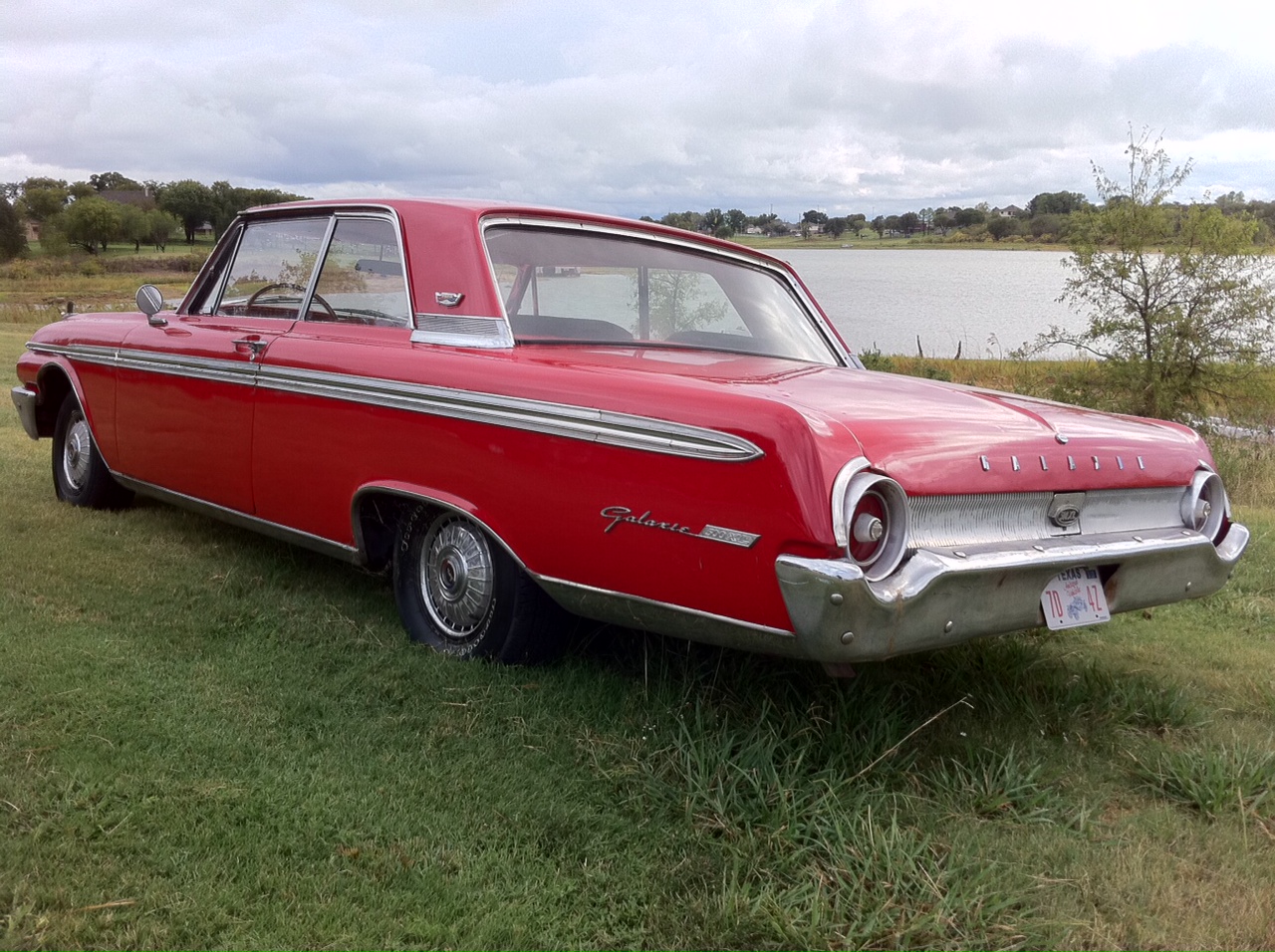
When we came upon them, they seemed to stretch all the way west to where the sun was taking its final glance on the day. “We” was my father and I, mid last week, making a long run down to northern Texas to look at 1962 Ford Galaxie Two Door Hardtop.

If you enter these hills like we did, on the Turnpike headed south, then immediately when you enter them you can look to the west and find one hill, a few miles away, standing a little higher than its counterparts and with sharper features. Looking at it I realized hundreds of years ago Indians use to ride their horses to the top simply to say they did. Some years later the white man that replaced them did the same thing, for exactly the same reason. Today the descendants of that white man and, I suppose, the descendants of those Indians drive past and make the same journey in their mind.

The vast majority of these descendants don’t have a horse and wouldn’t know what to do with one if they did, but this isn’t what keeps them from the aforementioned hill. They don’t go because the vast majority of us believe we simply don’t have the time.

A 1962 Ford Galaxie Two Door Hardtop was the first car for my father and his brother, Jack. A man whom owned the car dealership in Winterset had bought one for his wife.  Then, in the middle of 1963, in order to compete in NASCAR, Ford came out with the Fastback. Today it’s referred to as a ‘1963 and a half.’ His wife wanted one of those instead. Her ’62 had a console and bucket seats. This was the cat’s meow at the time, at least before the fastback anyway, and Dad and Jack now had a car which sported them.

I had been looking for one for Dad, and I had some hope of finding one so he and Mom could get some enjoyment out of it yet this fall. I found several listed here and there online. This particular one I came across in a print ad in Hemmings Motor News. What caught my attention was the “new paint and interior,” as well as the price. The car was listed as being located in the town of Little Elm, Texas, forty miles north of Dallas. There was no picture.

I called the owner, who said he had just listed it, and he gave me all the information his ad already contained.

“This car has new paint and a new interior. Why, it’s ready to go.”

“What size of engine does it have in it?”

“A 390, I think. No, wait a minute. I’m not sure on that. It might be a 352. I can’t tell them apart. It has the console, though, and bucket seats.”

“How does it run?”

“It runs good, but it has been sitting awhile. That’s why I figured I ought to get rid of it.”

“Much body putty go into it before the paint job?”

“No.   Just a little, you know. Paint has a blemish or two. It’s not perfect, but it’s pretty sharp. Why if you saw it, I’m just positive you’d like it. And the interior, why in my opinion that’s the sharpest interior Ford ever had in a car. Seats have never been sat in.”

“Could you send me pictures?”

“You bet. You got one of them emails? My son can send you pictures.”

The pictures came the next morning and seemed to support his previous testimony. It was 10 o’clock, and I called him back.

“What were you wanting for this car again?”

I had his ad in front of me, and he quoted me a price $500 below what was printed there.

“How would you want paid?”

“Well you could send a check, and I’d hold the car for you. You could come down and load it any time after it cleared. A cahiers check would be better, and of course there is always cash.”

“All right,” I said, as excited as a boy that got his date to the prom. I hung up and called Dad.

“Too wet to do much of anything today isn’t it?”

“I think so.”

“Come over here, I’ve got something for you to look at.”

When he arrived, I showed him the pictures, and we both agreed the old thing didn’t look too bad.

“Looks like the bumpers have some rust, probably have to re-chrome them. It would look nicer with some sharper wheels under it.”

“What are you thinking?” he asked.

“Well, we are not going to know anything until we see it. Let’s get a trailer, pack a bag, drive most of the way down there this afternoon and drive back tomorrow. It’s ten and a half hours away. We could make Oklahoma City by tonight.”

We got away at 3:00 in the afternoon, and made the outskirts of Oklahoma City by 11:30 that night. We ate breakfast early at the hotel, and the only company to be had was an elderly couple who were traveling from Pella, IA. I mention them because later that morning, thinking I was making good time to Texas, we were passed by a car with Iowa plates, and a couple of familiar senior citizens in it. Since I couldn’t beat them, we joined them, and followed them up and over the Arbuckle Mountains and into Texas.

Little Elm is only a few miles from Interstate 35, and I was convinced that I must have drove past the house, when we saw the rounded tail lights sticking out of an attached garage on a home right on the reservoir. As I pulled in, a man in his early 80s emerged to greet us.

“You guys have traveled a long ways. You’ve only got a few more feet to go. She’s right over here. Dad took the driver’s side of the car, and I took the passenger’s. As I rounded the rear corner, my heart sank. The passenger side of the car rolled like the Flint Hills of earlier. When he said it had only a little putty, he meant in comparison to all the putty that was ever made, he only used a five gallon bucket full. The new red paint was new 15 years ago, and it was ample enough to make me think someone had applied it with a roller. When I got to the passenger door, I opened it, and was greeted by a rusty vise grip attached where the window handle should have been, a much sought after option for 1962. Inside, lay various pieces of trim still not attached yet. Some appeared to have been missing all together.

The console was there, but it was recently installed.  To the steering column someone had affixed a piece of tin, hiding where the shifting lever had been.  The indicator was still there, and they had applied bright red paint to it in order to camouflage it with the rest of the interior.  It blended in as much as if I had smacked my thumb with a hammer, and laid its swollen carcass on the steering wheel.

My head emerged to find Dad about ready to pop the trunk. I joined him and found the missing interior trim lying next to the spare. He reached up and pulled the carpeting back near the passenger rear wheel well, and was greeted by a tarry looking goo, which I was certain I could put my finger through and check the tread on the rear wheel.

“I think we should let this car go,” Dad said. It seemed like the thing to do. I only wished we were letting it go off a cliff with the owner inside it, and yet for some reason there is always this desire to hide our disappointment.

By this time the car’s owner had pulled up his 4wd golf cart and told Dad to hop in. He wanted to show him the rest of the cars he had out back. His son was with him, and as the owner and Dad headed off, he stayed to visit with me. At some point I figured we had gotten to the part where they killed us one by one, hoped it was cash and not a cashier’s check in the pickup, put us in it, and rolled it into the lake.

My last meal was going to be a continental breakfast consisting of a dried up biscuit with cold gravy over the top. There wasn’t a damn thing I could do about it except hope to punch the guy before he shot me. But lo and behold, here came Dad and the owner back. Dad must have told him we had opted for the cashier’s check.

Now most would think a man would be disappointed right about now, but we were only mildly so. The car was a P.O.S. No man is afraid of buying a P.O.S. In fact a P.O.S. gives a man some pride when he relates to the story to others, for inherent in the story is the fact that he was smart enough to recognize it. No, what a man is truly afraid of is a lemon. This is a P.O.S. in sheep’s clothing, which he purchased anyway, and is now stuck with. That is disappointment.

We stopped for lunch at a neat little BBQ joint we had passed not far from the Interstate. We licked the wounds of whatever slight damage had been made to our pride while we ate. I suggested to Dad that we had an envelope full of cash and could always pawn the neighbor’s trailer for pistols in our boots, and begin a life of crime. He frowned on it. It seemed like the thing to do.

Driving home, no longer preoccupied with the car we hadn’t seen yet, it left one’s mind free to gravitate towards other things. Mine drifted to the armadillos, which always greeted me along the side of the road, four feet in the air, from northern Texas to central Kansas. I thought if they could tag them, the Department of Transportation might save some money on mileposts.

Many people think these armadillos are dead, but that’s because they don’t know the armadillo’s ancestry. Which is a shame, because it is really not hard to guess at. You can just look at one and see the armadillo is the result of a brief love affair between some ancient snapping turtle and a possum. From the turtle it inherited its armored shell, and from the possum its remarkable ability to play dead.

Stopping for gas, it let a local behind the counter know that I was wise to this little known fact.

“We’re from Iowa,” I said, “and boy I tell you what, I thought a possum could play dead, but they don’t have anything on these armadillos. How do you suppose they do that?”

“I think getting hit by a car has something to do with it,” he said.

Of course it does, I thought.  Aren’t the best performances always those after a tragedy?

photo_2

IPF

Idiopathic pulmonary fibrosis, or IPF, is a progressive hardening of the lung. It is distinguished from other forms of pulmonary fibrosis in a few regards. It alone carries the name “idiopathic.” This means they aren’t sure what causes it, or, in other words, that they are ignorant. I know of no doctor whom spent the front third of their life and hundreds of thousands in tuition to be called ignorant. This is why they use the term “idiopathic.” It is Greek for “ignorant but educated.”

This would be similar to the American term “a genuine asshole.” While it concedes that the individual in question is an asshole, it gives us the assurance that at least they are sincere about it.

IPF also differs from the other forms in that it has very limited treatment options.  Historically there has been supplemental oxygen when needed and a double lung transplant when oxygen alone no longer cuts it. As of today there are two experimental drugs about to be brought before the FDA in an effort to slow the progression.

In a few cases IPF seems to have a genetic component. You use to be able to be part of a research study which would disclose whether or not you carried the gene or genes which were suspected. They don’t do this anymore. Some who carried the gene or genes never developed the illness. Some who didn’t, did. You can still be part of the research study, but you do it blind, and this hardly seems to be objectionable for a test that has trouble seeing anyway.

But what does it tell us anywyay?  Would it be a terrible surprise to learn that all of us, with our self-destructive tendencies, are carrying around self-destructive genes?

My father was diagnosed with IPF well over a year ago. Some patients don’t make it 6 months after a diagnosis, at which time they presumably find the answers to all the questions we spend our lives wondering at. Some make it many years. My father is doing well, has taken it in stride, remains active doing what he wants to do, needs no oxygen, and only battles a persistent cough. Every few months he goes in for a checkup, and I and my sister, Katie, accompanied him today.

Despite all kinds of variations, when you boil it down there really seems to be only two ways to deal with an illness: either you keep it to yourself or you talk about it. If we take the former, the risk seems to be that it will distance us from those we are close to. If we take the latter, the risk seems to be that it will let others up close and personal. Near as I can tell, one risk is as considerable as the other.

For his part, Dad chose the second and talks about things freely. I tend to be caught between the two.  I find humor works in a unique way to let us do both.  After a two hour car ride I was beginning to wonder if my humor hadn’t left.

Just then a doctor came through the door my father had disappeared behind an hour before. He passed my sister and me, and approached a burly fellow, who had been in there so long he had fallen asleep in the corner.

The two were about the same age, but had little in common otherwise. The doctor was slender built and looked younger than he was. The man across from him, just waking up, had the brown ears and red nose of one who labored while the doctor carried in his sandals the tanned feet of a man accustomed to a different lifestyle. The doctor spoke in a business-like, matter of fact way, and the laborer met him in kind.

“Well I wanted to let you know that it was in a really tight spot. It was kind of tucked around behind like we suspected, and there were a lot of blood vessels and other things surrounding it.”

“That’s how they said it looked on the scan.”

“Yes, and the scan was accurate. I couldn’t get very close to it. At one point I kind of jabbed a needle at it with the scope, and I stuck a brush out and tried to rub up against it a time or two. I’m not very optimistic that I got much of anything. I’m afraid with where it’s at surgery won’t be an option for us. She did very well though.”

“Oh, I knew she would. She’s so strong. She greets everything with a smile and never gets discouraged.”

“Yes, she’s a trooper. You can come back in five minutes or so. I’ll culture what I got, and we should know something by tomorrow. I’ll call you. Now when you go back there I want to warn you. We had a water pipe break somewhere up on the sixth floor when we were in the middle of everything. So it is going to look like complete chaos with buckets everywhere.”

The burly man laughed a big laugh and said, “I don’t suppose I’ll even notice. I want to thank you, Doc, for everything you’ve done.”

“Yes, well that’s the trouble. I was hoping to have done more. Still, we are pretty sure we know what we are dealing with. This was just to confirm it. Dot our “i’s” and cross our “t’s”, you know? If we came up empty today, we still have a plan in place as to how to proceed.”

“Do you agree about the difference in the high and low rates?”

“Yes. A high rate is the only rate that offers a hope for a cure.”

“How long will it take her to recover from today?”

“She should be back to her old self in no time.”

“Is a bike ride this weekend out of the question?”

“A bicycle?”

“Do I look like a man that rides a bicycle to you, Doc? The bike I ride is a big old Harley Davidson.”

Now the doctor laughed. “I think a ride on the back of a motorcycle would be just fine. Big plans?”

“Oh, kind of a bucket list thing, you know?”

“Well, I think that’s wonderful. If you don’t have any more questions, you can come back in a few more minutes.”

And so two men whom seemed to have nothing in common, were united by the one thing that unites us all, and found that more than enough to share a mutual respect over. I respected it too.  I had gotten up close at a distance.

How many times that conversation took place today I don’t know. Thousands, perhaps. I suppose in hearing one I received an education. At the same time, I hardly know any more about why it happens than I did before. It’s idiopathic, I would guess, and I’m being genuine.

Sierra Undaunted

I’ve never seen the Sierra Nevada Mountains, except perhaps in drifting over them in my mind on a Sunday with my posterior in a church pew.  A long time ago I used to fight this drifting, but anymore I close my eyes and enjoy the ride without distraction amongst the ancient ritual of the Mass.  Or I should say no distraction most of the time. 

Once, when I lived in Guthrie Center, I had a guy while we were standing lean over and whisper in my ear, “You know, I had a horse that could sleep like you once.”

This past Sunday I had a pew to myself, and when I heard two people come in and sit behind me, I figured it was the nice couple, whose kids have left the nest, which always sit there.  When it came time for us to kneel, though, the time when my mind usually reaches wherever it’s going, I found I was wrong.

It was then that I heard the patter of two little feet on the seat of my pew.  “A mother giving her kid exercise,” I thought.  But the patter came closer.  Undeterred, I kept my eyes closed, and undaunted the feet came closer still.  Finally I felt a little hand on my shoulder.

I turned from snowy summits to look into the face of their 18 month old namesake, Sierra, with big eyes and a face with a perpetual smile.  I smiled too.  She smiled more.  I was bluffing.

Having no kids of my own, the presence of someone else’s can be intimidating.  Intimidating was a word this gal didn’t know.  Her glance alternated between me and my two year old nephew, Bowen, who was in the pew ahead.  I picked Bowen up, set him down in my pew, and figured the two could captivate each other’s interest eye to eye.  I missed a second time.

Bowen was at least as intimidated as I was, and much poorer in showing it.  I was standing now, and he retreated behind me grabbing my leg.  Sensing weakness, and seeing she had him cornered, our little tiger shark closed in for the kill.  At the last second, I scooped down, plucked Bowen to safety, and returned him to the pew ahead.  I think she scared the hell right out of him, and I don’t suppose he’ll need to go to Mass again.

The tiger shark

The tiger shark

The goldfish

The goldfish

From his fortress Bowen watched his pursuer climb down and stand up on the kneeler to get closer to him.  Bowen feigned a loss of interest.  This I applaud him for, since women usually seize the opportunity to play hard to get first.  Sierra remained undaunted, however, and crept more and more onto the toes of her little black boots with her hand reaching out to seize her man.  I had to hand it to her.  This was a woman whom didn’t take “no” for an answer. 

All of the sudden her feet slipped out, her chinned dodged the back of the pew, and she did a twist worthy of the X Games in order that she might slam face down into the kneeler. 

If I remember my physics lesson correctly, it should have happened in about .4 seconds.  A lot can go through your mind in .4 seconds.  In the first tenth of it, I had removed all blame from myself.  I knew I would be no good at watching a child.  And her mother would have too, had she ever overheard me in the confessional.  I suspected she would have blushed, in fact.  After all, the priest does, and you would figure he had heard it all.  Perhaps he had never heard it all at once before.

(Now, in order not to overwhelm the man, I move around the divider and look at the priest face to face.  Once I begin, I continue until the priest looks embarrassed or looks at his watch.  Or embarrassingly looks at his watch.  Once we had a priest with the countenance of an angel, and the patience of Job.  The man would neither look embarrassed nor look at his watch.  I did find he would sweat profusely, however.  The next time the sacrament was offered, I came around the partition to find he had a sweat band on.  Seems he had been expecting me.  This was mortifying.  It was several years before I went back again.)

Unsure of what to do with a child in the first place, I was now positive I had broken one.  Expecting a wail from my feet at any moment, which would lead to lots of looks and unwanted attention, I quickly reached down to pick her up and get her back in her mother’s hands before Sierra uttered anything audible.  This way everyone would think her mother had done it.

But before I could, Sierra broke the silence with a loud “ugh.”  I suspect it was similar to the noise the skydiver made whose parachute failed to open but lived to tell about it.  She had taken the fall in stride, but I hadn’t got over the shock yet.  I grabbed her quickly to transfer her to her mother, but her mother was laughing so hard I was unable to complete the handoff.  I looked down into the same smiling face and big eyes I had seen before.  This time I offered no smile.  This kid was the Terminator.  Bowen could run, but he would never be able to hide.

To save him until he had developed some better motor skills, I held Sierra up by my shoulder, snuggly so she didn’t fall again. From this vantage she could look down on Bowen, and he timidly moved for protection behind the legs of his mother.

I suppose she’ll too have a horse like me someday.  Hopefully Bowen has a faster one.

Putting Up a Front

Andrew Wheeler and I were making our way down the Grand Concourse at the Iowa State Fairgrounds. It was a little after 8:30 in the morning, on the second Thursday of the fair. There were several people about, but it was hardly a crowd by State Fair standards.

Our walk took us past a whole smorgasbord of culinary adventures.  Some fried, some on a stick, some fried on a stick. The vendors were already open and eagerly anticipating the crowd the late morning would surely bring. I was sure the crowd would bring their appetites, but I was without mine.

We were on our way to the Crystal Studio, which houses 1040 WHO Radio during the fair. At this time it was occupied by their popular morning show hosts, Van and Bonnie, and I was going to have to come up with something to say to them.  I was nervous.

It was a good thing Wheeler was with me. He’s particularly gifted in making smooth, easy conversation, and being able to engage in it made things better. Our talk made its way to the background of my mind, while it’s foreground searched for something else to occupy it other than being nervous.

I caught a sign for Dipping Dots. I decided I would try humor. The tagline for Dipping Dots is “the Ice Cream of the Future.” It’s been this way since I was a boy. I would have thought the future would have got here by now.

I felt nothing, so I tried to build some momentum with another one. The Fair this year featured an incredibly tall sculpture of the American Gothic.   A couple of days before, Sharon Bell had informed me that it was not the farmer’s wife that was sternly standing behind him, but his daughter. Reflecting on it during our walk, I had a series of epiphanies.

First, I realized what her father’s pitchfork was for: guys like me.  By the look of things, he’d been successful.

Second, I gathered that in her suitcase at her feet lay tucked away a little black dress and a cute pair of sandals, a partial can of hair spray, and a tube of lipstick she hoped was holding up well in the heat. She knew he wouldn’t be able to stay up all night, and we he finally tired out, around 8:30, she was going to let her hair down and saunter around a bit.

Her head was wistfully turned towards one of the many establishments that serve beer. The scowl on her face tells me she had seen the $8 price tag, and the sculptor caught her vainly wishing that she would have tucked more away from the old miser.  She’s been isolated to such a degree, the thought never occurred to her that a boy might buy her one.

In the end, this also was to no avail. The closer we got, the more nervous I became.

I mentioned to Andrew, in an understated, conversational way, “I’m a little nervous.” This didn’t help either, but Andrew did his best.

“The way this works is that we will go in at the start of a commercial break. Van and Bonnie will make small talk with you, putting you at ease and giving them a chance to figure out what they are going to ask you. When we go on the air, they’ll pitch you some easy, ‘softball’ type questions, and it will be over before you know it.”

We were at the Depot, and I knew their kegs were still tapped. I thought about seeing if Wheeler wanted a cold one. Unlike the miser’s daughter, I was partially motivated to pay the $8. I also thought better of it. It might make me liable to swear.

Arriving at the studio, we stepped in the side door and were greeted by a man standing behind a counter. Andrew struck up a conversation with him as easily as he had with me. A second man stood silently by and listened. At some point he joined in, and I recognized the voice of Jan Mickelson, waiting his turn to take his show on the air. I thought of asking him if he wanted to go on a littler earlier than normal.

Through a clear door sat Van and Bonnie and their current guest. In no time flat, a commercial came on, the guest rose, the door opened, and someone mentioned for Andrew and myself to go in. I decided not to look nervous. Part of me thought looking nervous would be liable to make them swear.

Van and Bonnie could make conversation as easily as Wheeler, whom might have his own radio show someday. We talked about the weather, the fair, the people of the fair gazing right in the large picture windows across from us, and somehow we wound up talking about grocery shopping at Hy-Vee. By that time only the three of them were involved in the conversation. I was still stuck on the unnerving presence of the faces outside the window.

My internal clock had been ticking during the commercial break, and it told me my moment was quickly approaching. Sure enough, and without warning, Van launched into the weather or traffic or something. I looked over to Bonnie, and I found her looking squarely at me. She had found me out. The expression on her face said, “Shit, this one is nervous after all.”

Just then Van cracked a joke of some sort or other and made a slight raise of his index finger.  On cue Bonnie broke into that famous laugh of hers.  I fancied it was laced with a slight trace of profanity.

Van began, “Joining us in the studio this morning is Dan Hanrahan. How’s it going this morning, Dan?”

Dry, I thought.

Before I could think any further, my mouth opened and out came, “Wonderful, Van. And what a beautiful morning it is to be out here at the Iowa State Fairgrounds talking about agriculture. Thanks so much to the two of you for having me on.” And as my own voice pattered on, without hesitation, laying it on thick and heavy as it went, I wondered, who let this crazy bastard in?

A few more questions, a couple of minutes, and it was over. I had survived it without cursing. I wished I could have said the same for Bonnie. The next commercial had arrived, and Bonnie told us to take our pick from two pans of cinnamon rolls. My stomach, strained from the knot it had recently been in, declined. Perhaps if they were fried and on a stick, they might be liable to make me swear.

As we opened the door to leave the studio, another guy hurried in before I got it closed. There was something about him that made one wonder if he was really supposed to be in there or not. It was as though I had ran into myself. As it was, he didn’t seem the least bit nervous, and I was sure they would find something to talk about.

WHO

The Madison County Water Works

The most famous water works in Iowa is located in Des Moines. It sits on a campus of 50 or 60 acres or so, on an oxbow which juts into the course of the North Raccoon River. It was arguably made most famous by LD “The Flood Stud” McMullen. It has a different director now, whom may not have a nickname, but by now has had several t-shirts dedicated to him.

Why its the most famous I don’t know.  We have much larger ones in the state.  My home county of Madison has one thousands of acres in size, and it rarely gets any press. Perhaps it needs a spokesman with a more fanciful mane. Perhaps it needs its own t-shirt.  Showmanship has always been second nature to it, though.  What it does, it does quietly.

The Des Moines Water Works lies on piece of land resembling a thumb that’s laid on top of the North Raccoon. It makes for great drama.  In Madison County the situation isn’t nearly as dramatic.  We lie over the watershed like a blanket.

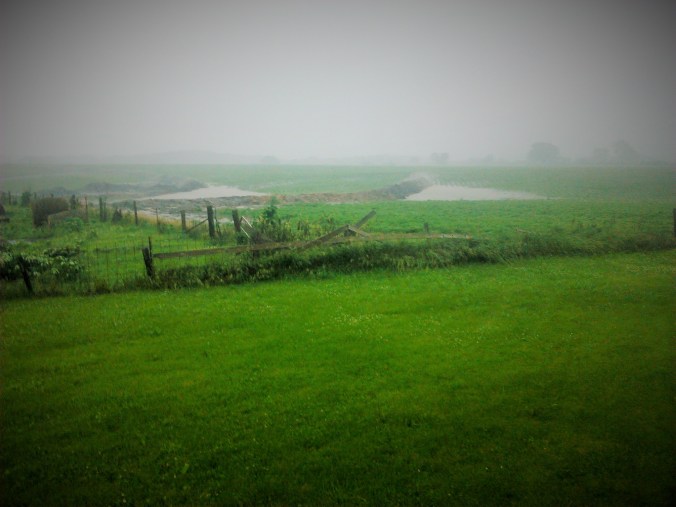
I get to witness this blanket in action.  Late June rains recently left the soil at home saturated, and on June 30th, we received a couple of inches in 30-45 minutes or so. A couple of inches of rain is hardly a big event most times, but on this particular time it came with no place to go. When the rain ended, I set out with my camera, and found a few things to give it some press.

Terrace1

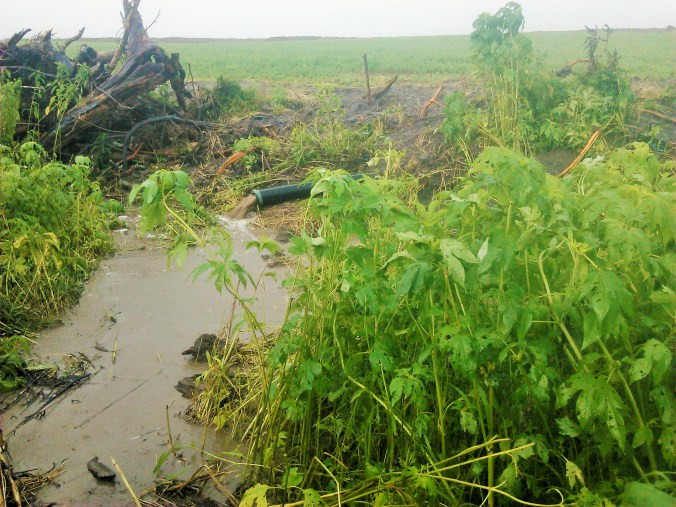
Two new terraces doing their job.


We were in the process of building some terraces over the summer, and had two completed off my back deck.  In agriculture we tend to take for granted that everyone knows what a terrace is, but I’ve found over the last year this isn’t the case.  A terrace simply stops water from running down a hillside, forcing to funnel out through a drainage pipe, letting go of the sediment it would have carried off the farm during its wait.

Outlet1

Drainage water being released slowly from an outlet.


Ridge1

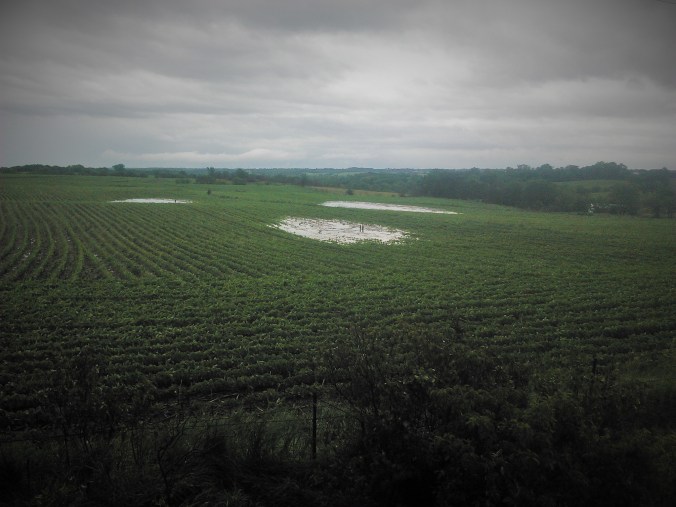
Last year’s residue and this year’s crop.


Above the terraces lie other lines of defense for controlling erosion.  This field was no-tilled, leaving last year’s corn residue on top of the soil.  You can see the stalks still standing underneath this year’s bean crop.  Most ground is no-tilled in our area.

The additional residue helps slow down runoff, allowing the water extra time to try and soak in.  Here, on top of the ridge above our new terraces, were a good 2-3 inches of water still laying on top of the ground looking for someplace to go.  One of the basic ideas of any conservation effort is to encourage that water to take its time.

Farmers sometimes tile fields to help with the situation shown above.  In order to have runoff, you need to have excess water in the first place.  Tile works to increase infiltration of water into the soil, reducing the amount sitting on top, as well as reducing runoff and anything that runoff might carry.

While excess nitrogen from the tile can be a concern, how we apply nitrogen, the use of cover crops, ways in which we outlet the tile, and managing when the tile operates can all work to reduce this while maintaining the above benefits.  Eliminating tile due to nitrates, eliminates it’s positive impact on all the other areas mentioned above.

Old Terraces

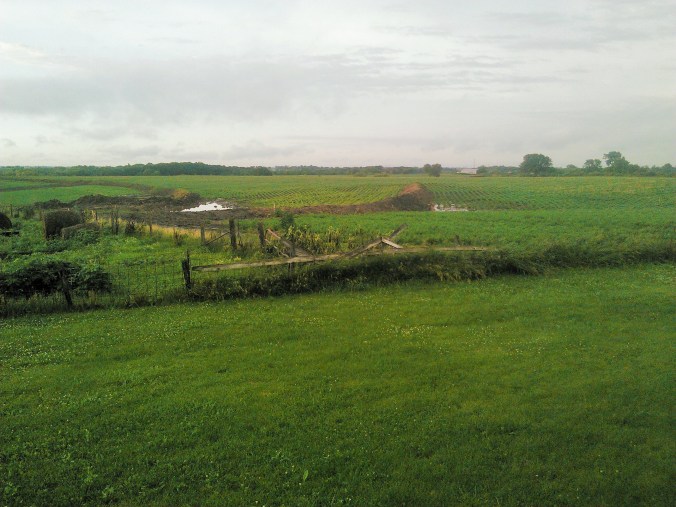
Long established terraces the new ones compliment.


While the two terraces above are new, the practice goes back much farther.  A bordering field features terraces built in the early 80’s, still doing their job on the landscape.  These older conservation structures mark the conservation efforts of a previous generation, and are the foundation subsequent ones build on.

Terrace2

7 hours later.


At the end of the day, shortly before sunset, I took one last picture of the new terraces.  They were still 1/2 to 1/3 full.  Water which would have washed its way off the field in minutes was still being released after hours.

Conservation doesn’t make much noise, I guess.  It isn’t designed to.  If only it sported a more flamboyant mane.

Ahquabi

If my grandfather had a way with stories, then it must be mentioned that my grandmother had a way with words.  At her command must have laid a whole army of them, but she never traipsed them about for a good showing, at least not as I recall.  Instead she would make an efficient sort of them and select the one most effective for a particular job.

Once selected, she would wield it effectively.  I don’t recall her being strict, mind you, but when she said a word like “no” it could run a circle around your entire childhood attention span and bring it focused on a single point.  She gave some certainty to it, I suppose, and it fell like a hammer blow.  Once spoken, with its full meaning comprehended, she could convey it in absolute silence with equal effect.  Perhaps this is the acquired skill of all grandmothers.

My aunt tells the story that she was staying with the two near the end of her father’s life, and one day a neighbor stopped to visit.  This wasn’t remarkable, it happened all the time, but what was remarkable that particular day was the story.  The subject of the reminiscing were the two’s younger years and a hell of a good time they’d had when one of their acquaintances had piled up his Model T on the way home from a dance in northern Iowa.  My aunt realized for the first time in her life that her father once drank.

So when my grandfather was poised to celebrate his next birthday, my aunt decided she would get him something special to remember it by.  She went into a liquor shop and inquired from the lady behind the counter on her recommendations for her aging father.  She was directed to a fine, Irish liquor which was then boxed and wrapped.

When the big day came, and the meal had been had, and the rest of the family had said their goodbyes, my aunt asked her father to sit still for one more gift.  She went down the hall and returned with a long, slender box wrapped and tied with a bow.  He was at the table, and had his back to his wife who was dislodging from the plates the final remnants of the party.  My grandmother took an interest, though, and from time to time would look over her shoulder to witness what was about to unfold.  Sliding the bow off one end and cutting the tape with a pocket knife, my grandfather made his way to the day’s final gift.  He pulled the lid off, folded back the packing, and his eyes glistened from the joy of seeing a long lost friend.

My grandmother took one look, raised one eyebrow, and fervently resumed her work.  My aunt was facing her, and her understanding of her disapproval was instant.  My grandfather had neither seen nor heard anything, yet he was perfect in his understanding as well.  He pushed the packing back over the bottle, carefully slid the lid back on the box, and pushed it back across to my aunt with a smile.  “Mary,” he said, “I appreciate the gift, but I cannot take it.  I made a promise to someone a long time ago now, and I intend to keep it.”

My aunt either felt like she’d diminished in size, or that the chair she sat in had grown to Edith Ann proportions.  What she didn’t know was that my grandmother was adamant in her belief that a man that drank wouldn’t amount to anything.  However it was she had that conversation with my grandfather, she had brought his full attention to the topic, his understanding was perfect, and there was no need to repeat it a second time.

But of all the words she rigorously selected, the most famous was in 1935 for a contest to name a new state park south of Indianola.  The Saux and Fox Indian tribes had once wintered in the area, and Grandmother submitted the name “Ahquabi” which was their word for “resting place.”  The committee set up by the local paper loved it, and awarded her first place and $35.

She was quite fond of the stories of the Native Americans, and there are still a box or two in my basement full of her numerous newspaper clippings, letters from the Department of the Interior concerning the old Indian Bureau, and knick knacks from early trips to pow wows in Tama.  Among the clippings is one she saved detailing the night of October 11, 1845.

At midnight that night, the Indian title to the lands in south central Iowa expired.  When it did, settlers could stake claim to 320 acre parcels.  The clipping states that “Precisely at twelve o’clock, the loud report of a gun at the agency announced that the empire of the red man had ended here forever, and that of his master race had begun.”  It goes on to say “civilization had now commenced her reign in Central Iowa.”

The rest of her clippings make it quite clear where my grandmother’s sympathy lied, and I suppose she preserved this in order to note the sentiment.  The early historian goes on to detail how Jacob Frederick and Jeremiah Church were without an ax to properly mark their claims near Fort Des Moines, so they carved their initials into trees to mark their boundaries.  Frederick evidently did it in the dark, but Chruch was aided by the light of an Indian wigwam he had set on fire.

While my grandmother was concerned of the plight of the Native Americans, I take some satisfaction that they never had to see the Food Court at Jordan Creek.  I’m sure they had their own doubts about the “master race” and their “commencement of civilization” on the territory, but I doubt even they could have imagined that.  I wouldn’t have had the heart to have broke it to them.

A year after my grandmother died, in 1986, they put up a small monument in the park to her.  It’s southwest of the trail as you come in the park’s east entrance.  As I recall they put four names of her’s on it, but nowhere appears the one I knew her as.

In her clippings I found the full meaning for Ahquabi.  “Resting place” only accounts for the first half, or the “Ahqua.”  The significance of “bi” seems to have been neglected.  “Bi” was Indian for “sitting around a campfire and telling lies.”  An activity which evidently joins the two empires.  And knowing that, perhaps we can understand its full significance, and not need to be told a second time.