The Irishman

John

I once heard we should refrain from making other people saints. The idea was that in doing so, we bring about at least two, rather destructive, outcomes. First, the sainthood we bestow gets in the way of knowing the individual for who they truly are, warts and all. Second, it creates an impossible standard for everyone else in our life to live up to.

I suppose a lot depends on how you define a “saint.” Conventional wisdom takes it to mean “he or she that can do no wrong.” I feel differently. So did an old friend of mine.

“What are we to do, when we feel differently than the group we are part of? Is it better to move to a group that thinks like we do? Or is it better to stay and fight for the identity that has laid its claim on you?”

“That’s a good question. You’ve obviously been thinking about it. What are your thoughts?”

“I think I favor blooming where we are planted.”

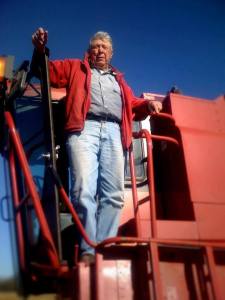
A few years ago, John Connor had a heart attack.  I went in to see him in the hospital.  He was already in his 80’s, and they were talking a potential surgery.  The thought crossed my mind that I might not see him again.

Outside of my family I had known no one longer.  He was something of a pseudo-grandfather in my youth.  He was now my oldest friend, and an ever present part of the place that I came from and still reside in today.

I entered the door of a large room with light wood paneling.  His wife, Marilyn, was seated by the windows that made up the wall across from me, letting the daylight in and quieting the din from the streets below.  John sat upright in bed reading the Des Moines Register. He looked largely unconcerned. He wore his hospital gown like silk pajamas, as though the two had just wrapped up a late breakfast over a casual morning at home.

At any moment he would rise and don a business suit or the lapel pin of some high ranking public servant.  In real life, John had donned none of those things.  Instead he chose the denim and occasional dirt of a farmer, and beneath them he reminded me there was no less dignity.

He folded the corner of the paper back and revealed his high forehead, and his large, round nose and the large ears that accompanied them.  The latter two had begun to be bandaged as they were occasionally trimmed for the skin cancer that was his reward for a lifetime spent in the sun.

“Well, look who stepped in the door.  We would have spruced the place up a little if we had known to be expecting company.”

The Irish have at least two distinct ways with which they handle life’s anxiety.  The ladies will generally heap food upon you after you have already eaten. Their irrefutable insistence masquerades as an over-the-top hospitality, and I suspect that it comes from a place which knows the presumptiveness of all the things we take for granted. Leftovers, I suppose, from a starved people.

The Irish can also pride themselves in the ability to find humor when most cannot.  For me it was a hallmark of John’s. Had he and I been on the Titanic together, the outlook would have been cold.  The outlook would have been wet. Yet in the time before our final plunge, I have no doubt that the conversation would have been first class. What makes us human is a chance to have a word more final than that of our basic instincts. Leftovers too, I imagine.

They skipped the surgery, and John would live his remaining years full of life without his eyes ever having grown dim. He died the Monday before Easter in midst both of his life’s pursuit and the Irish community he had long been the goodwill ambassador for.

For 59 years he and Marilyn seemingly enjoyed the partnership all aspire to, and I suppose, on the days they weren’t enjoying it as much, they found each other the worthy adversary a life of growth requires.  During that time they raised a family. They had a Pope land in their backyard. Neighbors joked he blessed their crops as he flew over. The crop he blessed were the adults they raised.

During the day, John generally selected the companionship of a faithful dog.  In their succession each seemed to bear part of the stately nature of their owner. His last dog, Riley, a noble Collie, was content to lay on the seat of John’s pickup ruminating on the world outside, just as the driver did. Occasionally, he would raise objection with the more conservative dogs at our place, just like the driver did. Once in a while, when John was offering his thoughts from the driver’s seat, Riley would raise his head from the red cloth and turn and look him in the eye, as if to say, “I couldn’t have said it better myself.”

John sharing his thoughts was instrumental in cultivating my love of stories.  A stop by either party could wind up lasting an hour or two.  In the past few years I became more bogged down, and I stopped less.

He was a proud Democrat. I had known him to be a good one, and when we talked we always talked politics. I can’t recall an argument. We tired, I think, the best we were able to talk about the things that were true. In the end what argument could be against that?

He advocated for his ideas on justice in the world without losing the ability to reflect on the ways his own party might keep it from fruition. In doing so, he taught me how to be a good conservative. He taught me what it meant to be a good citizen.

Once he even encouraged his kid conservative neighbor to get into politics. Last year, when the kid ran for a little county office, it was John that eagerly drove his ballot forms around. In a few hours he brought the forms back completed. “Let me know when you are ready for something bigger,” he said.

Politically that fall the national scene escalated to a fever pitch. At times it would leave me stunned. I felt on the brink of losing trusted acquaintances as much for where I came from as what I believed. But back where I came from was John.

I will often here people list the things important to them. Often the list will start: “faith, family, and…” Some will be particular enough to tell you that it isn’t just a list; it’s ordered. It never fails to give me pause.

Some will use their faith to justify isolation of themselves from the difficult who would stand to teach them the most about the subject to begin with. The same, then, can be said for people and their politics. They pursue their dogma with such zeal they miss the ends they aim for, and so we too become a starved people in the midst of our abundance.

John had his faith. With it he seemed to have faith in his neighbors. He even seemed to have faith in me. None of us were without flaws, but generally, for most people, what’s wrong with them is what’s right with them. Perhaps he knew that.  Perhaps someday people will find some faith in their neighbors again too.

John taught me more than a thing or two about faith, and I suspect he’ll teach me more than a thing or two yet.

His last stop at our place came after spending St. Patrick’s Day 2017 with Marilyn and his daughter, Theresa, in Haiti.  His cousin, Archbishop Eugene Nugent, is the Apostolic Nuncio to Haiti, or in other words: he’s the Pope’s man there. At 86, few would have made the trip, and having made it, John was exposed to a poverty whose depth and breadth shook him.

It was a rainy day.  I finally had a chance to do some mechanic work, and I had two tractors to work on.  John pulled into the machine shed while I was working on the first.  John stayed in the pickup.  My father sat outside his door.  I kept working on the tractor with the cab door open.  While I worked, he began to talk about the slums of Haiti.

I would ask him questions from the cab.  The last words I remember him saying were, “None of us realize just how damn fortunate we are.”  I certainly didn’t realize it at the time. Maybe the ladies who have heaped food upon me would have. John found no humor in it.

I think it is unique that John died with a true appreciation of it.

They had asked the pallbearers to walk ahead of the casket, down the church aisle, and wait outside the door of the bell tower beside the hearse. I walked down the aisle with my eyes directed to the choir loft, only to lower them to greet the priests who had come to celebrate Mass. I stopped to say hello to each and began to get emotional with the first. I quickly stepped outside.

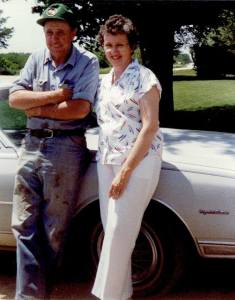
John and MarilynOutside, on the concrete below the bell tower, where John would preside over stories after church, I cried. At a time when everyone is certain someone else doesn’t understand their privilege, I fully understood mine: engaged in a calling, living in this setting, surrounded by the people John and Marilyn recognized for who they were: a blessing.
“Why do you suppose we tell stories?” I asked.

“Why do you think we do?”

“I think some tell stories to lose themselves in the cathartic, emotional abyss of a past they can’t escape from, some out of the anxiety that they or their story will be forgotten, and I suppose some try to escape personal experience altogether in order to tap into something larger about the human one.”

“Do you think its just a bunch of personal stories then?”

I suppose not.  A few are given the perspective that in the end it’s not a collection of little individual stories at all.  It’s one big one, which can repeat itself and often does, lest we try and find a way to nudge the needle. For me, John set his big shoulder against it and pushed.


The Clock is Ticking

Bill Stowe recently announced that the Des Moines Water Works will not appeal the dismissal of their lawsuit against drainage districts in three northwest Iowa counties.  This is big of Bill.  The courts clearly ruled he was doing what everyone thought he was doing:  suing the wrong people.  Plan B for Mr. Stowe will not include making the courts restate that fact.

In a meeting last week I happened to be sitting by a state official.  When the meeting was over, as he was gathering his things, I turned and spoke to him for the first time.

“What’s going on with Water Quality Funding?”

There are three nearly identical proposals sitting in Des Moines right now.  The first is the Governor’s budget proposal, the second is Senate File 482, and the third is House File 612.  They all create a dedicated source of water quality and conservation funding for the state’s Nutrient Reduction Strategy.

“That’s a good question.  Everyone thought something would get done, but we are getting late in the game now.  The clock is ticking.”

“Do you think the dismissal of the Des Moines Water Works Lawsuit took some of the impetus out of the equation for the legislators?”

“I don’t know.  What is interesting about the dismissal, however, was that there was no ruling on the Clean Water Act.  Everyone misses that.  That’s still out there.  The ruling was that the Des Moines Water Works was simply suing the wrong people.”

While an appeal won’t be Plan B for Mr. Stowe, it is difficult to believe he is not working on one.  Having visited the Statehouse lobbying for increased water quality funding with fellow farmers for several years and never once bumping into Mr. Stowe doing the same thing, it’s safe to assume that isn’t his Plan B either.  It’s a shame, a little additional help in the cause might come in handy right about now, but collaboration never will be Mr. Stowe’s hallmark.

Mr. Stowe has been tied into the idea that they only way forward is to regulate.  The state has entertained a proposal for sometime, that a collaborative, not regulatory, based approach known as the Iowa Nutrient Reduction Strategy has merit.  In this view they have been joined by other voices on the national scene, among them the US Secretary of Agriculture, and the Administrator of the Environmental Protection Agency.  Other states have begun to work on similar proposals.

The leadership Iowa has shown has been tremendous.  For it to be lasting, however, there is still one more step to go.  It’s the legislature’s turn now to step up to the plate and bring the proposal to fruition with a funding source.

The 1970’s regulatory approach, favored by Mr. Stowe, maintains one thought at its core:  “They (agriculture in this case) won’t significantly address the problem unless we force them to.”  Until significant funding is secured for the Strategy, Stowe is able to make that argument.  This year, with every wind in our favor and in spite of heavy lobbying from farmers across the state, funding still isn’t secured.

There are moments you look back on and realize the opportunity that was squandered.  Should the legislature chose to punt on this issue, this will be such an opportunity.  It is not unreasonable to say it might very well be the opportunity of a lifetime, one that stands to fundamentally change the way the public and agriculture interact on areas of mutual concern.  When Mr. Stowe comes back, and he will come back, the legislature’s inaction will have further bolstered his case and undermined the notion that there is a better way.

Life constantly presents us with better ways forward.  All that is needed is the courage to take them.  With the lawsuit dismissed, the stakes are as high as they have ever been, and the clock is ticking.

Chevron Deference

If you have followed the confirmation hearings of Supreme Court Nominee Neil Gorsuch, chances are you’ve heard the concept of Chevron Deference once or twice.  Over lunch today, I took the time to tune in for a brief while.  Of note to me was a comment Senator Amy Klobuchar, an attorney from Minnesota, made on Judge Gorsuch’s desire to overturn Chevron Deference, a legal concept established in the Supreme Court case of Chevron U.S.A., Inc. v. Natural Resources Defense Council, Inc. from 1984.

“This 33-year-old case guarantees that the most complex regulatory decisions are made by experts who are best equipped to handle them. Overturning Chevron would have titanic real-world implications, jeopardizing rules that protect public safety, requirements against lead‐based paint, and clean water protections for our Great Lakes.”

As I had mentioned in my previous blog post, part of my trip a month ago to D.C. actually educated me on the topic of Chevron Deference.  Senator Klobuchar’s comments sent me scrambling.  I thought I had learned wrong.  It turns out that I hadn’t.  Whatever your view of the confirmation of Gorsuch, you might be interested in knowing what Chevron Deference is really about.

What Chevron Deference states is that if you or I are caught in a lawsuit with any agency of the United States Government, and you or I and our experts have a reasonable interpretation of the law, and the agency and their employees have a reasonable interpretation of the law, the courts must side with the government agency.  It was a fine thing to have heard that Senator Klobuchar feels that the government employs “experts who are best equipped to handle” regulatory decisions, but I think most of us would have our doubts.  I know farmers for the last eight years that have had them, and I can bet on the environmental groups that will have them with the new EPA.

It has an ironic feel that liberal leaning legislators would mention the repeal of Chevron as a concern for Gorsuch, when a repeal of Chevron might actually be one of their better friends.  But then filibustering a nominee who would restore the court to its former balance and as a consequence invoke a Senate rule change that will clear the way for nominees much more from the fringe feels ironic as well.  Then again, I don’t suppose anyone has ever accused D.C. of being overly-farsighted.

I’m a poor guesser of the future, but I would guess that the fight to overturn Chevron Deference will someday have new, leftward-leaning allies.

The Lobbyists

The basement cafeteria of the Longworth House Office Building in Washington, D.C. is a bustling place to be.  Officials come and go, and their constituents do the same.  Tables are at a premium, lines are long, yet somehow everyone gets enough to go on with.  The most dedicated are able to carve out some little place for themselves, at least for a brief while, until someone else carves one of their own.  It’s a microcosm, I guess.

It was day three, and by now I was starting to get to know the group of Iowans I was in DC with.  All of us were involved in agriculture, and we had all come to give input on a particular segment of agricultural policy.  Some were making their third such trip.  Some, like me, were making our first.

Each segment was represented by a committee.  The committees had met on our first day.  I had spent my meeting trying to learn more.  I did.  I learned about Chevron and Auer deference in legal proceedings, the Endangered Species Act, air quality standards, and how it all impacted members of my committee who stretched from New Mexico to Montana and from Pennsylvania to Arizona.

Day two had been devoted to educational breakout sessions on various points of agricultural interest,  Day three, the day which had the delegation from Iowa entering the cafeteria, had us visiting our national legislators and their staff to speak about existing ag policy.

Here in the cafeteria one of our group was able to summit and place a flag on the only available table, a table for four.  There were 15 of us, but having a toe hold gave us a base to mount subsequent campaigns from.  My detachment raided a nearby table when it lost all of its occupants save one.

“Would it be all right if we joined you?” we asked the young woman.

“Absolutely,” she said.  So a farm couple, a veterinarian, a hog producer, and myself did.

“Do you work here, or are you in town for a visit?” I asked.

“Well I used to work here, but now I live in Colorado.  I’m here advocating for women’s healthcare on behalf of Planned Parenthood.  Where are you guys from?”

“Iowa.”

“What brings all of you here?”

“Farm policy.”

We went on continuing to share lunch together.  It was a fine thing.  Alongside Chevron and Auer deference and the rest, I now stored tidbits about living in Denver, working in D.C., and the answers she provided to the inquiries we made about Colorado’s marijuana laws.  If such a conversation can happen in DC, I suspect it can happen in other places.

At that table and in the subsequent visits with our Representatives and Senators, I frequently had time to reflect on the group I had stumbled into being a part of, and I began to realize my appreciation for them.  No one spoke about abstract, philosophical arguments on agricultural policy.  Instead they spoke about their real-life, real-time view of agriculture, revealing some of the things they were passionate about and a little of the hope we all have in being able to make a difference.

Those who didn’t have to catch a flight that night were finally able to gather for an informal dinner.  They spoke of their families back home.  By now we had learned something about each other’s sense of humor, and laughter was plentiful and came freely without costing anyone a dime.  Back at the hotel, headed to my room, I smiled the same way an eight year old boy would.

“It was a good day.”

“It was with good people.”

I don’t know what will come of all our discussions on free trade, the new Farm Bill, regulatory and tax reform, and renewable fuels.  I don’t know what impression of Iowa the Coloradoan had left lunch with.  What I do know is that occasionally we all get the opportunity to try to make a difference on the issues that mater to us.  Perhaps the way to make the biggest difference is in how we live our lives.  I’ve been fortunate in agriculture to continue to get to know those who live their lives in ways which make a difference to me.

Other People’s Children

Originally the school had a herd of 100 cows and 100 hogs to go with them.  The kids did the work, most of them were orphaned after a yellow fever epidemic.  That was what the place used to look like.

Today it boasts a herd of dwarf Nigerian goats.  Ten perhaps.  They milk them to make soap.  They sell the soap at farmer’s markets.  The garden was unkempt.

“If I have a kid that likes to draw, I tell them that’s okay.  You come out here and draw while we work.”  I bet they would draw it even better, if they had to do it, but even to make soap the school looked outside to source volunteers.

Where they were today was complicated.  Long ago they had to quit being self sufficient.  Government regulation forbid eating much of their own food.  Regulation also posed challenges with the school’s religious foundation.  By now the conversation had turned to a whole myriad of buzz words:  non-profit partners, socially-conscious, aesthetic value, increased awareness, pollinator seeds.

I make no claim I understand the complications they face.

In the background, through the nearby trees, I could catch a glimpse of the boys at the school playing ball.  They were dressed in the school’s olive t-shirts with khaki shorts, white and black, and still playing the way the boys that preceded had:  for keeps.  I suspect they used to farm that way too.

The kids still understood what it was about.  Even if farming had now become little more than a curiosity.  Even if the use of the term “farming” was questionable.

“We also have chickens here.  Our goal is that soon we will no longer have to source any chicken feed at all, generating it instead from our leftovers.  We are teaching them about the larger cycle, that nothing gets wasted, and that we shouldn’t consume needlessly.”

I suppose it’s a fine cycle.  Agriculture teaches us an even larger one, though.  To survive we have to find a way to make it work.  If we try hard enough, and the rain comes just right, sometimes we can make it just a little bit longer before that cycle gets the better of us.

Still, they were doing good for those boys.  Waiting in the hallway for the boy’s room just before we boarded the bus, the bell rang, classes began changing, and I was in the midst of them.  Today they are at-risk kids, encompassing anything from ADHD to having been kicked out of schools in the past.

Many knew more about trying to survive than most their age.  Many probably knew it better than me.  It was a shame their glimpse of agriculture didn’t give them a better chance to put those skills to use.  It would have made some of them fine farmers.

“House of Mercy” was the translation for the place.  I had it for the teachers.  For other people’s children, I had what the teacher’s had:  faith.  They had it in them from the beginning.  There was no sense in doing something different now.

Preaching to the Choir

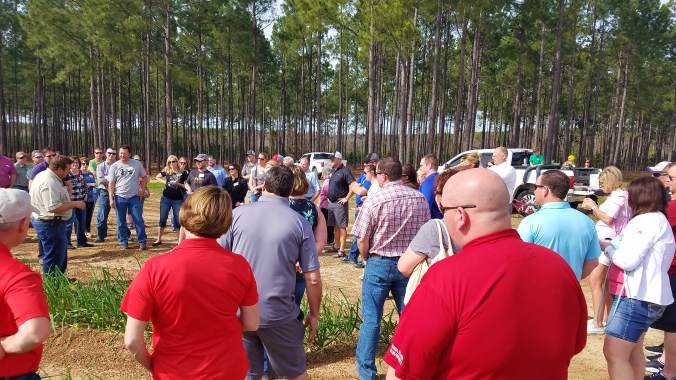
He had a friendly southern draw, conveying a sense of southern hospitality, while producing words in the quick paced way of a man that is busy.  Sunglasses dangled from his neck as he spoke after lunch in the little town of Lyon, Georgia.  While one hand held the podium in place, the other would work to make his point.  Visually he would have fit right in with the group of Iowa farmers listening, but we were listening because he was a Georgia one, growing among other things, the Vidalia Onions Toombs County was known for.  He was 38.

“Now who of y’all wants to ask the first question?”

“A lot of our crops in Iowa use biotechnology.  It’s something some express concerns about.  You guys have huge urban centers in Georgia.  How does agriculture interact with those consumers?”

“At least two of your all busses have visited Pittman’s right?  They’re the produce farm with the country store.  Any of you all know what Silver Queen Sweetcorn is?  Down here it’s the sweet corn all the supermarkets carry.  They have for years.  It’s all most people have ever known.

Folks will drive out to Pittman’s, who sell sweetcorn, and they’ll ask Mr. Pittman, ‘You, uh, you got any of that Silver Queen Sweetcorn?’

‘No, sir.  I sure don’t.’

‘Why, uh, why don’t you have any of that Silver Queen?’

And he’ll answer ’em, ‘Well y’all didn’t drive out here in no Model T Ford did ya?’

Up north you have BT Corn.  Down here we have BT Cotton.  You have it for your friend, Mr. Corn Borer.  We have it for ours, Mr. Boll Weevil.  In 1996 I could have used 14 different pesticides to keep him at bay.  I don’t have to use any today.  I know which one I prefer.

Some consumers are using bad information.  That’s on them.  Sometimes we aren’t doing a good putting information out there.  That’s on us.  We’ve never had to do it before.  It’s important to understand how to do it without driving wedges.”

As a spokesman for agriculture, he was bona fide, in every sense of the word.

20170220_144208

Visiting the farm after lunch.

After lunch, our bus came to a stop in 20 acres of Vidalia Onions.  There we met the rest of his family, in the back of a pickup, serving up boiled peanuts to their third bus load of guests.  Their two sons, 7 and 3, danged their feet over the side of the box and took it all in.

“I’m sure you’ve noticed in your other stops how pebbly our soil is.  When my grandfather was looking for land, he’d look at them stones.  What he wanted to see is what y’all are seeing here today, good red rock.  If he saw quartz, then that land was of no value to him.  It is red rock that takes in the heat from the sun, keeps our ground warm even in the winter time, and allows us to do what we are doing here.  By April these onions will be harvested, and peanuts will be growing in their place.”

20170220_150204

Taking it in

Two Georgia boys were getting their own chance to soak it up, in order to keep it going.  Meanwhile their father preached to the choir; looking, I suppose, for a few more preachers.  We need ’em.


The Fuzzy Math for Conservation

A recent Des Moines Register article made a passing note on Linn County’s purchase of 500 acres for 7.2 million dollars.  A Linn County supervisor seems to be quoted as calling the purchase an investment in “conservation.”  Conservation is a broad term.  It could mean a lot of things.  The trouble is the article continues with a direct quote from the supervisor on what the purchase is meant to stem.  “They {residents} go to lakes and find them covered in algae.”

Most of the time numbers are numbers.  Sometimes they get personal.

As a commissioner on the Madison County Soil and Water Conservation Board, we oversee state cost-share funds for conservation on the county’s 359,680 acres.  These are the funds local farmers and landowners will match to establish waterways, build terraces, and construct ponds.  This year the amount of state cost-share we will be in charge of spending will be somewhere around $110,000.  The Linn County purchase could fund our county cost-share for 65 years.

In fact the Linn County purchase comes is very close to funding the 7.5 million dollar state budget for cost-share programs in 2016.  In the state’s case, the Iowa Department of Agriculture and Land Stewardship notes that Iowa farmers matched it with 8.7 million, giving a total investment of 16.2 million.

I serve as a trustee of the local Badger Creek Watershed.  The County Soil and Water Conservation District is in charge of maintenance and improvement of numerous structures and investments previously made in the watershed’s 33,581 acres.  Our annual budget to do so is $84,942.  The Linn County purchase would fund that budget for 85 years.

It is a shame the Register article makes only a passing note of the Linn County purchase.  The real story, the one most uncomfortable to read, is that some might think spending 7.2 million for 500 acres is a feasible way to measurably improve water quality across the state.  It might be laughable, if it weren’t so sad.

Just two days ago I was the Iowa Statehouse to visit with my legislators about Iowa Farm Bureau’s number one legislative priority:  finding a larger, dedicated source for soil and water conservation funding.  This is the funding that will increase in value by being matched by the state’s residents.  I think this is the funding that will continue making measurable progress in soil and water conservation as we adapt to the challenges of today and look ahead to tomorrow.  I’m sure the 7.2 million Linn County spent will make a fine park.

Swiss Coffee

The lights were dim in the Des Moines coffee house, mostly coming from strings of lights that would bow intermittently from the ceiling above.  On the far wall, above each table that sat against the big windows that kept the patrons from the street, stooped a solitary light for those beneath to share.

With me there sat a man with clear blue eyes and the face of a priest.

“I drink coffee now,” he said with his graying hair curling up against the bowed down edge of his ears.  “At one time I used to come to a place like this to smoke.  Then those damn Democrats over there took it away from me,” nodding over to the group of college students, huddled around a large table, some sporting t-shirts that gave an idea of their politics.

“Could have been worse, I guess,” he continued.  “A hundred years ago the group behind you would have took away my cocktails.”  I didn’t have to look for the bible study group.  I had already seen them.

“I’ve never been here before.”

“It is quite the place.  Very different people at different tables, all in the same room.  How one hasn’t protested the other’s existence, I don’t know.  I have been coming here for years.  I’ve seen no fights.”

“Perhaps the coffee is Swiss.”

Unamused, he continued.  “Do you know why I think people read what I write?” he asked, leveling his glare at me and exhaling like a man who still smoked.  “I write about being lonely.  Being lonely has no party.  It relates to everybody.

It makes them equally uncomfortable.  I have no idea if I write well or not, but I do take comfort that no book of mine makes someone feel better about themselves or worse about someone else.  Sometimes I wonder why anyone reads them.”

“There’s a truth to it, isn’t there?”

“Do you think people like that?” he laughed.

“I don’t know.  Perhaps a lot of us just respect it, especially when it’s delivered softly.”

“Respect.  Ha.  Some here would talk to you about personal responsibility, some about privilege.  Both represent the idea that someone else didn’t suffer enough.

You write.  You must look at people.  Have you ever seen someone that hasn’t suffered?”

“I’ve seen some that work like hell to avoid it.”

“Where does that get them?”

“More suffering.”

“Ha.  We sit in one big room together.  We drink our coffee together.  And we suffer together, whether we are at different tables or not.”

“Sounds a little depressing.”

“No.  What’s depressing is how we waste it and let it push us further apart.  I always find it hopeful coming here.”

“What do you do with it?”

“Me?  Well I write.  Occasionally, though, I shrug personal responsibility and in my privilege sneak an occasional cigarette.  But a coffee…sometimes a coffee will do.

What about you?”

O Ye of Little Faith

20170207_072521

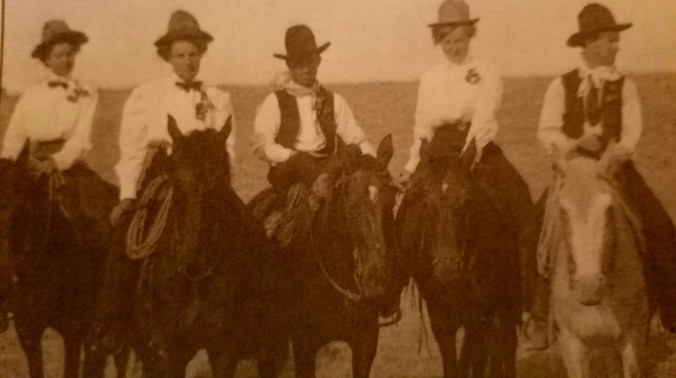
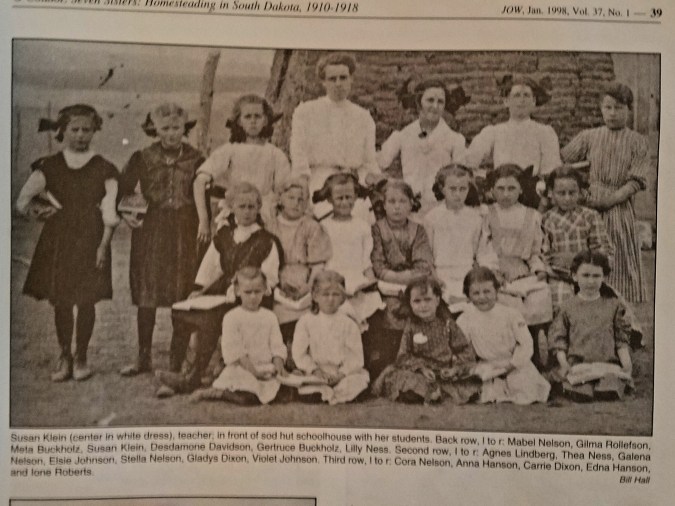
In 1918, Susan Klein Funk was 31 years old.  In her last few years she had acquired a husband, a 3 year old daughter (Margret, my grandmother), a 1 year old, and a newborn.  In the few years which preceeded that, she had proved up her own claim for 160 acres of land she had homesteaded.  There she’d built her own cabin, shot her own game, roped and branded cattle with her sisters, and found time to teach school.

Her last days in 1918 found her with apendicitis.  The nearest hospital also housed wounded veterans of the First World War.  They carried the Spanish Influenza.  There was no cure.  Susan was exposed, and in that hospital she died.

By her side was her sister, Mary.  She had been for some time.

20170207_072012

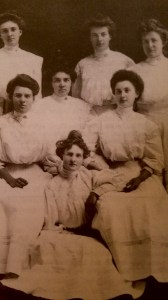
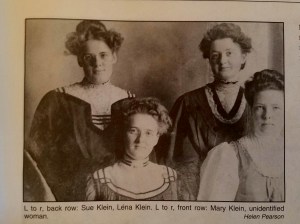
There were seven Klein sisters in Waverly, South Dakota.  Several were seamstresses.  They had all grown up on the farm.  Three were married.  The reminaing four, Magdalena (Lena), Susan (Sue), Victoria (Tory), and Mary, ranging in age from 22 to 27, were considered past their marriageable prime.

The federal government was opening up new territory in the western part of the state.  Anyone over the age of 21 was welcomed to stake a claim.  In 1909 the four struck out on their own.

They each selected a 160 acre tract not far from the emerging town of Faith.  Over the summer and fall of 1910, each built a sod house on the corners at the adjoining tracts central point.  Within 15 feet they’d find water.  It was considerably more to find wood.  They could still find “buffalo chips,” however.

The Klein girls (as they were called) relished the big waves in the new territory.  They had their work.  They had a countryside full of eligible men.  They had dances and excitement in the new town of Faith.  In 1911 they took a one month trip to the Blackhills and the Badlands.  Susan kept a diary of their time.  Her brief entries came to an end with one final line:  Sure saw some country and had a fine time.  End.20170207_072709

The oldest of the four, Mary, was the ring leader.  On her shoulders would forever lie her own mother’s blame for the taking of four of her daughters, and I suppose one’s death.  Fiercely independent, she’d fight for the right to work off her poll tax in order to vote.  She’d be the last to marry.  At 92, she’d be the last to die.

She was stubborn enough to disregard the good consuel of the day and fearlessly care for my great grandmorther in the hospital.  Most wouldn’t be.  After Susan’s death, her coffin was brought home, but fear over infecting her family would keep it out of the house.  Instead it was briefly laid open on the front porch for her children to say goodbye.  At least one of her sisters wished to do so as well.  She loaded up her family and ventured as far as the farm drive before turning around, unable to run the risk.

55 years later, Susan’s husband, Francis, would make his way back to Faith to rejoin her.  Out of respect, I suppose, for that Klein stubborness.  Or perhaps for a journey that began in Faith.

We should live the life we are called to live.  Some will stay in spite of the waves.  Some will come around.  Some will be attracted to it.  The rest is not our business.

20170207_072102

From l to r:  Lena, Sue, Roy Hall (Lena’s Future Husband), Tory, and an unidentifed man.

All photos from Journal of the West.  Vol. 37, No. 1.  January 1998.


You and Me and the CRP

You won’t have to go to far in your day to run into the polarized political debate that is currently raging in our country.  Many voices compete to be heard, and while shouting is not without merit in acheiving that, it is often at the expense of a much more substantive debate we need to have.  One federal program that might illustrate that while minimizing emotional fallout is the Conservation Reserve Program or CRP.

The program came to prominence under the 1985 Farm Bill, though it had existed three decaes prior.  It targeted highly erodible land, placing it under vegetative cover for a period of 10 to 15 years and removing it from production.  These acres were essentially rented to the federal government.

There had long been a conservation push to expand the program, but the push was coupled with the collapase of the farm economy during the Farm Crisis of the 1980’s.  A farm family could now enroll their acres for a guaranteed yearly income and for a guarenteed length of time.  This contract gave families something firm to restructre their debt and removed acres from production that might boost sagging markets, saving farms and saving soil.  5 million acres were under contract in 1986.  40 million would be enrolled by 1990.

The program began with great intentions on all fronts.  As time has went on, however, concerns have arisen.  One can see many of them by simply travling down Highway 34 or Highway 2 in Southern Iowa.

Southern Iowa was hardest hit by the Farm Crisis.  Its rolling hills were also prime targets for the erodible acres sought by CRP.  Some of those acres can be seen today, unfarmed and ungrazed.  You can also see the impact it has had on local communities.

No seed, fertilizer, or equipment is needed on those acres.  No hardware store, or repair shop, or gas station sells anything of note to service them.   No steward is needed.

Many wonder if this is what conservation needs to look like.

The CRP rate can create competition in rental rates for other cropland.  In some cases it can set a floor that raises the barrier for entry for young farm families.  In some it simply offers a higher rate of return, attracting acres not for their conservation merit, but simply for the return that might not ever reside in the local community.

The rental rates can also prohibit cow/calf producers from competing for those same acres, who would leave them in grass, but generate prodcution from them.  Attempts have been made to change this, but to date each attempt runs into some dedicated to the idea that conservation needs to look presettlement.  The farmer, last in line, is often left without something practical.

It isn’t hard to envision an attempt to change the program being shouted down as an attack on the environment.  Shouts won’t extinguish embers that still smolder in rural communities from the meltdown in the farm economy.  Being faithful to both is how the program took root in the first place.