Papa Papa:  Thoughts On Grief

When Cohen was a couple weeks from being two, a young boy with light-blonde hair and sky-blue eyes, my father died.  A couple of months had passed since then.   It was getting late and well past Cohen’s bedtime, yet he refused to acknowledge it was time to go. His father had reminded him, to whom he angrily replied, “No.” His eyelids were getting heavy, and he slumbered towards me, still fighting the acceptance that would eventually come.

Cohen was the closest thing I had to a grandson, and towards me he threw up both arms and pleaded his favorite word, “Cows,” bargaining with an unrelenting world.  Fortunately for him, grandparents and pseudo-grandparents are more forgiving.  I hoisted him into my lap and opened the gallery of my phone.

He called his grandmother, “Mimi,” which was much to her pleasure.   His word for me was simply “Papa,” and I liked it a great deal.

He had met my mother and father on a couple of occasions, and so I used the terms he was familiar with to explain who they were to him. My mother was Mimi Mimi, and my father, Papa Papa. From somewhere, out of his abundance of bashfulness, he had repeated their names back8 to them softly. Each “mimi” was elongated as though an invitation, and each “papa” delivered in an urgent staccato.

He was a beautiful little boy.

“Papa, Cows,” reminded the boy in my lap.

The pictures were ones he’d seen before, going through them like a bedtime story with its corners worn.  There were pictures of young calves and old cows.  There were videos of bulls getting turned out into pastures and moving pairs onto new grass.  I had originally taken them for this little boy, and a boy that had grown too old to get out and see them.

The last of them was a very short video of my father the last time he would see the cows.  We had recieved permission to take him from the rehabilitation facility to a dentist appointment.  My sister and her husband took him on a detour going back.

My frame caught the back of his head, nestled low down in a car seat. He spoke softly, sometimes beyond the limits of volume and memory, and sometimes just loud enough that you could catch his pleasure of getting into June with calves without pinkeye.

As we watched, Cohen’s small hands tried to grab the flesh of my forearms, pinching the hairs. “Papa Papa,” he said, and looked up at me with those deep blue eyes, damp with tiredness and heavy with sleep. “Papa Papa,” I said in return.

I couldn’t believe he remembered my Dad here in a world I, too, found unrelenting. My chest swelled. I cracked a smile. “Papa Papa,” I said again.  I kissed him on the forehead, as he agreed to go to sleep.

II

“There were so many conversations only Dad and I could have.  Some were the only ones on that particular topic; some were the only in that particular way.  My family, the farm, the cows, what was going on in town, or around here. Sometimes I think about not having anyone to talk about those things like that again.”

“What do you think you’ll do about that?”

“I suppose I’ll learn to be someone else.

Maybe I feel like it hasn’t hit me. I haven’t broken down weeping. Work continues to get done. If anything, I suppose I feel a heightened sense of responsibility to see that it does.

I talk a little about it to the people I know.  Some I know well, some more casually. Probably more so the folks I know ask.   I almost feel like I have canned answers, methodically going through things matter of factly.  As I do, their eyes get damp, as I talk about how lucky we were with time, and how he met death on his terms, surrounded by his family, and how we all stuck it out over the roller coaster of those last two months, and how much we witnessed Dad grow, and how much I know not everyone gets that.

And in the back of your mind you wonder, ‘What the hell is wrong with me?'”

She laughed, “By all accounts, he lived a remarkable life. In a way, maybe you’re happy for him.”

“Goddamn, right I am,” I said, a stray tear marking my cheek.

“Well I talk to people a lot about grief, and I’d like to tell you for most it’s about struggling with the loss of someone they care about, and it certainly is, but frequently what I also hear about are people feeling like they should feel something different. Like there’s some manual we should all be going by.  And that just isn’t how it works.”

“I had seen some PBS documentary about home burials once. The gist was that funeral homes interrupted how families had historically grieved, depriving them of time spent with the deceased. I didn’t want to do that. I helped the hospice nurse get him ready.

Anyway, after all of that, I bet I went around for a couple weeks wondering how the fuck I was supposed to be in denial.”

“I assume you’re talking about The Stages of Grief.  They were really developed by studying folks more in your Dad’s situation than your own. I think the current consensus is there’s some good stuff there, but it isn’t gospel. If people find it helps them, that’s great, but I’m not going to tell you to read up on it.

Conditions are so varied, and the experience is so personal.  For someone that had been in a lot of pain, for instance, relief is commonly felt by family members, and then they just beat themselves up over it.  I just want to tell them, ‘Of course you feel that way. It’s all right. How you feel is all right.’ People are so hard on themselves.  Why they feel the way they do, how long they should feel it, why other people feel differently.”

“The world just keeps right on going.  Sometimes you want to scream that you just lost someone your cared about at the top of your fucking lungs.  Then there’s this other side, a side that suggests there are better ways to pay tribute in living your own life than going through it standing still like a silent martyr.”

“I think that’s a conflict everyone wrestles with.”

“There’s this guy that wrote an entire album about the loss of his father, Stephen Wilson Jr.  Great song after great song.  He’s got this one, though, ‘Grief is Only Love.’  The chorus says that grief is only love that’s got no place to go.  I kind of liked the song before Dad died, but I’m not so much of a fan of it now.”

“What is that?”

“I know exactly where that love is to go: back into my family, and the damn cows, and the farm. That’s where it goes. It’s that heightened sense of responsibility I was talking about.

I’ll tell you one thing, for his last two months I feel like I was the son I always wanted to be. I don’t know how that happened.”

“You’ve been talking and preparing for this almost since we first met.”

“Well that’s a helluva thing to say.”

“Why?”

“Shit, all this time, I thought I was just worrying.”

I suppose that’s what grief is like.

III

The cook at my father’s rehabilitation center was an immigrant.  Her English was a little broken, but she delivered it with a bit of an English accent to make up for it.  Joy seemed to be her base emotion, and her skin glowed as if it radiated.

Somehow, she quickly established a habit of stopping by my father’s room, wishing him a good morning, as if she simply couldn’t wait for breakfast.  Her name was, Helen, and my father enjoyed her.

My sister told me that on the day they brought him home to hospice care, Helen sat on my father’s bed and cried.  My father comforted her.

“Don’t worry, Helen,” he told her.  It will all be all right.”
A Eulogy for My Father

At my father’s funeral, I wanted to give a eulogy.  I told those in attendance that I had prepared a more traditional biography, but felt a more fitting tribute was a story.  One that started out, meandered around a bit, made everyone wonder where it was going, that brought it all together in the end.

Along the way, I hope it conveyed a few important things about my Dad, and left folks with a couple ways to remember him in their own lives and with their own loved ones.

I had been asked a few days prior, what my father had taught me about faith.  I suppose the following was my response

In 2013, shortly after his diagnosis, my father and I set out to see the gulf coast.  We would come up a little bit short, and Mom and him would visit it later.

We were in Vicksburg, Mississippi. It was a Sunday, and Dad and I wanted to go to mass.  We found a Catholic Church called St. Marys.  It was brick but sort of reminded you of the old St. Johns in Cumming both in the size of the structure and the size of the congregation.

The gospel that day was from John, and it was about the apostle Andrew, who was a follower of John the Baptist and the first to recognize Jesus as the Messiah.  He runs off to get his brother, Simon Peter.

The priest was a black man, who, according to his obituary, would have been around 82 years old.  He walked the aisle with a decided limp.  His name was Fr. Malcom O’Leary.

His homily was that although Andrew was the first to recognize Jesus, it’s the apostles that come after him that get to witness many of the important times in Christ’s life.  In fact Andrew, he said, only gets mentioned a dozen or so times in the New Testament, and half those times, after telling us his name, they immediately mention he is Simon Peter’s Brother, as if his own name doesn’t carry enough weight.

“Andrew,” Fr. O’Leary said, “doesn’t get a great speech, nor some great deed, but he is never bitter or small.  He just shows up every day and goes to work.

Andrew is like you and me.  He’s an ordinary man, and that’s no easy thing.  But Christ knows how difficult it is to be ordinary, and he loved Andrew for it.”

Driving away, I thought of a religion class in college.  The professor was spoke about the disciple Jesus loved, repeatedly mentioned in the Gospel.  Everyone says that disciple was John. But the professor was a little more hesitant about that.

I do not want to rewrite our theology, but there was something about how that professor mentioned this mysterious disciple is so often in the company of Simon Peter, and there was something about the sincerity the Fr. O’Leary had when he spoke about Christ’s love of Andrew.

Why is it that it is so much easier for us to believe Christ would love a great talker or mover and shaker more than an apostle most like you and I?  Think about the transformative power of kind of love could have.

My father would have described himself as an ordinary man.  That might be.  But for a lot of us he reminded us of the extraordinary things ordinary people are capable of.

He loved god.  He loved the family he was born into, he loved the family he started, his wife, his kids, his grandkids, and he loved it here with all of you.  He believed he was born in one of the best spots on earth.  He believed you all made it that way.

What are you and I to believe?  Did he believe this was a special place because extraordinary people just keep springing up generation after generation?  Or is it a special place because ordinary people make an extraordinary commitment to each other in celebrating our strengths and going easy on our weaknesses?

My father would tell you a weakness of his was he tended to worry about the people and the things he loved.  We are in a time where some believe faith is some antidote to worry or anxiety.  We are in a time that wants to place such a premium on certainty.

My father looked out his window and could see the world didn’t look the way God wants it to.  He knew we didn’t always do what He wants us to do.  He knew that God’s feet are our feet and that God’s hands are our hands.

He knew if we want to move in the direction God wants us to go, we need to exercise great discernment in not mistaking what God wants for what we want.

Maybe sometimes those that worry but become engaged anyway, exercise a faith much larger than we give them credit for.

In mid-April, my father was on the 6th floor of Mercy, and he was quite ill.  It seemed unlikely he’d get out of it. One night, in a weak voice, he told the nurse a story.  One he said his father told.

I was going through all the ones I thought it might be when he trotted out a story I had never heard before.

“My father told a story about two friends,” he began, “who died just a few minutes apart.  In fact, they were so close together in time, there were only a few people separating them when they got to the pearly gates.  When the first friend got up to St Peter, there arose such a commotion that the second came up to see what was going on.

‘Did you know they charge a dollar to get in here?’ said the first.

‘What’s the problem?’ asked the second.

‘The problem is that I only want to pay $.50,’ replied the first.

‘My God,’ replied the second.  ‘Inside those gates there’s a spread like you’ve never seen before, and it has no end.  What the hell is $.50?’

Throughout the last few weeks, we’ve witnessed our father taking the hurdles and the obstacles in his way and using them to grow into the person God called him to be, paying his fifty cents again and again, and inviting us to do the same.

To love and double down on those around you, to worry about the happenings outside your window, to have the faith to become engaged, to grow as God desires, and to pay the small fee that brings eternal life.

My family thanks each of you for your support, and we thank God for Dad and the generous gift of time.

2025 Bull Sale

While we encourage you to see the 2025 Sale Bulls, you may also opt, as Cohen did, to see the 2025 calf crop.

March 22nd, 2025 at 11:00 am at the farm will once again be the opening day for our annual bull sale.  It’s something that’s largely been built on words of mouth and the continued support of neighbors.  That’s something I greatly appreciate.

We will be offering 14 bulls again this year.  They are pre-priced at $4000, $4750, and $5500.  On opening day, should more than one person be interested in a bull, we will settle it in $100 increments.  It’s pretty low-stress and low-key.

The bulls are available to be viewed any time, and even if you’re not in the market, feel free to stop in and see what’s available.  The bulls have been feed-efficiency tested at Werner’s in Diagonal, Iowa, and just returned to the farm last Saturday. They were clipped while there and semen tested, though a couple will be rechecked the day before the sale.

We try not to get pigeon-holed in any particular trait.  We try to keep in mind adequate good performance, carcass merit, and efficiency, but what we would really like are for them to come from a herd of cows that stick around.  To date they have.

The vast majority of the cows we began with were older cows, having proven their ability to raise good calves and breed back, without issues on udders or feet.  We’ve turned in whole herd reporting data with the American Angus Association since they set out to develop a functionality longevity EPD.  The initial reports place the average of our females above breed average.  Exciting for me are the number of young, registered females we’ve kept back to breed just over the last couple years.

It’s been a somewhat slow and methodical process, but one that’s steadily lead to more successful AI breedings, more bull candidates, and more heifers in the replacement pen.

We breed those heifers in a short forty-day window, at the same time as the mature purebred cows.  To stay in the hunt, they need to continue to breed up front, and we use that pressure to sort.  We try to run them in a commonsense matter.

We’ve grabbed onto tracking hair shedding ability, foot score, docility, and using genomics to get a better understanding of each animal.

In closing I’d just thank my family, our neighbors, and everyone that has expressed interest over the years.  Call with any questions.

You can download pedigrees, prices, and basic epds at the link below.

Dan

515 681 4619

Songs You Should Know:  The Work of John Moreland

When I first saw John Moreland’s clip from the Late Show, my mind first went to what the audience must have thought.  Perhaps some had come because he was performing, maybe a few others looked him up the morning of, but likely most were just happy to be there and along for the ride.  The ride that night brought them a big man who sings big songs.

There, in the partial darkness before he began, how did they think it was going to go?

On the flip side, I wondered what John Moreland must have thought.  If not that night, then the night he first began.  Most of us can hardly tell our closest friends about our most intimate experiences.   John adds music to them and sings it to a new group of strangers each night.

Imagine the guts it takes, presenting yourself and your greatest longings, worst failures, and deepest dreams, wondering how you’d be received.

In our own lives, we often let others keep us from far less.

Perhaps it wasn’t hard for him at all.  Maybe he just sits there and bleeds.  In this case, the crowd will erupt, but the real vindication came when he sat down to sing.

In nearly every Moreland song is at least one well-crafted line you wish you’d written because it is something you’ve experienced but hadn’t figured out how to say.   Mixed with the envy is gratitude that someone could say it at all.   A line that offers a real perspective on a real thing.

It isn’t as easy as it sounds.  We’ve stretched a canvas in front of what’s really real.  On it, we’ve created the reality we all agree to, on how we think things ought to be, or how we wished they were.  Things, others, and ourselves.

On the canvas, people are strong in all the ways we want them to be strong.  Behind it, folks are strength is found in the weak places.  On the canvas, the more you say, the more you know and the more significant.  Behind it, the more you say, the less it means.

Every now and then, folks break through:  Heros, anti-heros, the gal beind the counter, or singer-songwriters.  John Moreland did it in front of a crowd at the Late Show and on every album he’s put out.

Moreland will be in Iowa City on September 25th.

A Shot in the Ass or the Ballad of $53.13

I’m allergic to poison ivy.  As far as I know, it’s my only allergy, and it visits me every summer and every fall, especially in my work.

I typically do little in terms of treatment.  A few years ago, I outdid myself. I was trying to get some tile lines installed ahead of a rain.  I kept limping a long, thinking I had seen the worst of it, and each day served as a reminder that I hadn’t.

I finally went in, after I got the job done, and found relief in a bottle of steroids and a shot.

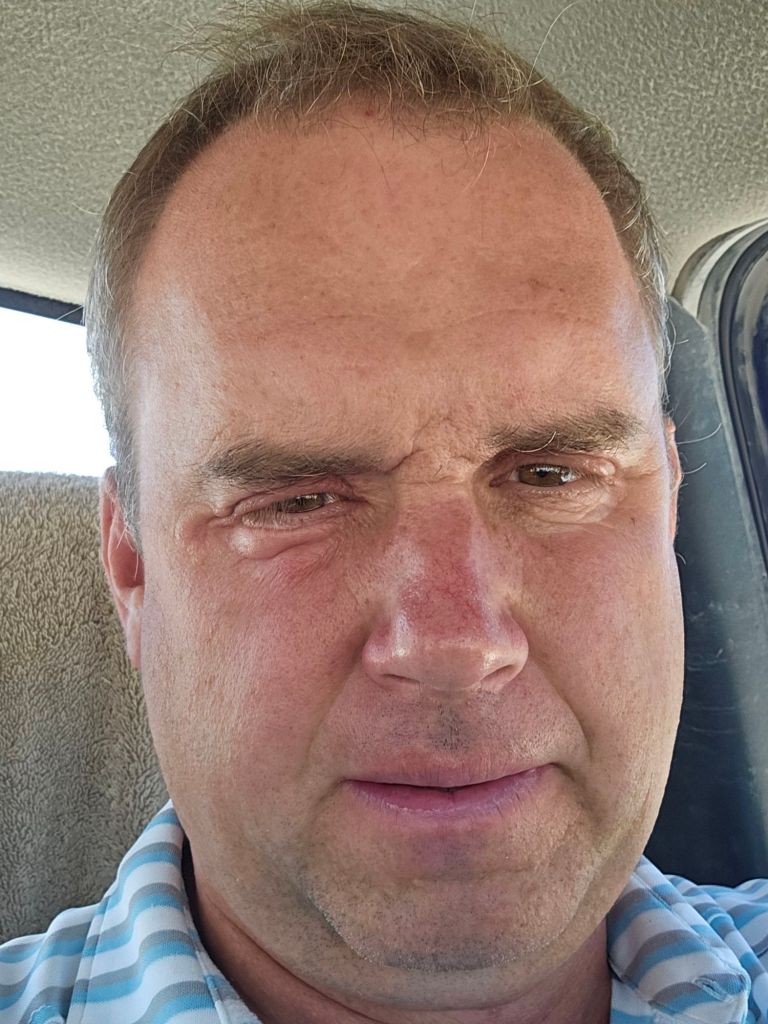
A week ago, working on another summer project, I woke up with my eye half shut and a few welts on my ankle, wrist, and forearm.  The eye was my right eye, and I can’t close it without closing my left.

Folks are blessed to be able to do all kinds of things blind. Installing drainage tile isn’t one of them.

So I went to a clinic.  The doctor recommended a shot.  Bourbonm? I asked.  She said she had something stronger.

A few minutes later, the male nurse that had ushered me back to the exam room to begin with, reappeared.  He had latex gloves, a syringe and bottle, and a female nurse in tow.

I’ll admit, I wondered what she was doing there.

“Okay,” he said, “this shot will need to go into your gluteus maximus.”

“Your butt,” the female nurse replied.  Perfect, I thought.  A translator.

“I’m going to need you to drop your pants and hike your shirt up so I can get to the top of that muscle,” he continued unfazed.

The female nurse, Johnny-errr-Jenny on the spot, recommended I bend over the exam table and grasp it with one hand.  Placing my hand as instructed, I tried to maintain some level of decency with the other, keeping my shirt hoisted without letting all modesty fall down around my ankles.

At that exact moment, there was a knock on the exam room door.  At first, I was too busy to worry about it, but that quickly changed when I heard the male nurse confidently say, “Come on in.”

I stood and turned with my pants undone, and a look of ‘are we serious here, Clark?’

“So I just wanted you to know that I tried to check him out,” nodding to the patient with the unbuckled belt and open fly, “but I couldn’t get it to print, so you guys will have to print his checkout papers when you are done,” the second female in the room said.

“Can do,” said the chipper game show host of Who’s Ass is this Anyway?  “Sorry about that,” he turned to me and offered.

“No problem,” I inexplicably said in return.  “Is there anyone else that would like to come in?  If they’d like, I could jiggle it for a dollar.”

$53.13 later, after my copay, a couple senior discounts, and a severe leg cramp, I left on the road to better health.

Sowing Wheat

Reading his obituary, I had forgotten that Don Cain had a thirty year career with Principal Financial.  To me, Don was every bit a farmer.  He was also a neighbor.

I can’t claim I knew him well.  I did know that when we visited, he wore his concern for others on his sleeve. Because of this, I viewed him as a kind man.

I remember working for Don the evening after his daughter’s funeral.  He had come to check on my progress.  I expressed to Don my condolences.

“I’m sorry.  I can’t talk about it,” Don responded softly.  “I won’t be able to keep it together, but I do want you to know I appreciate your saying something.”  Even in the loneliness of his grief, Don’s thoughts turned to me.

Don had battled cancer.  He had fought it a long time.  That fight had come to an end.

The morning of Don’s funeral, I was hurriedly checking cows, thinking about all that needed to be done on the farm as well as the commitments I had made away from it.  Most farm families, hell most families, know what I am talking about.  The daily need to pay bills runs headlong into the need to live a life of meaning filled with the things money can’t buy.

The homily that day was given by the parish priest at St Patrick’s Irish Settlement, Fr. Thomas Dooley.  It was a simple homily, reflective of the man whose life it celebrated.  It felt like it was for everyone, and at the same time, it felt like it was just for you.

“One of the last times I visited with Don,” Fr. Dooley began, “I found him to be, shall we say, perturbed.  People were stopping by his house, asking what it was they could do for him.  Don didn’t know how to handle that.

‘It’s me, Father, who should be doing something for them,’ he told me.

No, Don, I said, you’ve done enough.  It’s time to let others be Christ to you.

We, like wheat, live, die, and are planted in the ground.  So was Christ.  On the third day, He rose again.

In the Gospel today from John, we hear Christ tell us that he who loves his life will lose it, and He talks to us about wheat.  It’s a crop Christ often uses to remind us about the real purpose of life.  We are to bear fruit.

Don is now with Christ.  This gives us comfort. Yet, we are also reminded of the seeds he sowed here for his family and our community.  So I ask you this morning, what are you sowing?

When Don came up to receive Holy Communion, there were often tears in his eyes.  Tears of joy in receiving the Eucharist and tears that stemmed from whether or not he was worthy to.”

Looking at his casket, Father conuded, “Yes, Don.  You are worthy.”

I’ll listen to an agricultural podcast.  Frequently, it mentions farming is a business, not a lifestyle.  I both get what they mean and get upset by it at the same time.  If I know somebody who views farming as a lifestyle, I can’t think of them now.

I do know those whose sharp pencil is admirable when it comes to raising a crop of grain or livestock.  I’ve been further blessed, however, to grow up and live in a place where the business of farming is understood more than just in profit or loss.  It’s the business of faith, family, and community.

Since the Irish Settlement was founded, a lot of those original families no longer farm.  They aren’t the less because of that.  Instead, the rest of us are the greater, for they sowed a crop that still bears fruit today.

Today, we stand with those who sow still, in joy, through doubt, in trying to make ends meet and in trying to live a life of meaning. It bring us joy and may we prove our own selves worthy.

Are We Making Progress?

Yesterday, the Des Moines Register asked this question when it comes to water quality in the state. I understand why they are asking. Folks wonder about the impact they are having on the environment around them. It’s a question I ask myself here on our Madison County Farm.

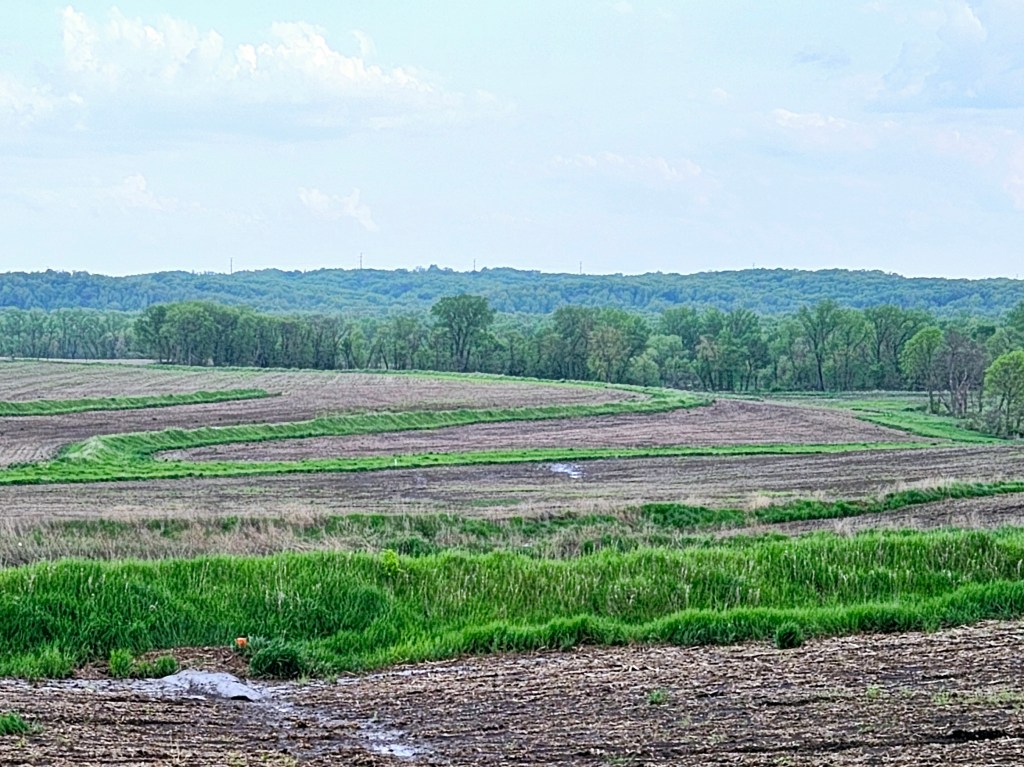
I can look out my window right now and see two sets of terraces leading down to an acre farm pond, none of which was present 10 years ago. What was in their place was a troublesome grass waterway in a crop field and an active cutting ditch in a pasture.

The waterway was troublesome, not because it was present, but because it wasn’t doing its job as well as we wanted. Not only have we limited the erosion, we have kept the silt from moving downstream, and we’ve greatly reduced the volume and velocity of the water as it leaves our property and continues down the watershed.

Right now, I’m thinking of the coming decades of service those structures will continue to provide. I know in the coming decades that work is going to be added to and built upon. Hopefully, for a couple of those decades, I’ll be able to continue to play a role.

Are we making progress? I don’t know how the answer to that is no. That doesn’t minimize the work left to do, but it is an accurate reflection on where we have come from.

I recently heard a voice on water quality issues in Iowa pronounce that those terraces aren’t doing any good. That’s baffling to me as a farmer. I see the good they are doing every time we get a significant rain, and every spring there isn’t erosion to mend.

Below is a picture from an intense downpour a few weeks ago. Can you imagine what would have happened without the terraces pictured? Right there, in the bottom of the photograph, you can see the work they do.

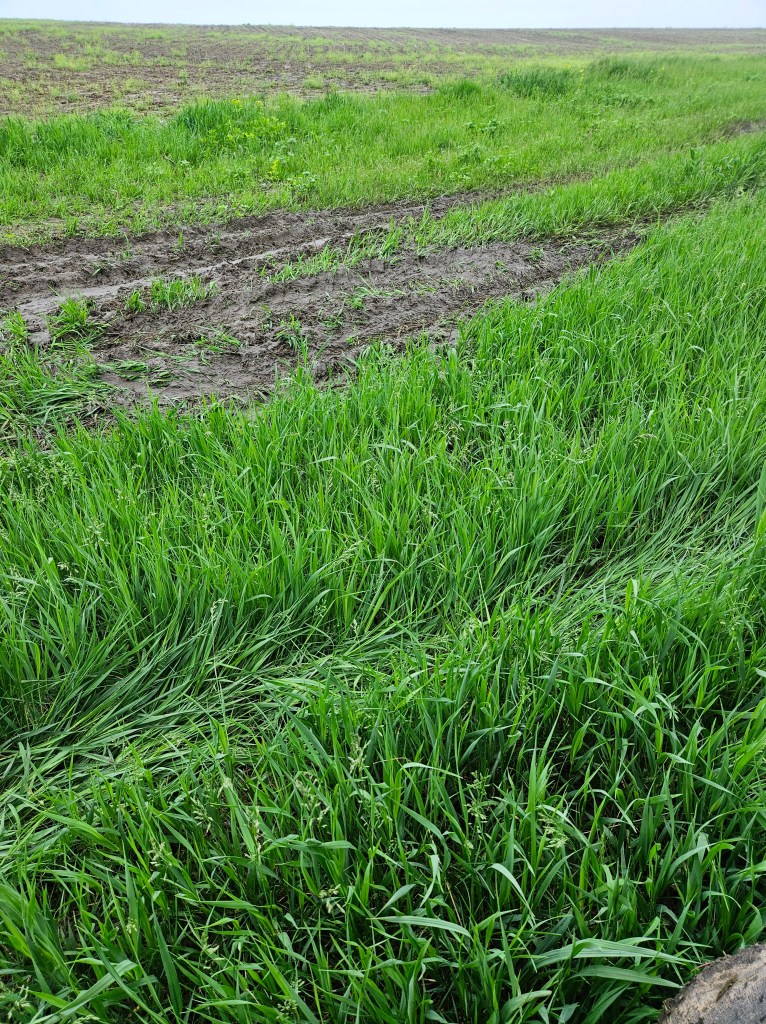
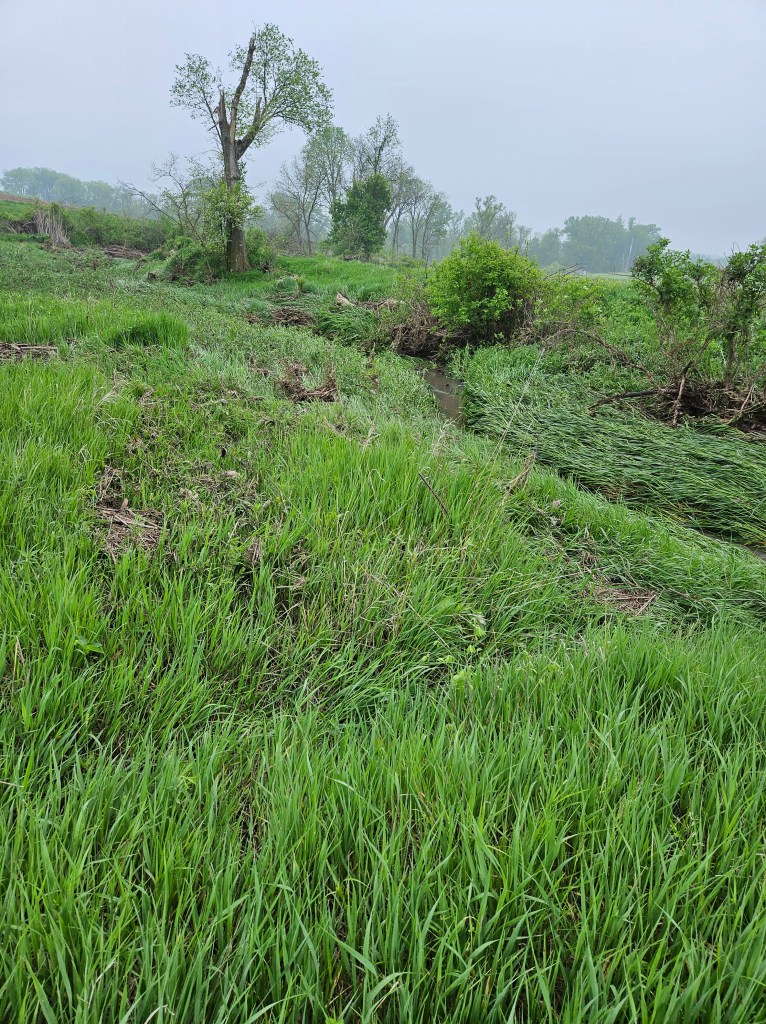
On the right side of the photo, you’ll see a strip of grass along the little creek. It functions to filter out any sediment from the field to its bank. Even though the soil wasn’t tilled, some sediment did move. It moved until it hit the buffer.

The rainfall was sufficient that the little creek left its banks. The grass along it laid down flat and kept the soil in place. It also caught some of the debris the water carried.

Critics will argue that our farm is an exception. It isn’t. Hop in with me, and I’ll take you down the road.

There are 40 acres on here on the northside that are farmed. It is terraced with 2 farm ponds bow it. 80 acres on the south, terraced with a big pond in one of its main draws. To the east are 80 acres that are terraced, and a 40 on the southside with a farm pond and a sidehill in grass.

In the fields to the west of us are terraces, a several acre pond which serves as flood control and a giant filter catching anything that moves from several hundred acres above it. West of that more terraces, another pond, a CRP sidehill in permanent vegetation, an 80 with grassed waterways and cover cropped. North of that terraces, more terraces, more terraces, more terraces, a series of ponds, and then the flat creek bottoms of Badger Creek.

We just traveled six miles. None of that was here 40 years ago. In that time, the way folks farm have changed, their practices have changed. All of that continues to evolve, and the work they’ve done continues to be built on.

I’d like to tell you it’s perfect. It isn’t. But the work here is hardly an aberration.

I was in the field pictured above, after the downpour, to take account of what it is we might do next. I’m wondering the same thing as I sit here and look out my window. Are we making progress? Yes. The question is how do we continue to build on it?

Making The Best Burger

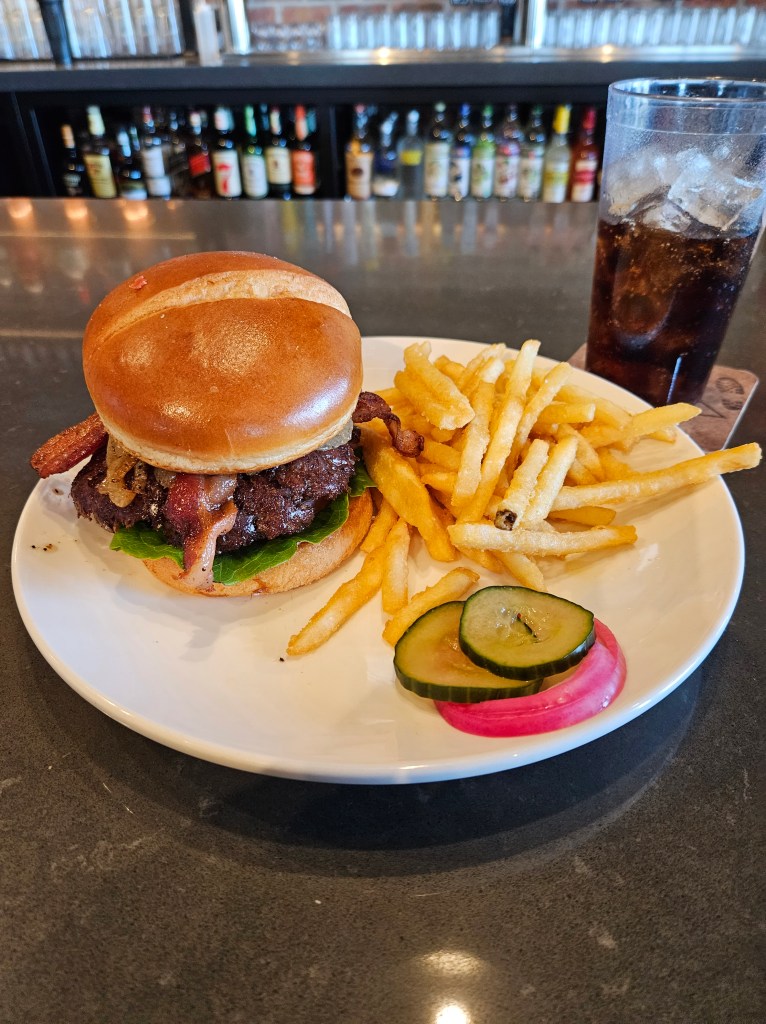
The Foundation Burger at Flight Bar and Grill in Huxley

Once upon a time, if a cow was overly protective at calving, Dad and I would tag-team getting the calf tagged. The process was similar to professional wrestling, save the bright colors were blue denim, and tights were jeans. My father would try to get the cow going in a circle, with the calf and myself in the center.

As I’ve aged, we’ve dispensed with the tag-team. This is well. Today, my father would show me up, playing to the crowd at the age of 77, with one hand to his ear, begging for applause.

Instead, I mark down the cow and date of birth and wait a few weeks to bring the herd into the corral. There, old greivances get softer with time. If not, the odds are good to get a calf sorted off before its mother knows what is going on.

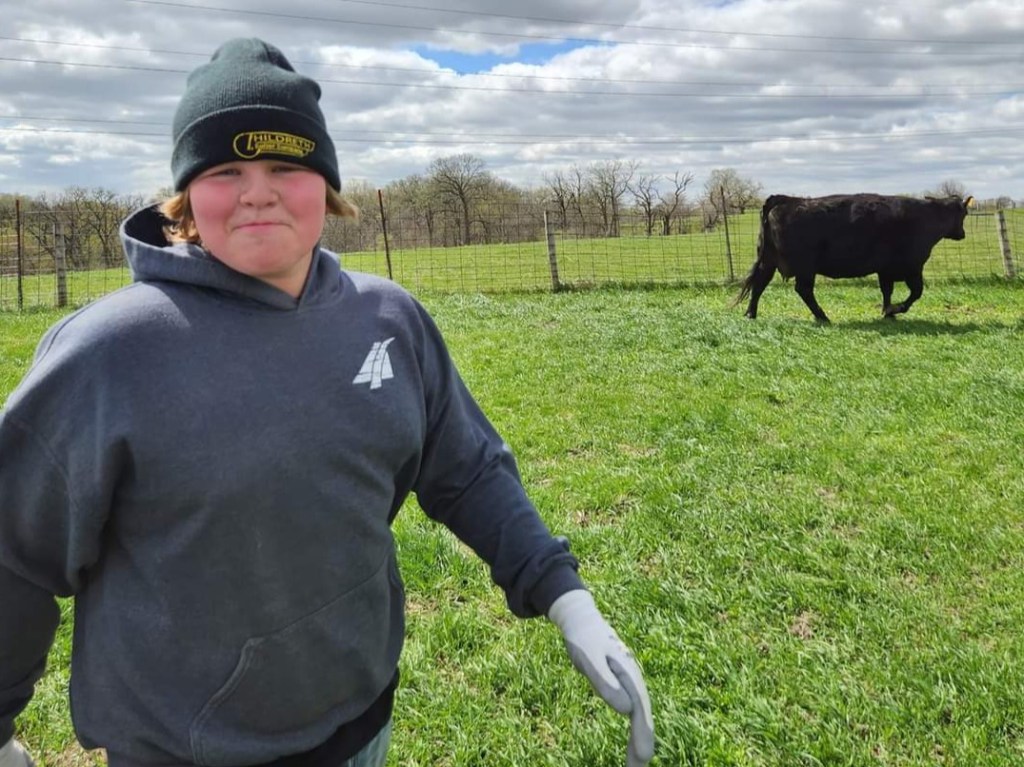
Helping me on the last day of April was my nephew Raylan, who is about to turn 12. He’s a big kid, with long, blonde locks that billow out from under his hat. Because of the hair, I sometimes wonder if he can see anything, but see he does.

The two of us would guide the calf into a small pen. There, we would push the calf into a corner. I’d take my time guiding the calf to a spot he could be caught, while Raylan shuffled his feet, looking nimble and pretending he could see.

At just the right moment, we’d close the gap between the calf and us. I became the tail guy, keeping a knee behind the calf’s backside. Raylan would swoop in, placing one hand under the calf’s chin and the other behind his head. Once I had the tagger, Raylan would bring a hand up to the calf’s ear, making sure it was positioned right.

For the calf’s part, he would shuffle his feet, looking nimble and pretending he could see. With a simple click, the tag was in place, and it was all over before it ever began. The calf, obviously expecting more, was released in an anti-climatic letdown.

“Nice work,” I’d tell my nephew. “Let’s get another one.” My nephew felt part of something and was grinning ear to ear. It was fun, but after a half dozen, it too was over before it even began.

“What can we do next?” he asked. On the farm, I’ve been thinking about that.

The next day, I headed to Flight Bar and Grill to be present for the announcement of the best burger in the state. On the way up, I was thinking about all the things I wanted folks across the state to know when it came to the families raising their beef.

If those consumers could see my nephew’s smile…, I thought.

At Flight, I met the owners, Matt and Marianne Pacha. They, too, were grinning ear to ear. In the interviews they gave that day, there was an obvious and sincere sentiment that they were overwhelmed that they won.

If consumers and producers could see that…, I thought.

There were also their future customers. All the folks that would hop in a car and plan a trip around sharing the 2023 Best Burger in Iowa. The memories they would relive, and the new ones they’d create, and all of it around a patty of beef, bringing together sunlight, grass and corn, salt and pepper, and good people across the state.

If the people that raised it could see that…

I made my own trip back last week with Shannon. The burger was as good as I remembered. As we went to leave, I spotted one of the owners behind the bar.

“I’ve enjoyed seeing all the good reviews on social media,” I told him, “but what I really enjoy is seeing how many producers have made the trek in just these past few weeks and enjoyed how you present what they raised.”

As far as what Raylan and I should do next, I know a burger he needs to try.

Raylan, The Calf Catcher

Dean-o

“Oh, all the money in my life I did spend
Be it mine right or wrongfully
I let it slip gladly through the hands of my friends
To tie up the time most forcefully
But the bottles are done
And we’ve killed every one
And the table’s full and overflowed
And the corner sign
Says it’s closing time
So I’ll bid farewell and be down the road.”

-Bob Dylan

I had missed the visitation, so I arrived early the following morning and found him laid out as straight as I’d seen him in some time. The pain had vanished from his hip. His legs were no longer too weak. His shoulders square, and a remnant of the smile he so often wore was across his lips. He looked at peace.

The attendants for the funeral home were there, dressed in dark suits. Beyond them were only his son, Randy, and his daughter-in-law, Beth. They were looking through a trove of photographs on display, and Randy was referencing conversations they had with the long line of friends the night before. Meanwhile, at the casket, I was certain I had Dean Molln to myself one last time.

I thought of the quarter pop he bought us from the Coke machine when I was just a kid in the office of BB&P Feed and Grain. I thought of his belly laugh, reclined in the corner in an old swivel office chair, about to drop his Democratic wisdom on some poor unsuspecting Republican. Often he began with, “You know one time…” and from there it was on. A story about overhauling a semi behind a Missouri scalehouse with only a sheet of plywood to break the winter wind, or a story about a trip to East St. Louis, or what a wild town Creston once was, or how wild his sons once were, or a bet he won, or a bet he lost and gladly paid.

He was like a second grandfather to any kid who came through the doors, and I’m sure his family bore the expense of that. He was a friend to us all as we grew up. I thought of all our conversations as I went off to college, or came home to farm, or worked for my then inlaws, or went through a divorce, or leaving the elevator and working for myself. And I thought of how foolish I’d been not to visit him more in the end.

Always chasing it, you know? Trying to make a dollar or a difference, juxtaposed by the guy silently making noise.

The last time I paid him a visit, he was in a nursing home. I had a beard, and I was worried he wouldn’t recognize me, and I’d have to explain to him who I was. I was even more worried that he’d be unhappy there, removed from the grain elevator, the tasks, and the people he’d built his life around.

“Dan,” he greeted me. “Come on in. Make yourself a drink.” It was 11:30 am…on a Wednesday. He had a dorm fridge stocked with 7Up and Seagram’s. “I just saw Richard a couple of days ago. Looks like he’s doing good.”

“How are you doing Dean?”

“You know, I’m not going to lie. I didn’t want to come here. In fact I threw a damn fit, but hell, Dan, this is where I need to be. These nurses take good care of me. Shit I can’t even get my pants on by myself,” he laughed. “Old age must be catching up to me.”

“It chased you until you were in your nineties, Dean.” Even in his nineties, there was the same old Dean. Indomitable. We told old stories. We talked about new things. We shared a drink, just as he’d done with so many others.

The last time I saw him was a couple months later. The county fair was going on. His other daughter in law, Shelly, arranged for a scooter so he could ride it around the fair. In the parking lot of the nursing home, they were both to be instructed on its use. Shelly was listening, but Dean was busy figuring it out himself, which is how he discovered the two speed. Into the high side it went, and out went Dean onto the city street.

Shelly was calling after him on a dead run, which Dean acknowledged by raising his hand above his head and waving her goodbye. A second later, her toe caught the lip of asphalt at the end of the driveway, and the asphalt then caught the skin of her palms and knees. Several blocks down, Dean rolled into the fairgrounds with the scooter still on the high side and a smile plastered across his face. Several minutes later, Shelly also came in on the high side, on foot with a decided limp, wearing dried blood and a look of exasperation.

Sharing a drink, telling old stories, talking about pretty girls, it’s all a silly way to tell someone you love them. But beside him, at his casket, like so many of my kind before, I finally got it right.

I knew Dean before I knew farming, or most of my friends, or even myself. He offered what he offered so many kids that came through the door. Support.

I wouldn’t know the number of kids Dean bought a 4-H animal off of at the county fair, representing the elevator. A fair number of those kids wouldn’t even have known who Dean was. He’d just see they had three chickens, or a hog, didn’t know anyone else in town, and he’d bid. It’s the kind of work that builds a community.

Having the place to myself, I cried, said a prayer, and started to take my leave. As I did so, I noticed his hands crossed at his belt, and jutting up from them between his thumb and index finger was his driver’s license.

I found a seat towards the back, and I was sitting there when his granddaughter arrived. I tried to tell her what her grandfather meant to me, and I couldn’t do it without emotion.

She told me how he had an appointment to renew his expired driver’s license that day, and he was hell-bent on doing it. Shelly was going to take him in so he could hear the news they all knew was coming directly from the folks in charge. Dean would have fought it. The fact that he had done so successfully about a year ago would have given him confidence. Confidence worked with Dean as gas does with fire.

“Have you seen Mom and Dad yet?”

“No,” I said.

“They’re in the kitchen. A friend made Dean an urn out of the old barn boards from the family farm, thinking he wanted to be cremeated. He didn’t, but we thought we’d all pick out some of our favorite photos, put them in there, and bury it with the casket. Come on back, you should see it.”

Larry, his son, had a sportcoat hanging loose on his shoulders, and there in his large, worn hands was a picture of his Dad, just past being a boy, with a rifle and two buddies at an army camp below the hills of Korea.

I mentioned the photograph, and his finger fell on the one in the middle, more muscular and taller than the friends on either side. I watched as it made its way to the box of weathered barn boards. From one side of the world to the other.

Given Dean’s build, they assigned him a .50 caliber machine gun in training, and he was supposed to carry it over the hills in the photograph behind him. On the ship from the states, however, their radio man was having second thoughts. Word had got out that the radio made you a target, and the acid from the batteries strapped to your back compounded the misery. The radio had been given to the smallest guy in the unit, and with great urgency he was trying to trade anyone he possibly could.

Finally, Dean asked him, “Do you think you can carry this .50 cal?”

“You bet I can,” he replied.

“All right then, I’ll trade you.”

“Ain’t you scared?”

“I ain’t scared.”

When Dean decided on something he was doing to do it. I assume he was always that way. So I think about him in those hills, and how many times someone must have sighted in that big, broad-shouldered American, carrying a radio, like a bull in a goddamn china shop.

To his daughter, Joyce, and his great-grandson, Cole, I said the same thing. “It probably won’t make sense,” I told him, “but I’ve come to believe most of life is just learning about being resilient. Dean was the most resilient guy I ever met, and the best part is that I think you can see that in his family.”

Maybe Cole didn’t know that of himself yet, but I did.

The reading at his funeral was about Lazarus of Bethany:

So Jesus, again being deeply moved within, came to the tomb. Now it was a cave, and a stone was lying against it. Jesus said, “Remove the stone.” Martha, the sister of the deceased, said to Him, “Lord, by this time there will be a stench, for he has been dead four days.” Jesus said to her, “Did I not say to you that if you believe, you will see the glory of God?” So they removed the stone. Then Jesus raised His eyes, and said, “Father, I thank You that You have heard Me. I knew that You always hear Me; but because of the people standing around I said it, so that they may believe that You sent Me.” When He had said these things, He cried out with a loud voice, “Lazarus, come forth.” The man who had died came forth, bound hand and foot with wrappings, and his face was wrapped around with a cloth. Jesus said to them, “Unbind him, and let him go.”

In the tradition of the Eastern Orthodox Church, Lazarus becomes the first Bishop of Kition, living another 30 years before dying and being buried a final time. Tradition states he never smiled in all that time, save once.

Who could imagine Dean Molln never smiling? So I unbound him, and I let him go.

Cows on Stalks

I’ve been working the last several days putting fence back around a 120 acre field.  A few parts of it were in CRP until a couple years ago.  Due to how those parts laid, we kept the cows off it during that time.

We bid the parcels in for ten years.  The intent was to focus on other fields, and other parts of this one, in building terraces, building fertility, clearing trees from fence rows, and installing tile.  Once the ten years were up, during which the acres were to sit idled in grass, we’d finish these parcels.

CRP is a tool that works for many landowners.  It worked for us in getting to where we wanted to be.  But the idea that conservation and farming are two different things is bothersome.  The reality is that they need to go hand in hand.

A year or two after we bid it in, my father was diagnosed with a lung condition.  I came to regret these acres.  I was worried he’d never see the completed project.

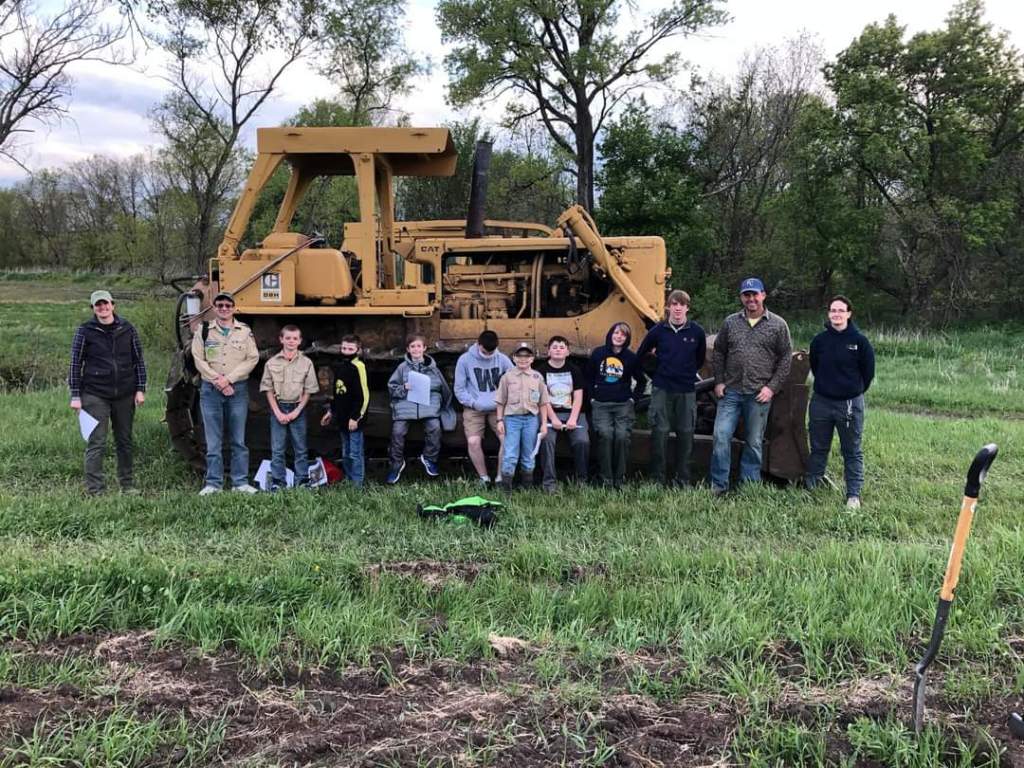
In 2020, the acres came out.  In the spring of 2021, we completed the terraces on it.  Dad put the final touches on them himself.  When they were done, we hosted a local Boy Scout chapter intent on earning merit badges.

After a year of soybeans, we seeded a few of the acres back down this spring.  This time we seeded them to alfalfa and let it go to work, protecting the most sensitive acres with year-long cover, and converting sunlight to the protein found in beef.

Tonight, we got cows back out onto those stalk acres.  Dad helped with that, too.  They’ll graze for a few weeks on the residue that makes up the afterthought of last fall’s harvest.  They’ll speed that residues break down into the soil, and in the process we will will channel it to build fertility on the acres most in need.  Here in the bleak winter, they’ll convert some of summer’s leftover sunshine, caught by a corn crop now in the bin, to the protein a family will put on their plate.

Tonight, it felt like a long process was finally done.  Tonight, talking to Dad, we talked about what lie next.

The Oxford Dictionary defines merit, in its verb form, as follows:  deserve or be worthy of.  Perhaps we, the land, and our animals all merit each other.