Logging the Section

Logging the Section

The Section

My great grandmother was born on St. Patrick’s Day, 1862.  It’s not a bad birthdate if you are Irish, and I’m sure that’s something my great grandfather must have thought himself.  They would start a family, and she would share with her children what most parents do:  her earliest memory.

Hers was remembering the relocation of Indians as they traveled through the woods near her home.

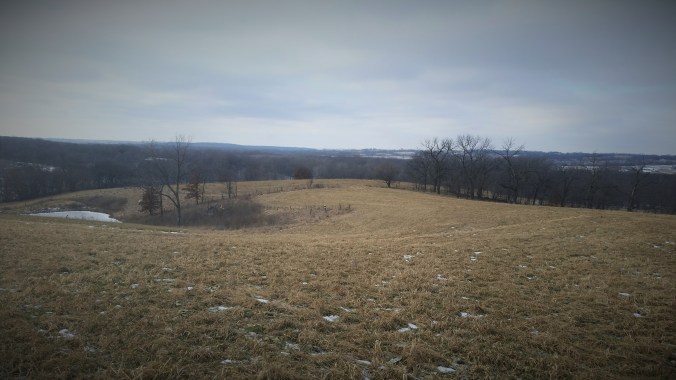
Today those woods are known as ‘The Section,’ or in some cases ‘Section 10.’  The vast majority of the 640 acres that make it up are still standing silently in timber, divided only by North River which meanders its way amongst them.  This was the river the Indians and their escorts were traveling along and camped near, building a fire a mile south of the young girl and her window.

Her son, who I can’t remember, would tell his children the same story about the grandmother they didn’t know.  Afterwards, they could lay in their beds like their dad and his siblings had, looking out their own windows, seeing the same bright glow in the darkness of the night, and fearing that the whole world might catch fire.

The things that were possible in the days before yard lights.

The orginal fire was likely a paltry thing, fueled only by wood.  Yet in the retelling it grows, fueled now by wood and imagination.  The world survived it, though my great grandmother, the Indians, and the original fire they shared are long gone.

The walnut trees that witnessed the event would last another hundred years.  They never viewed it with the apprehension the young girl did.  They had seen plenty of Indians before.

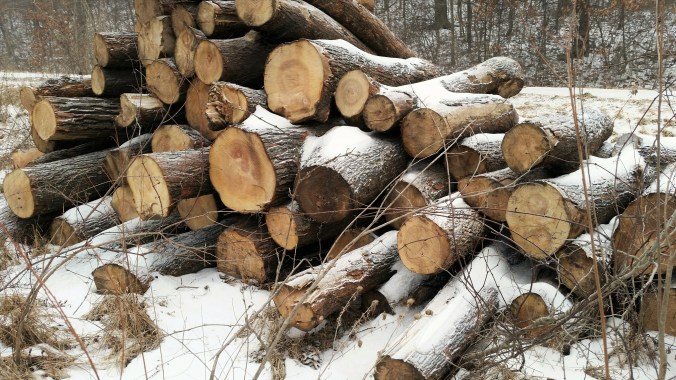
In the 1960’s the trees would be logged.  Iowa, in case you didn’t know, grows some of the finest black walnut in the world.  Those particular trees were of such exceptional quality and size they were exported to Japan.

Somewhere in Europe, perhaps, a beautifully grained walnut veneer lies across a fine table.  There in the veneer, underneath the varnish and the wax, lies the last physical connection to what my great grandmother saw all those years ago.  Some will bemoan the logging of the old walnut, thinking it would have been better had the tree fell and rotted naturally into obscurity.  Perhaps they are jealous of it.  As for me, I think I could appreciate the table.

Wandering down my own path, I sometimes come upon the memories and experiences others have drug out of the woods to me.  A few I’ve drug out myself.  Occasionally, I do what many do.  I pull a sliver out of this one or that, and try to build something that will last.

“I can sum up everything I’ve learned about life in three words:  It goes on.”  Sometimes in a story, or a table, a part of us goes on with it.
Logging the Section2

Coffee

Devotion
The heart can think of no devotion
Greater than being shore to ocean –
Holding the curve of one position,
Counting an endless repetition.
-Robert Frost

He was a faithful man, and over the time I got reacquainted with him I saw that faith grow.  It had grown through the loss of a partner and now, after the Holidays, through the sudden loss of his job, leaving him with the girls who depended on it.

A week after, I took part of the day to grab a coffee and find out how he was doing.

“It’s been a big struggle, but sometimes I find this incredible sense of peace.  It surprises me.

I think it has to do with having the strength to let go, and the courage to remain vulnerable and let new people and experiences enter my life.  In the last week I have found friends I never knew I had.  It’s been humbling.

I talk about remaining vulnerable with a mentor of mine, but the first one that suggested it to me was a certain friend I know.”

It was lunch time, and the place was full of diners.  We hogged a whole booth to ourselves, without an appetite and only two cups of coffee between us.  Even our waiter had lost interest.

“This friend you talk about, God only seems to speak to him in silence.  He has a humble house he doesn’t own, and the walls of it have blown flat many times.  Sometimes he’s tired of putting them back up.  If you’re looking for peace, he hasn’t found it.  I’m not sure he’s the one you should be taking advice from.”

“I never said he was a carpenter.  How’s work?”

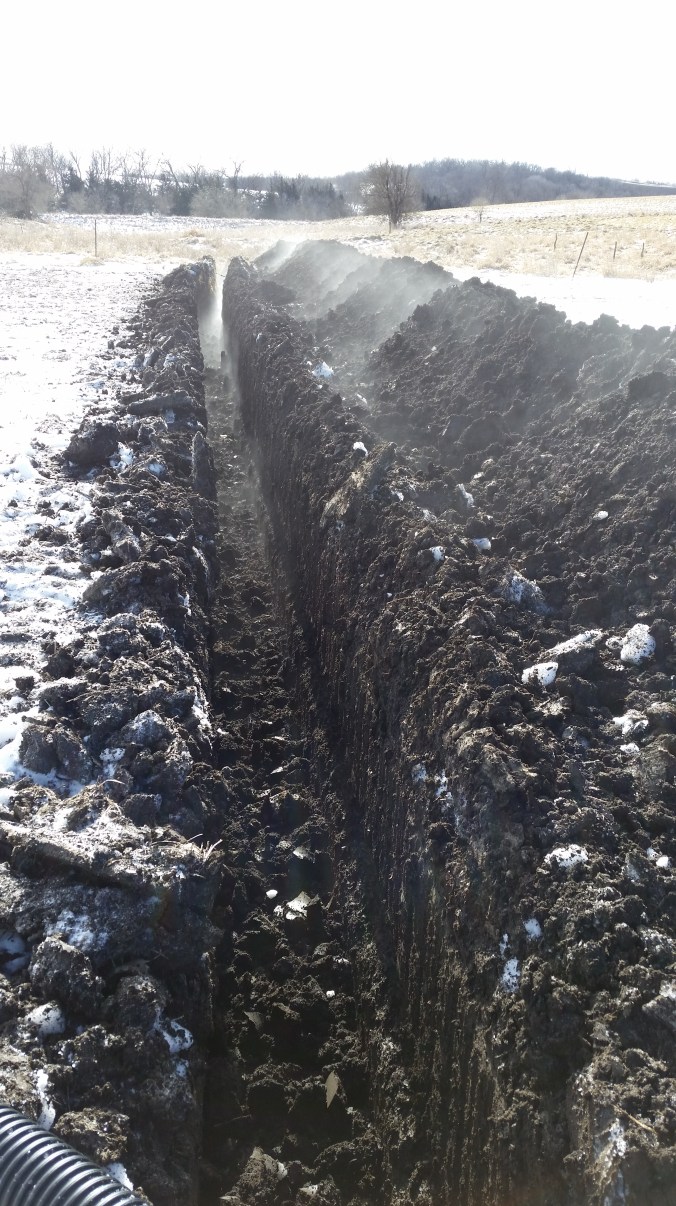
“Won’t be long now.  By Sunday it will be cold enough the ground will have a pretty thick crust on it.”

“At least we aren’t like the ground, then.”

He isn’t.

20160109_120053

Before it All Goes Green

20160106_095123

After the pirates but before the looters.


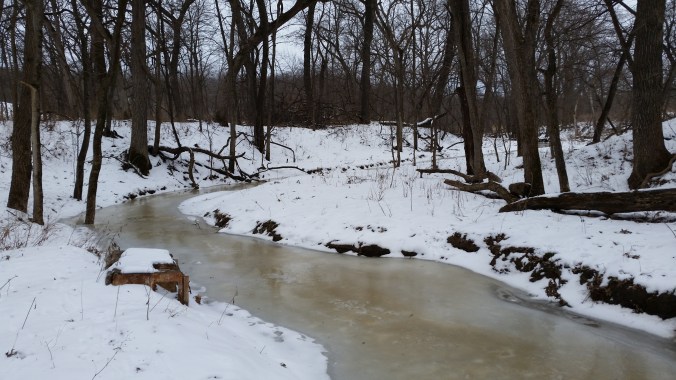
Beneath the curved trees of Art Nouveau,
along the Modern consciousness of the stream,
remained a hulk of old Art Deco
for the Postmodern me to see.

Seventy years removed now
from the time it first hummed
in a kitchen for its owners
who couldn’t believe what the future brung.

It was the fridge that saw the arguments,
before the kids got home from school,
As the arm from a white-t fished inside
for a beer that was mostly cool.

Now partly buried by the bank,
like a sunken pirate’s chest,
holding an untold treasure
for the boys who’ll come upon it next.

Digging with the finger nails
their mothers will make clean,
while I take note of the countryside
before it all goes green.

An Old Tune, in the Key of Affluence

The winter always seems so Christ-less right after Christmas, and people always act like it is a sin to mention it.  The nights are long, the days are hard and cold, and all of it serves to make the very thought of spring seem foolish.  I was thinking about all of that on the 30th of December, headed into a local grocery store to eat lunch with my father.

We had just passed an old man walking out.  His beard was scraggly and long.  He had on  a pair of dirty blue jeans, mostly tucked into rubber overshoes.  The right side of his shirt was tucked beneath his belly, and the left side hung loose, flapping in the breeze from the bottom of his old coat.

In his hands he clutched two grocery bags, holding two buckets of fried chicken and three 2 liters of pop.  It would be his meal for the next few days.  Santa doesn’t make the rounds for grown ups, I guess, and on the whole we don’t do it often either.

A couple of days later, courtesy the Stanford Marching Band, people would be up in arms over the band’s portrayal of rural life.  Being part of an area damned by a marching band didn’t offend me none.  It had already been damned by a President as “clinging to its religion and its guns.”  What was the damnation of a marching band compared to that?

Somehow the President and the band had missed “clinging to buckets of fried chicken and two liters,” but I have some hope they will correct it next time.  It is an old song anyway, always played in the key of affluence, and always tone deaf to the world outside my door.  It’s sung by the President, it’s played by the band, and lest I watch it, it is hummed by me.

Last year I read a Facebook post hoping for the day that beef production in this country ceases.  I objected to their desire to put my neighbors and friends out of business.  They offered me the assurance that it would only be done after an extensive retraining program, moving all of us onto bigger and better places in life.

A bucket of chicken in every bag, I suppose, and when we get them retrained there is always tofu.

“Like we did with the coal miners in Kentucky, then?”

Sturgill Simpson could have told him how that worked out.  We don’t hear Sturgill, though.  We don’t see the guy coming out of the grocery store.  We never notice the sour note of that which we think we know but isn’t so.  And the band always plays on.

Old King Coal, Sturgill Simpson

Many a man down in these here hills
made a living off that old black gold.
Now there ain’t nothing but welfare and pills
and the wind never felt so cold.

I’ll be one of the first in a long, long line
not to go down from that old black lung
My death will be slower than the rest of my kind
And my life will be sadder than the songs they all sung

Old King Coal what are we gonna do
the mountains are gone and so are you

They come from the city to lend a hand
carrying signs saying, Shut the mines down
We ain’t looking for pity and you don’t understand
So go back to your city now cause this ain’t your town

My Great Grandfather spent his days in a coal mine
and his nights on the porch in a chair.
Now he’s in heaven and down here in hell
the rivers run muddy and the mountains are bare

The Stray

The next day, headed out to do the morning chores, I walked past the abandoned dog house of a farm dog that had died.  There, curled in the back of it, red-haired with wide, white eyes, was a stray.  Something someone had perhaps once loved but abandoned.

Dogs from the city get dumped in the countryside all the time.  Often the dog will linger a few days right at the very place, as though it thought its owners had made a mistake and will be back.  How the owners think it will all play out, I’m not sure, though I am sure it usually plays out contrary to them.

“You know I try not to judge, but sometimes I judge people.”

“Who do you judge?”

“Those who should know better, but they don’t.”

“It’s all right.  Sometimes maybe I judge them too.  Is it that they don’t, though, or is it that they can’t?”

The way the dog was pushed back into the corner, the way he held his eyes in terror, and his total and absolute stillness, told me he already knew most of the dark little secrets of man.  Maybe I should feed him?  No, it might scare him off.  He’s found a spot to hide.  Let’s give it a day.

The next day he was still there.  Looking to the back this time, curled up and pressed against the far corner in the same stillness that suggested once again he didn’t want to be disturbed.  One more day, then.  One more was enough.  On the third day, as I went to bring him a handful of food, he was gone.

Whatever happens to all our strays?

Christmas

As a child I remember riding the two short miles to the rural church of St. Patrick’s for Christmas Eve Mass with my forehead pressed against the cold, hard car window.  I was scanning the starry sky for the streak that would represent Santa Claus coming to carpet bomb my parents’ living room with presents.  The next morning, in each wrapped mystery, I expected to find a happiness I had not known before.

Those days are past me now, and even if they weren’t, I have no desire to keep such ambitious anticipation of the presents of Christmas from its rightful heirs.  Anymore,  I think of the gifts that presented themselves all the other days of the year, and how for most of them I never got around to even getting the wrapping off.  Sometimes what keeps us from opening these isn’t a lack of that ambitious anticipation, but excuses made of more fiction than the jolly fat man in the red suit ever was.  Perhaps peeling that back is a small part of what Christmas is supposed to be about in the first place.


This Christmas, if you need to, may you unwrap a few of those.


The Bends

I was walking along a tile ditch in the dark, hoping to find the hand level I had left behind me.  I’m always going back for what I’ve left behind.  While I’m gone, the world goes on without me.  This is the principal difference between myself and it.

In the distance the windmill lights twenty miles south blinked in unison.  Although I knew these lights were perched upon their tall towers, they looked to sit on top of the horizon, as though I could simply cover the miles and touch them.  I have tried that many times, only to find them beyond all reach.

Curvature of the earth, I thought.

Finding the level, I headed back with the tool that was supposed to trump my own perception and keep me on grade, an instrument of reason, I guess.  Had a boy held it he might have thought with that little three foot level he could plot a straight course through the world we are in.

It was no longer a boy that held it, though.  I was old enough to understand the same gravity that kept the bubble centered was also the same force that would bend it around the world, bringing me back to where I started if I could fly high enough over the valleys, dig deep enough through the mountains, and find a way to sail its immense seas.

There are some convinced that the pursuit of their own particular truth is taking them in the same straight line the boy once dreamed of.  I think the world is a big place.  It’s big enough for it all to be true, and sooner or later our own particular ones get bent by that.

Our reason leads us back to the same place our heart does:  our beginning.  The only differences are circumference and time.

Mud

20151130_082847

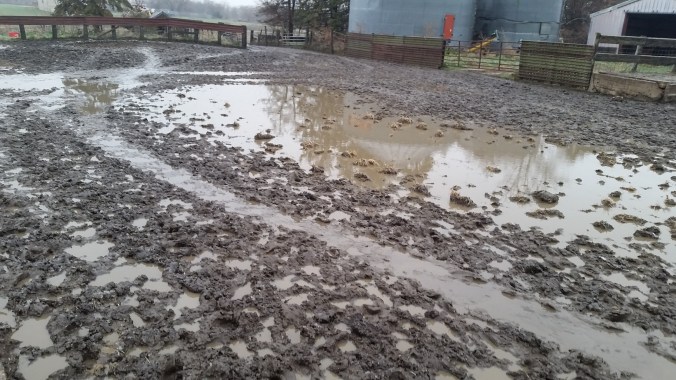
I could begin by saying I once met a farmer who liked the mud, but that would be a lie.  No farmer likes the mud.  I’m hardly a stranger to telling lies, but some even I dare not utter for fear of the repercussions.

In this case I’d probably lose my farmer card.  The impact on my life would be devastating.  Areas I now enjoy full access to would face restrictions.

Take the farm and home store, for instance.  No longer could I carouse about the whole thing, wandering aisle to aisle.  Instead I would be confined to paints, furnace filters, and anything else I needed to make a mess of my home’s electrical and plumbing systems.

The local elevator, where I pretty much grew up and over who’s counter I was free to speak on anything from politics, to crop prices, seed corn, fertilizer, cattle feed, and local gossip, would now restrict me as well.  I would be left to asking about the best feed for my miniature horses or fainting goats, making asinine inquiries about having anhydrous applied to my lawn, and complaining about how the last batch of dog food gave diarrhea to my Pomeranian.

Finally, at the equipment dealer, I would be relegated only to getting high prices belts for my lawnmower and making statements like, “Boy those new combines sure are something, aren’t they?  How much does one of them suckers cost?”

Other areas, like the local livestock market, would be off limits entirely.

Beyond the day to day impact, I’ve got my future to think about.  I may grow old someday.  If I do, I might want to go into town for a cup of coffee.  Without my farmer card, all I would really be able to talk about would be the weather and the diarrhea of my Pomeranian, I suppose.

I can’t tell you why every farmer hates the mud.  This morning I was reminded of a few reasons why I do, though.  I hate it in the mornings, before I leave the house, when I put clean white socks through yesterday’s coveralls, marking them in a grimy residue not five minutes after having fished them out of a drawer and put them on.

It’s a two-fold bane on socks.  Whenever you come back in, after kicking off boots twenty pounds heavier than they are supposed to be, followed by the coveralls, you re-grime them and dare not wear them into the house.  Cold, damp feet greet a cold garage floor, and you pick up the dirt you were hoping to avoid tracking across the kitchen linoleum.

Generally I refrain from washing coveralls until you wear them into town and someone offers to buy you a cup of coffee at the gas station.  After contemplating if leaving them dirty might not be more profitable, you return home and throw them into a high efficiency washer incapable of handling the mess because it was only designed to clean already clean clothes.

Then you do it all over again.

In the midst of it is the more serious work of trying to keep livestock comfortable and fed.  Sometimes, after hammering a tractor through a foot of slop, when you are out trying to cut the damp wrap off a bale of hay, hoping it at least doesn’t snow on top of the mess, you look down to find the rat terrier house dog belly deep beside you.

It could be worse.  It could be a Pomeranian with diarrhea.

No, I’ve never met a farmer that likes the mud.

From Somewhere Down Below

20151120_152313

In the springtime comes the grass, from somewhere down below,
springing up from the March mud relentless,
as though it would cover the boy of summer,
under the tree at which he dallied.

And so it has, a million times.
Boys no longer dally at trees,
but I suspect it will find them anyway.

The poor southerner has a year long quest to keep it at bay,
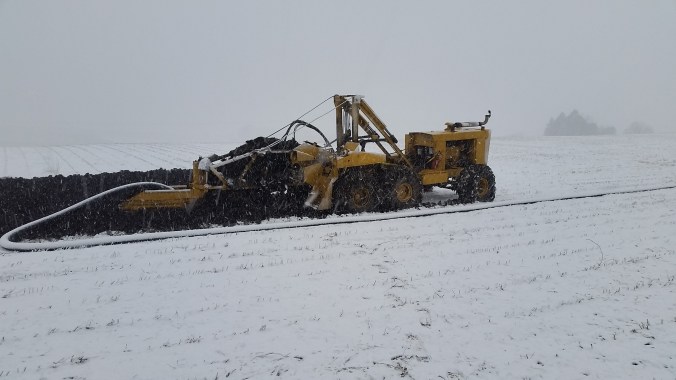
but here, after the November rain, we get snow.

Down from above in splendor,
driven mad by the wind,
a blanket descends on the ground below,
making it beautiful once again.

Fleeting and taking nothing
it will not in time give back,
as thought it were a bender
from the anxious grass.