The Fuzzy Math for Conservation

A recent Des Moines Register article made a passing note on Linn County’s purchase of 500 acres for 7.2 million dollars.  A Linn County supervisor seems to be quoted as calling the purchase an investment in “conservation.”  Conservation is a broad term.  It could mean a lot of things.  The trouble is the article continues with a direct quote from the supervisor on what the purchase is meant to stem.  “They {residents} go to lakes and find them covered in algae.”

Most of the time numbers are numbers.  Sometimes they get personal.

As a commissioner on the Madison County Soil and Water Conservation Board, we oversee state cost-share funds for conservation on the county’s 359,680 acres.  These are the funds local farmers and landowners will match to establish waterways, build terraces, and construct ponds.  This year the amount of state cost-share we will be in charge of spending will be somewhere around $110,000.  The Linn County purchase could fund our county cost-share for 65 years.

In fact the Linn County purchase comes is very close to funding the 7.5 million dollar state budget for cost-share programs in 2016.  In the state’s case, the Iowa Department of Agriculture and Land Stewardship notes that Iowa farmers matched it with 8.7 million, giving a total investment of 16.2 million.

I serve as a trustee of the local Badger Creek Watershed.  The County Soil and Water Conservation District is in charge of maintenance and improvement of numerous structures and investments previously made in the watershed’s 33,581 acres.  Our annual budget to do so is $84,942.  The Linn County purchase would fund that budget for 85 years.

It is a shame the Register article makes only a passing note of the Linn County purchase.  The real story, the one most uncomfortable to read, is that some might think spending 7.2 million for 500 acres is a feasible way to measurably improve water quality across the state.  It might be laughable, if it weren’t so sad.

Just two days ago I was the Iowa Statehouse to visit with my legislators about Iowa Farm Bureau’s number one legislative priority:  finding a larger, dedicated source for soil and water conservation funding.  This is the funding that will increase in value by being matched by the state’s residents.  I think this is the funding that will continue making measurable progress in soil and water conservation as we adapt to the challenges of today and look ahead to tomorrow.  I’m sure the 7.2 million Linn County spent will make a fine park.
Swiss Coffee

The lights were dim in the Des Moines coffee house, mostly coming from strings of lights that would bow intermittently from the ceiling above.  On the far wall, above each table that sat against the big windows that kept the patrons from the street, stooped a solitary light for those beneath to share.

With me there sat a man with clear blue eyes and the face of a priest.

“I drink coffee now,” he said with his graying hair curling up against the bowed down edge of his ears.  “At one time I used to come to a place like this to smoke.  Then those damn Democrats over there took it away from me,” nodding over to the group of college students, huddled around a large table, some sporting t-shirts that gave an idea of their politics.

“Could have been worse, I guess,” he continued.  “A hundred years ago the group behind you would have took away my cocktails.”  I didn’t have to look for the bible study group.  I had already seen them.

“I’ve never been here before.”

“It is quite the place.  Very different people at different tables, all in the same room.  How one hasn’t protested the other’s existence, I don’t know.  I have been coming here for years.  I’ve seen no fights.”

“Perhaps the coffee is Swiss.”

Unamused, he continued.  “Do you know why I think people read what I write?” he asked, leveling his glare at me and exhaling like a man who still smoked.  “I write about being lonely.  Being lonely has no party.  It relates to everybody.

It makes them equally uncomfortable.  I have no idea if I write well or not, but I do take comfort that no book of mine makes someone feel better about themselves or worse about someone else.  Sometimes I wonder why anyone reads them.”

“There’s a truth to it, isn’t there?”

“Do you think people like that?” he laughed.

“I don’t know.  Perhaps a lot of us just respect it, especially when it’s delivered softly.”

“Respect.  Ha.  Some here would talk to you about personal responsibility, some about privilege.  Both represent the idea that someone else didn’t suffer enough.

You write.  You must look at people.  Have you ever seen someone that hasn’t suffered?”

“I’ve seen some that work like hell to avoid it.”

“Where does that get them?”

“More suffering.”

“Ha.  We sit in one big room together.  We drink our coffee together.  And we suffer together, whether we are at different tables or not.”

“Sounds a little depressing.”

“No.  What’s depressing is how we waste it and let it push us further apart.  I always find it hopeful coming here.”

“What do you do with it?”

“Me?  Well I write.  Occasionally, though, I shrug personal responsibility and in my privilege sneak an occasional cigarette.  But a coffee…sometimes a coffee will do.

What about you?”

O Ye of Little Faith

20170207_072521

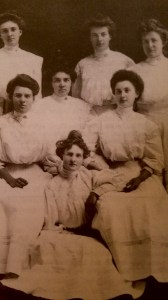
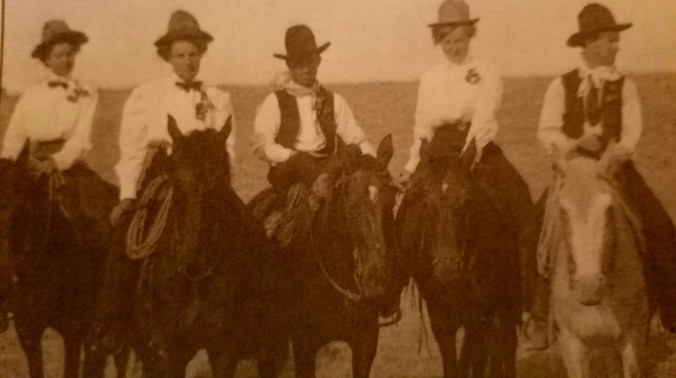
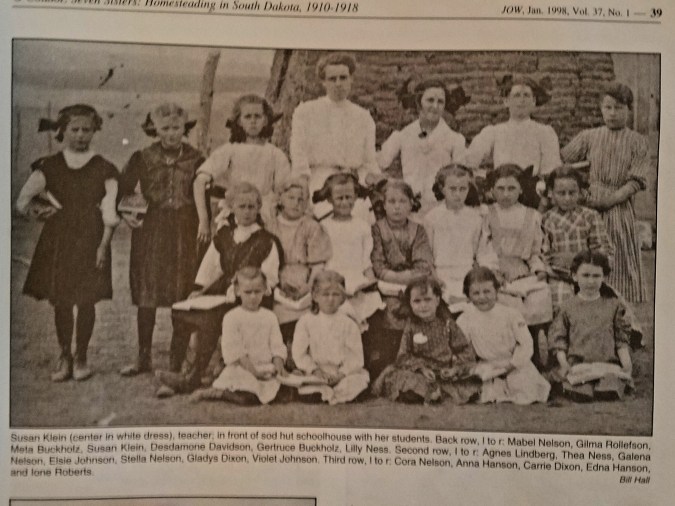
In 1918, Susan Klein Funk was 31 years old.  In her last few years she had acquired a husband, a 3 year old daughter (Margret, my grandmother), a 1 year old, and a newborn.  In the few years which preceeded that, she had proved up her own claim for 160 acres of land she had homesteaded.  There she’d built her own cabin, shot her own game, roped and branded cattle with her sisters, and found time to teach school.

Her last days in 1918 found her with apendicitis.  The nearest hospital also housed wounded veterans of the First World War.  They carried the Spanish Influenza.  There was no cure.  Susan was exposed, and in that hospital she died.

By her side was her sister, Mary.  She had been for some time.

20170207_072012

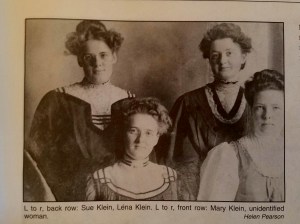
There were seven Klein sisters in Waverly, South Dakota.  Several were seamstresses.  They had all grown up on the farm.  Three were married.  The reminaing four, Magdalena (Lena), Susan (Sue), Victoria (Tory), and Mary, ranging in age from 22 to 27, were considered past their marriageable prime.

The federal government was opening up new territory in the western part of the state.  Anyone over the age of 21 was welcomed to stake a claim.  In 1909 the four struck out on their own.

They each selected a 160 acre tract not far from the emerging town of Faith.  Over the summer and fall of 1910, each built a sod house on the corners at the adjoining tracts central point.  Within 15 feet they’d find water.  It was considerably more to find wood.  They could still find “buffalo chips,” however.

The Klein girls (as they were called) relished the big waves in the new territory.  They had their work.  They had a countryside full of eligible men.  They had dances and excitement in the new town of Faith.  In 1911 they took a one month trip to the Blackhills and the Badlands.  Susan kept a diary of their time.  Her brief entries came to an end with one final line:  Sure saw some country and had a fine time.  End.20170207_072709

The oldest of the four, Mary, was the ring leader.  On her shoulders would forever lie her own mother’s blame for the taking of four of her daughters, and I suppose one’s death.  Fiercely independent, she’d fight for the right to work off her poll tax in order to vote.  She’d be the last to marry.  At 92, she’d be the last to die.

She was stubborn enough to disregard the good consuel of the day and fearlessly care for my great grandmorther in the hospital.  Most wouldn’t be.  After Susan’s death, her coffin was brought home, but fear over infecting her family would keep it out of the house.  Instead it was briefly laid open on the front porch for her children to say goodbye.  At least one of her sisters wished to do so as well.  She loaded up her family and ventured as far as the farm drive before turning around, unable to run the risk.

55 years later, Susan’s husband, Francis, would make his way back to Faith to rejoin her.  Out of respect, I suppose, for that Klein stubborness.  Or perhaps for a journey that began in Faith.

We should live the life we are called to live.  Some will stay in spite of the waves.  Some will come around.  Some will be attracted to it.  The rest is not our business.

20170207_072102

From l to r:  Lena, Sue, Roy Hall (Lena’s Future Husband), Tory, and an unidentifed man.

All photos from Journal of the West.  Vol. 37, No. 1.  January 1998.


You and Me and the CRP

You won’t have to go to far in your day to run into the polarized political debate that is currently raging in our country.  Many voices compete to be heard, and while shouting is not without merit in acheiving that, it is often at the expense of a much more substantive debate we need to have.  One federal program that might illustrate that while minimizing emotional fallout is the Conservation Reserve Program or CRP.

The program came to prominence under the 1985 Farm Bill, though it had existed three decaes prior.  It targeted highly erodible land, placing it under vegetative cover for a period of 10 to 15 years and removing it from production.  These acres were essentially rented to the federal government.

There had long been a conservation push to expand the program, but the push was coupled with the collapase of the farm economy during the Farm Crisis of the 1980’s.  A farm family could now enroll their acres for a guaranteed yearly income and for a guarenteed length of time.  This contract gave families something firm to restructre their debt and removed acres from production that might boost sagging markets, saving farms and saving soil.  5 million acres were under contract in 1986.  40 million would be enrolled by 1990.

The program began with great intentions on all fronts.  As time has went on, however, concerns have arisen.  One can see many of them by simply travling down Highway 34 or Highway 2 in Southern Iowa.

Southern Iowa was hardest hit by the Farm Crisis.  Its rolling hills were also prime targets for the erodible acres sought by CRP.  Some of those acres can be seen today, unfarmed and ungrazed.  You can also see the impact it has had on local communities.

No seed, fertilizer, or equipment is needed on those acres.  No hardware store, or repair shop, or gas station sells anything of note to service them.   No steward is needed.

Many wonder if this is what conservation needs to look like.

The CRP rate can create competition in rental rates for other cropland.  In some cases it can set a floor that raises the barrier for entry for young farm families.  In some it simply offers a higher rate of return, attracting acres not for their conservation merit, but simply for the return that might not ever reside in the local community.

The rental rates can also prohibit cow/calf producers from competing for those same acres, who would leave them in grass, but generate prodcution from them.  Attempts have been made to change this, but to date each attempt runs into some dedicated to the idea that conservation needs to look presettlement.  The farmer, last in line, is often left without something practical.

It isn’t hard to envision an attempt to change the program being shouted down as an attack on the environment.  Shouts won’t extinguish embers that still smolder in rural communities from the meltdown in the farm economy.  Being faithful to both is how the program took root in the first place.

Mike

“Who’s Mike?” she asked.

“A basketball coach we first had in junior high AAU basketball.”

“What made you think of him?”

“He made us feel like anything was possible.  I wasn’t talented, but he believed in me.  In exchange I gave him everything I had.  I wonder what happened to that kid and his effort sometimes.  He used to call me the whirling dervish.”

“Sounds ferocious.”

“I was constantly in a state of falling down.

He taught us man to man, obscure zone defenses, and a full court press for each.  The teams we played against knew only the 2-3 or man to man.  Perhaps they knew one full court press.  We quickly understood the importance of knowledge, and the advantage to be had by aggressively putting it to use.

We had a kid so talented, Mike would have the rest of us set up in the press, then he would give the ball to Ryan and have him break it.  He taught us respect for one another.

There was a kid who got nervous anytime he had to go in.  One game we were down to six players with a quarter and a half to go.  The kid had a long time to think about it.  One of us finally fouled out, and Mike looked to the bench and found him white as a ghost.

‘You only have four out here, Coach,’ said the ref.  ‘He needs to come in.’

‘Those four can handle themselves.  Let me talk to my guy here for a second or two.’  Mike draped his arm around him and cracked a joke in his ear.”

“What happened to Mike?”

“He wore his heart out.  He’d always been a heavy smoker.  There was something about him that seemed to love the anxiety and stress of life.  He was born to be a coach.  It was his calling.  Hip deep in the thick of it, always making adjustments.

I remember going into see him in the hospital.  He was gray.  As a boy I found it hard to believe how a strong man could suddenly look so weak.  Then he opened his mouth.  He was as cantankerous as ever.  Still in the thick of it, making adjustments.  Undefeated.  All heart.

He got his transplant.  He quit smoking for quite awhile.  He set some goals for the rest of his life.  He died over ten years ago.”

“What sticks with you?”

“Mike had asked them to play ‘My Way’ at his funeral.  The pastor obliged.  I was twenty something and still a kid.  I thought the song was about pride.   Years later it struck me that for Mike maybe it was simply about him knowing who he was.  Not many know that about themselves.

We played for him.  Some coaches only desire that.  We played for each other.  Some coaches understand that.  I think what Mike most wanted was for us to play for ourselves.  Few really get that.”

“So he wasn’t a ‘there’s no I in team’ guy?”

“I don’t think he would have known how you could function in a team without knowing your own strengths and weaknesses.  He knew his.  He knew ours.  He knew something about who we could be.”

“Sounds like he made an impression.”

“I loved him.  He loved us.”

Cattle and Systems Theory

I first met Barry Dunn in 2010. It was at a leadership program sponsored by the American Simmental Association, and it was hosted by South Dakota State University. He had just become he Dean of the College of Agriculture and Biological Sciences. He’s since become the president of the school itself.

I recall him to be a slight man, tall and thin. He wore wire rim glasses. It all made it hard to picture him working cows. There didn’t seem to be an ounce of profanity in him.

I was there to learn new things. I suppose I thought I already knew a great deal at the time. A few of the things I thought I knew, I still know. One is that the cattle business is a people business.

The topic he chose to discuss was related to cattle production. Its application went far beyond that, however. Occasionally, I am able to dust it off and make some use of it.

“Have any of you heard of the idea of Systems Theory?”

I hadn’t. If anyone else in the room had, they decided to keep it to themselves.

“Systems Theory is an idea that has been around for awhile. It pops in a lot of places, and can be found in several of the sciences. The idea is that in order to properly understand something, we need to look at how the thing or individual functions and is impacted by the whole of the system it is in.

The popular author, Malcom Gladwell, uses the following story to describe the ideas of Systems Theory. It goes something like this:

On the most basic level there are two types of systems in life: simple and complex. The simple system works along the following lines: You are in your house. You are cold. You turn the thermostat up. You are warm.

The complex system, on the other hand, functions as follows: You are in your house. You are cold. You turn the thermostat up. You get colder.

We spend most of our lives convinced that we live in simple systems. What we fail to see is that most of the systems we are in are actually complex. In such a manner, we spend our time actively working against that which we most desire.”

On a Monday

from the comfort of my house
across a slickened stoop
into the brown grass
that laid in an icy tomb
with a silent hint of green
glistening its way through
ventured I in the January rain
into a frozen world
on the day for MLK

the only sound to rise
against the murmur of the mist
was the cattle who milled
discontented against the trees
and in the heat of living
kept the ice at bay
I thought of people
in another day

headed home from town later
on six lanes that lay new
built to carry those
who hadn’t got there yet
every star extinguished
by this icy mist
in the comfort of the car
heat and noise within

Unfortunate Coincidences

I met Gary Bailey while I was a student at the University of Iowa.  He was an associate professor in religion.  I first met him when he assumed instructing the tail end of a course taught by the college’s most popular professor, a rabbi named Jay Holstein.

Holstein had an abrupt, drill-instructor type style.  He paced.  There was a cadence to how he spoke.  He’d occasionally force a stutter to keep the beat.  He swore like a sailor.  When Bailey came in after him, the class would find he possessed nearly all the same eccentricities as Holstein, minus, perhaps, the profanity.

It was so uncanny, within 10 minutes of the start of his first lecture, you could hear the scoff from the several hundred kids in the auditorium.

“What’s this guy trying to do, imitate the last guy?”  Attendance would drop by the score.

The assumption of the students was natural. What I would subsequently learn, however, is that it was simply who he really was.  It was an unfortunate coincidence.

As much as I loved Holstein for the way he read the texts of the Bible, and those of  Melville and Hemingway, there was something about Bailey that read even better.  I would take a small seminar with him.  In that class was Holstein’s son.  Towards the end of the semester I would confide in him.

“You know, I once thought Bailey was just a hack copying your father.  Anymore I think he might be the first genius I’ve ever met, if that were something I could judge.”

“Bailey is a genius.  He’s got a real problem, though.”

“What is that?”

“He’s a white protestant trying to get a job at a time when any religion department that still exists is looking for diversity.”

For Bailey it would be another unfortunate coincidence.

Bailey had asked an interesting question in class that day while we were reading Hemingway.

“What do you guys think is the opposite of love?”

“Hate,” was the response scattered back from those in the small class room with large windows that looked over the street below.

“I’m not going to take that as the right answer.  You guys ought to do some thinking on that.  Let me ask it another way.  What is it that stands in the way of truly loving or hating anybody?”

“Fear,” came from the long, lanky kid who hung out in the back of the room and seldom said much of anything.  He was a loner-type, both in class and out of it.  The only other words I remember from him were the brief, inaudible murmurs shared between he and Bailey whenever our papers came back.

“Fear,” echoed Bailey with a smile of approval.  “You know a very wise person once said that it was a very fine line that separated love or hate from fear, and it was very difficult, if not impossible to tell the difference.”

I’ve never found what came of Gary Bailey.  I have never found who to attribute his quote to.  What I have found, however, is that generally we are quite certain we can tell the difference he spoke about above.  We seldom ever contemplate it.  An unfortunate coincidence, I suppose, for all of us.

Cutting it Close

Somehow I always wind up coming back to re-dig the dirt I’ve already dug.  This in spite of beginning with the conviction that I have started on something new.  That conviction usually resigns itself as soon as it encounters a sign that I have been there before.

In the first days of December, I came back to add more drainage tile to a place I had worked three years ago.  I was certain I remembered which side of the draw I had been up before, so I set my machine in on the opposite side and went.  The dirt was deep and black, and I sunk the tile down to match it.  About a hundred feet up the waterway, I saw a bit of plastic tile come around, snagged in the wheel of the trencher.

It figures, I thought.  I hadn’t remembered correctly.  I was where I had been before.  Daylight was waning, and I was in a hurry to get done before I lost it.

I hit the line at the slightest of angles, about 6 inches below the four foot depth I had placed it at before. At the bottom I could see the jagged end of the tile I had hit.  I fished a knife out of my pocket and hopped down in the trench to cut the jagged end smooth and connect it back up.

I thought nothing of it.  The ground wasn’t wet.  I hadn’t seen a sidewall cave in a month.

Down in the bottom, on my hands and knees, I had just cut the tile clean and was closing up my knife.  I heard something.  It was the slightest sound, and a split second later I felt a clod hit my shoulder.  I remember trying to get my knees up, and then I remember the quick and silent, heavy stillness of the weight that caught me at the middle of my back and down.

I tired to do what I always try to do:  go forward.  It is the simplest of all desires.  What strikes you is how bad you want it.  I was successful.  What strikes you next is the thought that desire has little to do with it.  It is shared equally by those who were and those who weren’t.

That’s humility, I guess.

A few deep breaths, and I was climbing out to get the excavator to clear the dirt away, and get back to where I had been, now for the third time.

“It’s a funny thing, you know?”

“What is?”

“The way we keep going.”

“Why do you suppose that is?”

“I suppose it is how we are wired.  Some go on in defiance.  Some go on in the faith that it is going to work out.  Sometimes I just think it is the best way to pass the time.”

“You should be more careful.”

“We all should.  Something is always trying to swallow us up.”

Mags

Her since of humor would be considered refined at any age, but it is all the more notable since Mags is only 12.  It takes some work to get her to smile, and you have to set the bar higher than you do for most.  If you are successful, your reward is usually but a brief, wry grin.

It was getting late, and there were four of us in a detached garage.  A wood burning stove kept us warm, a big screen television provided the entertainment, and a dorm sized refrigerator provided a little pre-holiday cheer.  Mags, of course, did all of that too.

“Where’s your mother at?” I asked.

“She’s putting presents under the tree.”

“For Santa?”  She looked at me dryly.

“That ship sailed a long time ago,” and her face relented with a slight twinkle in her eye.

There she sat, then.  Eagerly having let go of what she needed to in older to grow older, only to wind up old someday, like the rest of us, and trying in vain to grab it back.

“Suppose any have your name on them?”  That brief, wry grin was the only response.

“Dad, could I have another Mountain Dew?”

“No.  It’s late.  You’ll be going to bed soon.  I think you’ve had enough.”

She was disappointed, but she never raised an objection.  I tossed an empty can to the container in the back corner, and I reached into the dorm fridge for a beverage of my own.  Out with it, came a Mountain Dew.  Responsibility could wait for another day.  I slid it over to her, behind her father ahead.

The grin broke into an all out smile, a silent giggle that finally betrayed her youth.  Though that youth was beyond me now, it wasn’t beyond her yet.  Secretly she sipped it, and all the more talkative she got.  She laughed and laughed, and I did too.  We all did.

If our youth is beyond us, it thankfully isn’t beyond the young yet.  I suppose it is their gift to the old.  They would never believe that it was far too big to ever get under a tree.