Drowning in the Dirt

Scan_20150810 (4)

Iowa State Capitol under construction

Why does the fear of drowning exist only with water?  The earth has to have swallowed a million times more souls than the sea has ever dreamed of.  Perhaps our fear of water is nothing more than our fear of being the exception.

Scan_20150810 (2)

King and crew grading East Court Avenue between 1st and 4th streets.

M.H. King was my grandmother’s grandfather.  He was a dirt man.  I seem to come from a long line of them.  There are two types of dirt men.  You’ve got the farmer, who scratches it in order to grow something from it, and you got the contractor, who moves and digs it by the yard for building.  History would show the diver and the swimmer are in equal danger of going under.  King would.

Scan_20150810 (3)

The crew getting ready to lay a cornerstone at the Capitol.

For his first contracting job he had to come up with some money to operate with.  He got it by mortgaging his house.  Over time the contracts grew, his business grew, and so did his houses.  He worked on numerous street projects around the city of Des Moines, moved 50,000 yards of dirt excavating and grading the site of the present Iowa State Capitol, moved 700,000 yards building 17 miles of levee near Burlington, but his main specialty would be railroads.

Scan_20150810

The scraper in action with a cart beside it.

He used a mule drawn scraper, which raised and deposited dirt in trip-bottom carts also pulled by mules.  He became well known for his innovative process and rail companies sought him out to work in many of the surrounding states.  Eventually he would be one of a handful of contractors the Union Pacific selected to bring out to Portland, Oregon to see about building a railroad to Seattle.

Scan_20150810 (7)

Getting the mules ready to start the day.

When his mules were idle, he housed them right south of downtown.  While they were idle, he was busy serving as the longtime alderman of Des Moines’ then 6th Ward.  He was often rumored to run for Mayor.  He never did.  Any other spare time was devoted to civic projects, such as being one of the founders of present day Mercy Hospital.  In it all he gained both admirers and detractors, and several political cartoons of the day featured King and his famous mules.  Some papers were fond of him.  Some, like the Register, he seemed to battle.

Before his death he had the city’s first steam shovel, which was estimated to displace the work of 50 men.  The papers noted he kept it guarded at all times for fear of sabotage.  At his death the same papers noted he had been the city’s largest employer.  After his death they noted the complaint of a laborer, lamenting that everyone had always had work when old Mike King was around.

Scan_20150810 (5)

The steam shovel in action.

King flirted with disaster twice.  The first time a railroad went defunct while he was in the middle of a large project for them.  Eventually the court would make sure the wealthy individuals behind the project paid.  Years later a second railroad would go defunct.  Evidently this time the individuals which had been backing it were no longer wealthy either.

Scan_20150810 (6)

The Kings at 647 East Grand Avenue, below the Capitol and on the site of the present State Historical Building.

King mortgaged the family home in order to pay his help.  On Memorial Day of 1902 he died.  The bank subsequently foreclosed on the property, and the family eventually moved over to 31st street.

On giving notice of his death, one paper concluded by saying, “He was generous to a fault and had he been as good to himself as he was kind to his friends he would have attained to a comfortable competence.”  A more friendly one concluded he died “leaving no heritage to his family but….a public spirited citizen, a friend of the poor, an honest, well spent life.”

My grandmother’s mother was the only one of four girls to have married.  She had one child.  It would seem M.H’s meager heritage grew smaller, but not without his daughters’ best efforts.  During their lifetime they concerned themselves with their father’s legacy, and some managed to carve out their own.

Someone else’s legacy can be an ocean we lose ourselves into, trying to lay claim on the exception we fear to be, before we too someday drown in the dirt.
https://www.youtube.com/watch?v=lmVNswlLDgc

After the Deluge

https://www.youtube.com/watch?v=_hxc6Vnph4E

Jim sat at the counter, with his blue, pin-striped overalls on.  They were immaculate.  In the breast pocket was a ball point pen clipped neatly next to the horizontal spiral atop the bright yellow cover of a now defunct feed company.  His hat was sponsored by a seed corn company now next to the feed company in defunctness.  It’s bright yellow bill and large badge sat ahead of the white mesh that brought up the rear.  All of them laid over the well-groomed, grey hair trimmed only a couple of days ago.

He had got up early to get to the counter and hear the reports of last night’s rain as they came in.  His furrowed hand produced a thumb and middle finger which held the handle of a white porcelain coffee cup.  The index finger tapped the top intermittently, as though he would think of the line of a song and then think of another.  He stared at the line the contents made on the inside of the mug.

It was then he glanced to the side and caught Ted, walking with the knees of a hog farmer up to the counter’s end to pay the bill his breakfast had left.

“Did you get any rain last night, Ted?”

“Oh, we got just a skosh, you know.  The gauge had five inches in it this morning.”

“I had around five and a quarter at my place.”

“Well, the devil always did take care of his own,” said Ted with the same smile Jim returned.

Some would say Jim had told a little lie, but he could argue there had been profit in it, and surely the profit made it excusable.  Jim would say he told no lie at all.  He only suggested he got around five and a quarter.  In truth he had, within a quarter of it.  For Jim it was the its status as a suggested quarter that made it defensible, and it yielded to him the same advantage an actual quarter would have.

The line in the mug dropped lower.  The songs changed several times.  Finally, Jim glanced to the side and caught the bow-legged gait of the mustached horseman called Russ.

“I got around 5 and a quarter,” said Jim, now with some confidence, blinking his eyes as he spoke.  “What’d you get?”

“We got six.”

“You don’t say?”  His confidence deflated, but opportunity seized the moment.  “Is that the most you’ve heard of?”

“I thought I heard them say behind me that the Meadows boy got 7 south of town.”

If the suggested is every bit as good as the actual, having gotten the most rain is every bit as good as having found out who did.  Yes sir, it had been a productive morning in deed, and the tapping began for the rhythm of several happy tunes.  The young waitress walked by, and Jim opted for one more cup.  Waiting for it, he caught sight of the confident walk of a young man who looked but vaguely familiar.

“Did you get much rain last night?”

“Five and a half,” Jim replied, “but the Meadows boy was in this morning and he told me he thought he had over seven.”

“You don’t say?”

“Yep.  That’s what he told me.”

“Well I thought I heard that too,” said the Meadows boy who was smart enough to keep his mouth shut.

Now John had sat there, long and tall as ever, taking it all in as the egg yolks got cold in his hash browns.  He too would pass Jim on the way to the register.

“I suppose you got us all beat,” were the words that came from the down turned eyes underneath the yellow bill.

“I suppose I do,” said John.

“How much did you get?”

“We got enough that last night the bar in Bevington was the driest spot in town.”

Yes, Jim thought, it had been a very productive morning, and he laid down a two dollar tip for the gal who had been filling his cup.

Me and Bobby McGee

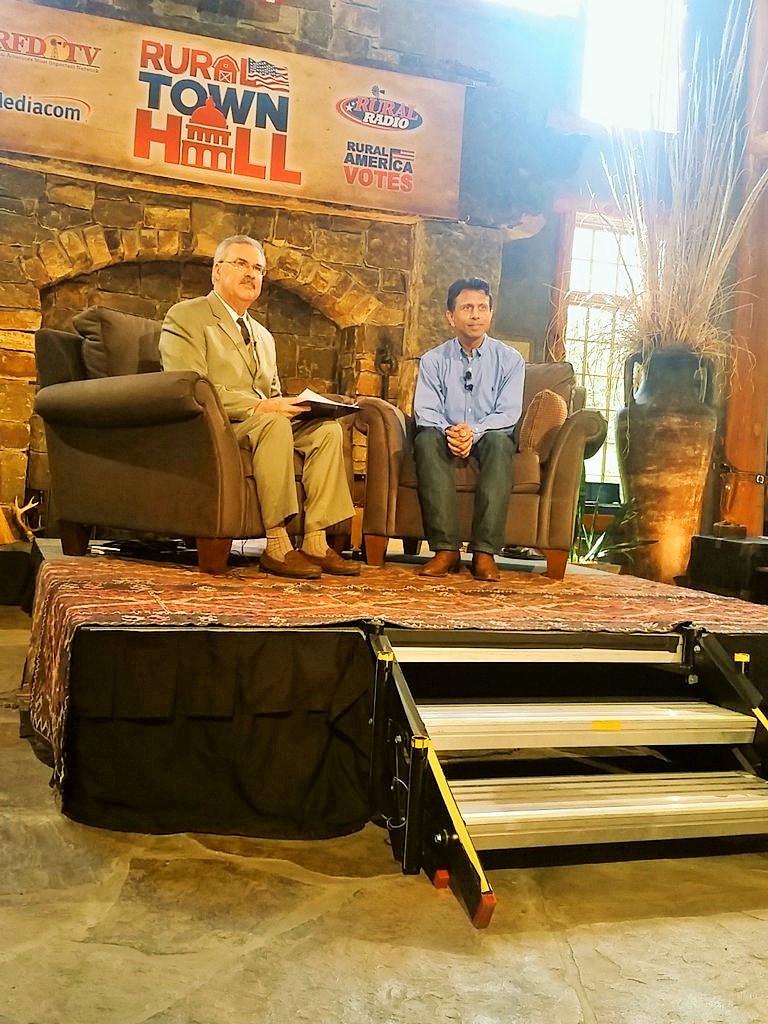
Jindal2

Photo courtesy of Justine Stevenson

I suppose it was a combination of my own dumb luck and others’ busy schedules that had Justine Stevenson with the Iowa Cattlemen’s Association contacting me to see if I would be interested in participating in a rural town hall meeting with Louisiana Governor Bobby Jindal.  I had just broke down my recently repaired tile machine half way up a pastured hillside.  20 acres of late oats needed mowed to boot.  Still, I said yes.  Someday the phone won’t ring, but I’ll taste every grape on the vine I get offered until then.

The meeting was to be held at the Stine Barn in West Des Moines.  I had never been.  It’s quite a place in the middle of town, and I was in awe as I parked my car on the grass ridge above it.  A man in a golf cart was right behind me, waiting to give me a ride back down.

“A healthy young man like you I ought to let walk,” he smiled.  He knew how to bullshit.  We would get along fine.

“What’s your name?” I asked extending my hand.

“Johnny Rodgers”

“I’m Dan Hanrahan.  Beautiful day isn’t it?”

“It better be for a Husker to be in Iowa.”

“I went to Iowa and Iowa State, so I got you covered either way,” I laughed.

“We tied Iowa State in my last season.”

“I’m sorry, did you just say you played for the Huskers?”

“Yea.  I played for them.  I was also the first one of them to win the Heisman Trophy.”  With that he raised his right hand, and it was then I noticed the ring.

“So what are you doing in Iowa?” I asked.

“I’m working with RFD-TV now.”  With that Nebraska’s Player of the Century dropped me off, but not before I shook his hand again and shared one more smile.

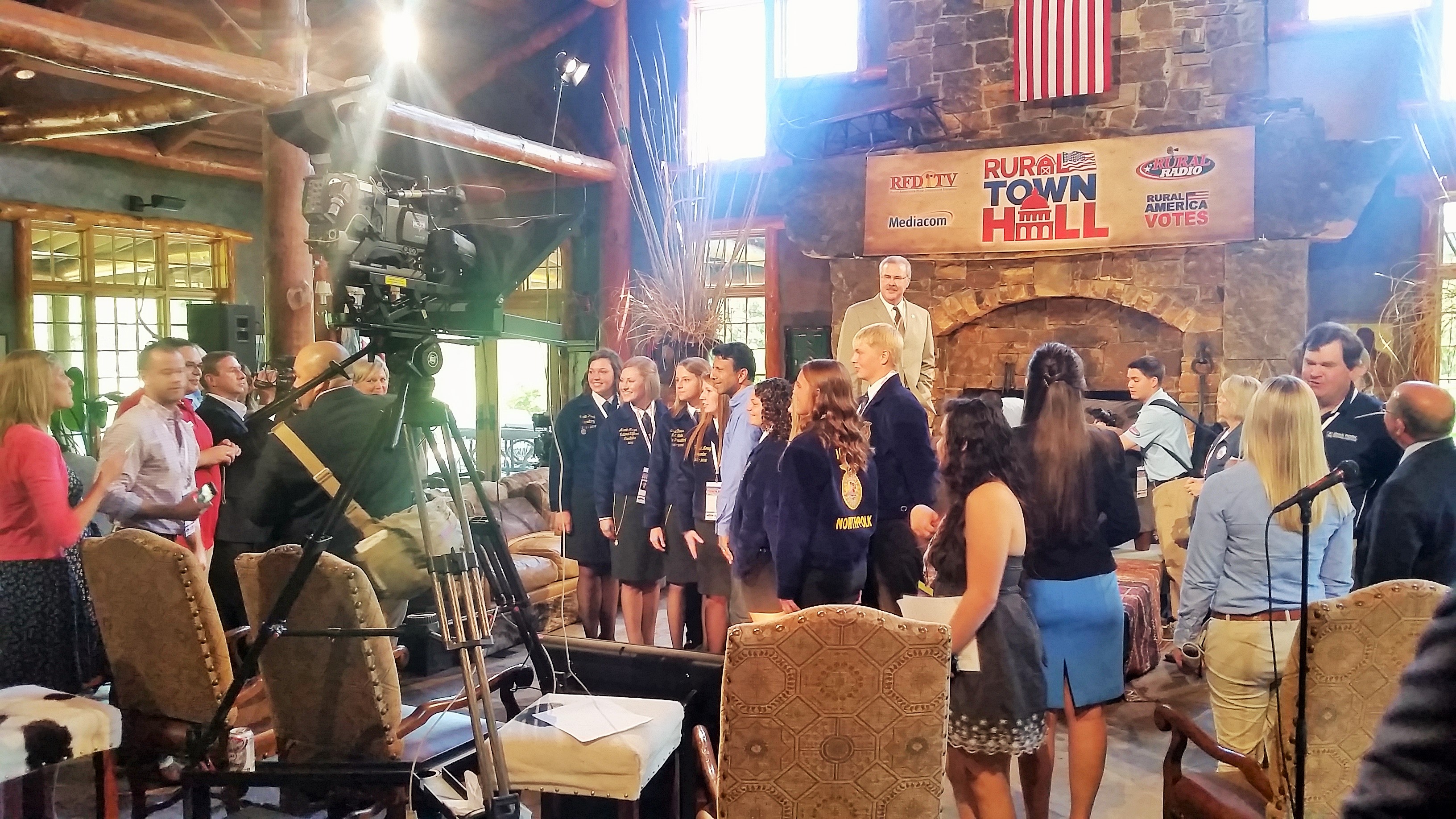
RFD-TV and Mediacom were sponsoring the day’s town hall.  It was to be the first of ten or so, featuring many of the Democratic and the Republican candidates for President.  It is hoped this series will bring light to the issues rural America is facing concerning agriculture and beyond, not only for the candidates themselves but also for our urban counterparts.

Several groups were invited to participate in the meeting and submit questions to the candidate.  The Des Moines Register was there, there was a group representing rural hospitals, youth from FFA and 4H, Farm Bureau, the Soybean Association, the Pork Producers, the Corn Growers, and the Renewable Fuels Association to name a few.

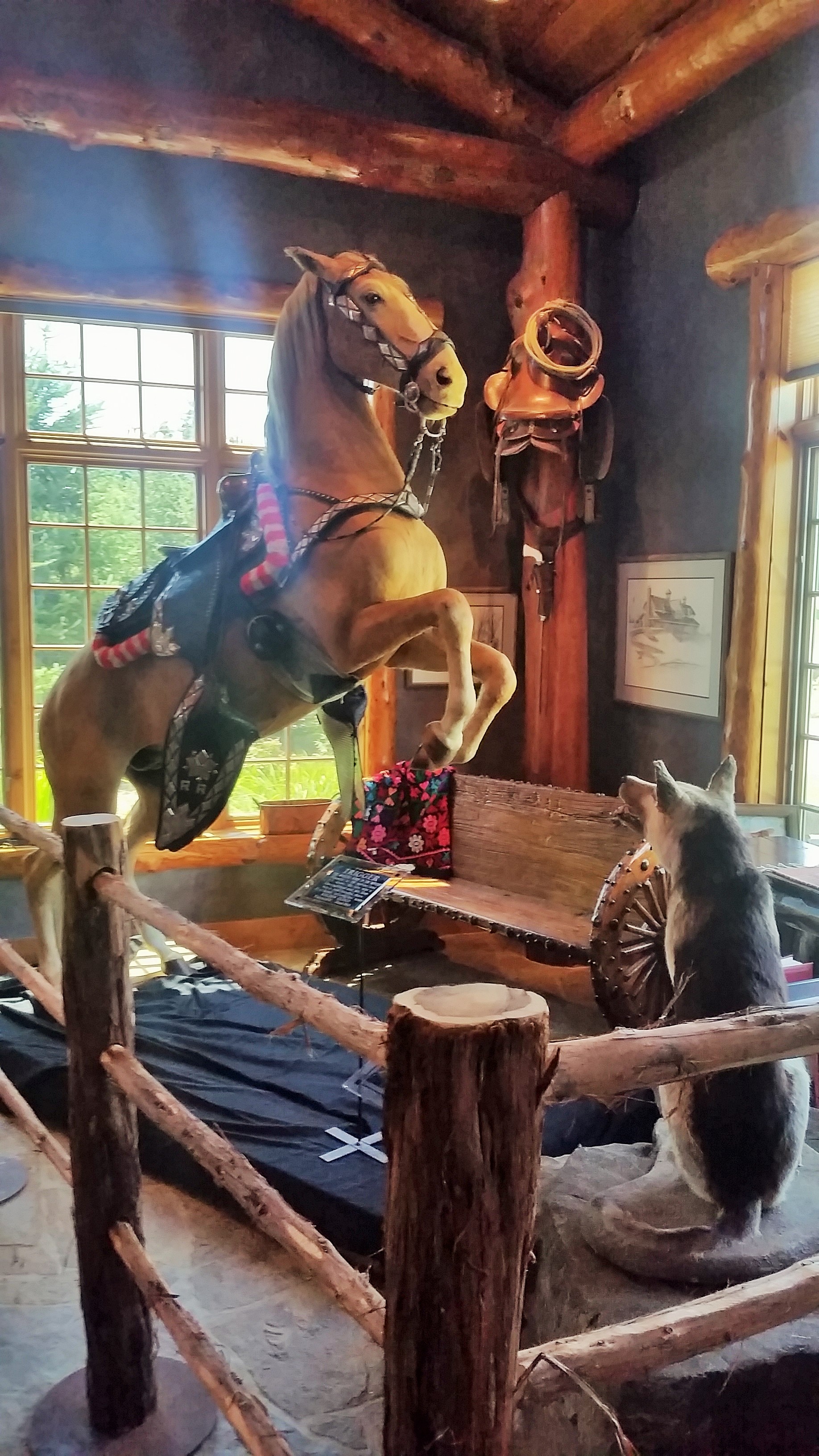
Trigger

Trigger and Bullet

The town hall was to be an hour long, and we were seated somewhat in order of the questions we would ask.  Most of the seats were taken, when I looked up to see Craig Hill with the Iowa Farm Bureau beside me.  I suggested to him that perhaps one of us would get to sit on the horse over in the corner.

Craig smiled as large as Johnny Rodgers had.  “That would be quite a seat.”

The horse, Trigger, had belonged to a different Rodgers.  That one was Roy.   In front of Trigger was none other than Roy’s dog, Bullet.  It wouldn’t have surprised me to find Roy himself behind a door somewhere.

After instruction on how to ask our question, we remained silently seated while we waited for the Governor to show up.  While I waited I wondered how much of rural America would really be represented here.  How long would it take for this candidate to seek cover by wrapping himself in the flag or wandering off into the topics of Iraq, Iran, John McCain, or all our gods?

Beside me was a reporter from the Des Moines Register.  She’d been covering the Jindal campaign, and she was to ask a question the paper had submitted.  The paper had several people present in the small, invited audience, and I would guess it was a member of the Register Editorial Board that came over to visit with her as we sat.

“Do you think I can modify this question?” the reporter asked.

“No.  Ask it as it is written.  There is supposed to be a follow-up which will hit on the other topic we are interested in.”

As I wondered if even the audience would play ball, Jindal stepped in.  He’s short, skinny as a rail, and didn’t even have time to say ‘Hello,’ before the crew started the whole thing rolling.  There he stood, patient as Job, at the back of a room of strangers, waiting for the cue to hop on stage.Jindal

The audience stuck to their questions, and Jindal stuck to the topics they asked, never veering from them.  I’d only seen a few television ads of his and was surprised in the soft way he spoke.  He had an engaging sense of humor and used it to discuss the items in both a length and depth that left me impressed with his substance.  He gave some answers that might be a tough sell in Iowa, but it is my view that as the first one out of the gate, he set the bar high.

Substance, I should think, could be an appealing alternative when the feeling good of ‘hope’ or the faded feeling of fear leaves one busted flat (in Baton Rouge or elsewhere).  Still, perhaps substance is overrated anymore.  The hides of Trigger and Bullet are sure to get air time during the broadcast at 9 central Thursday evening.  I bet you don’t see Johnny Rodgers once.

For what it is worth, Jindal might be in this race for awhile.  (Edit:  He wasn’t.)

The West Always Begins a Little Sooner Than You Think

James (2)

Where do the daydreams of little boys go when they become men? Some speculate they get left behind with other childhood things as we age. I wonder if we ever truly leave anything behind. At best we cover it up, and inadvertently drag it around with us when we think we left it behind. If not you, me then.

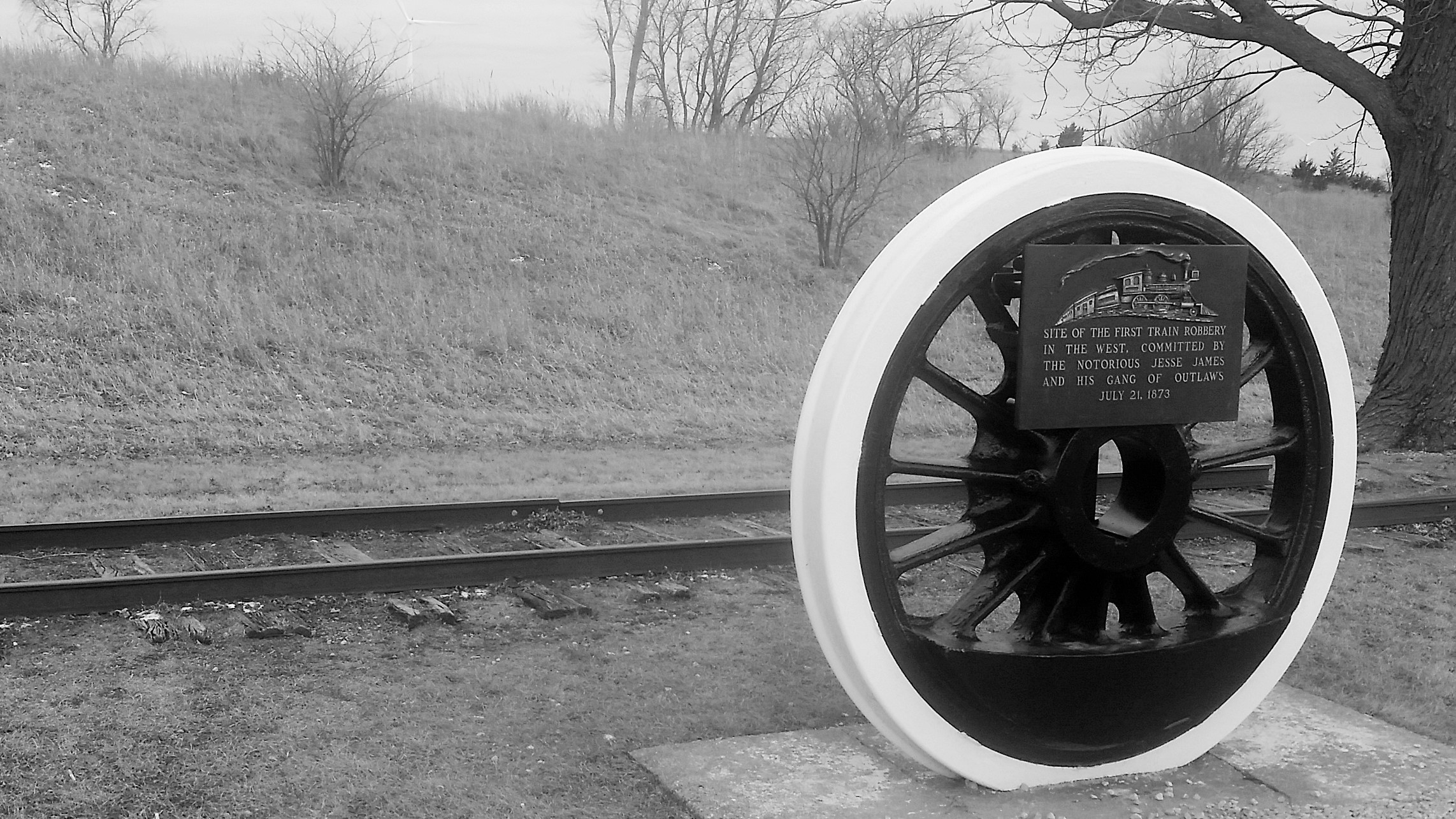
Perhaps one site in Iowa would invoke boyhood daydreams beyond all others. It sits near the town of Adair, a mile south of Interstate 80. Tomorrow, July 21st, is the anniversary of the 1873 day that gave it significance.

That year the town of Adair was celebrating it’s first birthday. Previously the site had been known as Summit Cut, a name it received by being the Iowa high point of the Rock Island Line. It sits on the Iowa Divide, leaving each raindrop in apprehension as to whether it would be going to the mighty Mississippi or the muddy, and less prestigious, Missouri.

All those drops will eventually end up in the Gulf of Mexico, but even when we know the destination, we have to fret on how we are going to get there.

Some speculate the town’s setting on the ridge was one of the reasons Jesse James and his brother, Frank, selected the area as the site of the first train robbery in the west and the first moving train robbery of all time. The theory is that the train would be going slower as it approached the ridge. In reality they selected the site in the belief that the engineer would be preoccupied gawking at the wind turbines.

If you find it curious that “the west” includes Iowa, you’re probably not alone. The site doesn’t even muster a sign on the interstate, where daydreaming boys and the fathers that supplanted them drive by in droves. It is as though most consider the event an accident of history, which should have happened elsewhere, and they are doing their best to pretend it did.

The train was to have $75,000 in its safe, the equivalent of 1.5 million dollars today. The gang camped outside of town, then bought pies from the wife of the section foreman of the railroad, while others raided an outbuilding in the backyard for the tools they would use to loosen a rail. Once the rail was loose, they tied a rope to it, and pulled it out of place when the engine approached.

The wreck killed the train’s engineer, John Rafferty, and would go on to kill its fireman, Dennis Foley. The guard, John Burgess, was forced to open the safe and hand over its contents: $2337.

No doubt the gang was disappointed. Burgess was likely pleased. He had achieved the fame of Rafferty and Foley, and he would get to tell others about it.

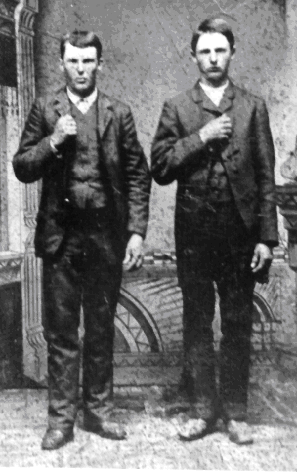
Jesse (25) and Frank (29)

Jesse (25) and Frank (29) in 1872

Trying to bolster the loot, the gang passed the hat and managed to eek out another $700 from the passengers. In all my life I never knew the James’ were Catholic, but where else would they have got the idea for a second collection?

Burgess ran to Adair to raise the alarm, only to find the town hadn’t got around to putting it up yet. Local hero, Levi Clay, would run (since Adair was a one horse town, and that horse was out at the moment) to the neighboring town of Casey.

There he sent a telegraph, which should be reaching your smart phone one of these days. My best guess is that it will be between 3 and 4 am.

The James’ got away, but of course they had the advantage. Which ever direction they went was downhill, with the wind from the turbines pushing them along. Running along behind them was what they had hoped to leave behind. It would catch up to them, just as it always does.

Through Albia on Independence Day

It was the Fourth of July, and I was making my way home from Rathbun Lake.  It was nearly dark, and I was hoping to make an hour and a half drive without introducing a deer to my Galaxie.  I was alone, and there was one more party I was headed to.

Rathbun sits just across from the southern border of Monroe County.  Monroe was first known as Kishkekosh, named after an prominent Indian of either the Saux or Fox tribe.  Frank Hickenlooper, who wrote the history of the county in 1894, said translated the name meant “a savage biter.”  Perhaps someday it will resurface for a new species of mosquito.  Others say it meant “man with one leg.”  Perhaps someday it will resurface for a new, one-legged species of mosquito.

The county seat is Albia, and I was coming through the town, snaking around it’s beautiful square in what was now darkness.  Sitting at a stop light I couldn’t get over that on the Fourth of July there was absolutely nothing going on.  Out my driver’s window was a concrete soldier atop the Civil War monument in front of the courthouse.  The butt of the gun rested on the ground, both his hands held the barrel, and he gazed off serenely in the direction I was headed.  He seemed to have no intention of doing anything either.

In the darkness on the edge of town, I came upon a cluster of cars I took for a used car dealership.  That is until I noticed the silhouettes of those seated in lawn chairs, on tailgates and trunk lids, and standing with old friends.  Block after block was lined with them and their cars, and everyone was looking over the open field to the east, waiting.

The old veteran was looking in the right direction after all.  I thought of him and my neighbor who did three tours in Iraq as the shelling of Albia commenced in the rear view of my ’64.  Pandora was finally getting my tastes down, a deer was nowhere in sight, the cool evening air was rushing in my windows, and I couldn’t help but think how it all felt perfect.

Off in the west sat Jupiter and Venus on the level, not unlike Christ’s mother would have seen all those years ago, minus the haze of a Canadian forest fire.  In that haze I could see the bombardment had began in Knoxville.

There we were on Independence Day, all of us in it together in the darkness on the edge of town.

The Great Danes

“The world is a very big place.”  This is something we tell our children to keep them from overly focusing on themselves.  I couldn’t argue with the truth of it, but in the world’s entirety the only thing I seem to find any hope in exercising control over is myself.  My efforts have served to keep my hopes modest, but if we are to try to control something, controlling ourselves is probably the best course.

Someone once told me that wanting others to do what you want them to do is a sign of immaturity anyway.  I would find that true enough as well, were it not for the fact that it might also be a sign of a natural inclination towards politics.  The truth of whether or not the two are related I’d leave up to the reader.

In doing so, I’d simply comment that the things which generally harms us most are the things we think we know that aren’t so.  We naturally refute anyone who tries to correct us on those topics, and we are left to discover the errors ourselves.  It is an uncomfortable thing when we do, so we quit looking to avoid it.

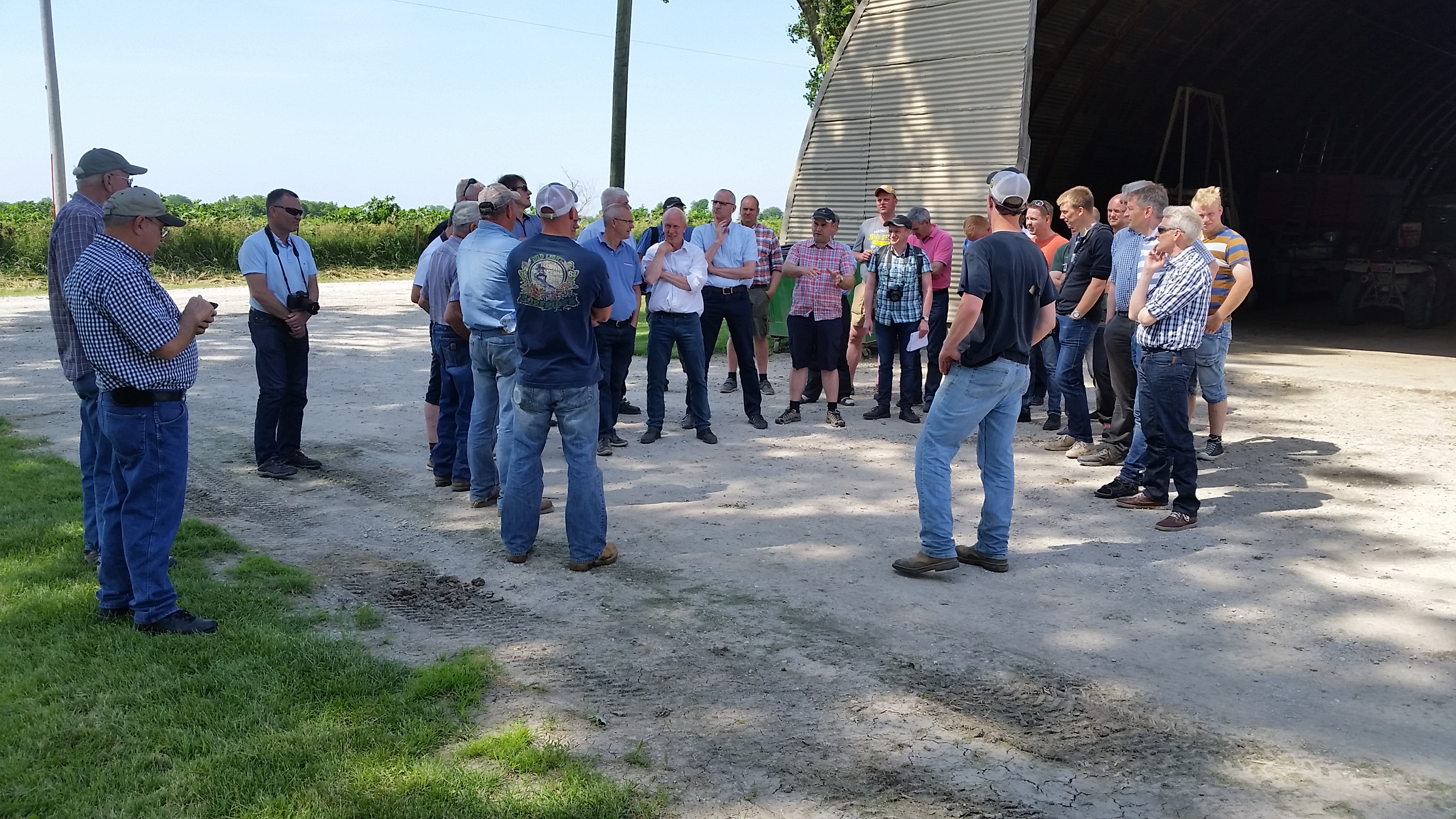
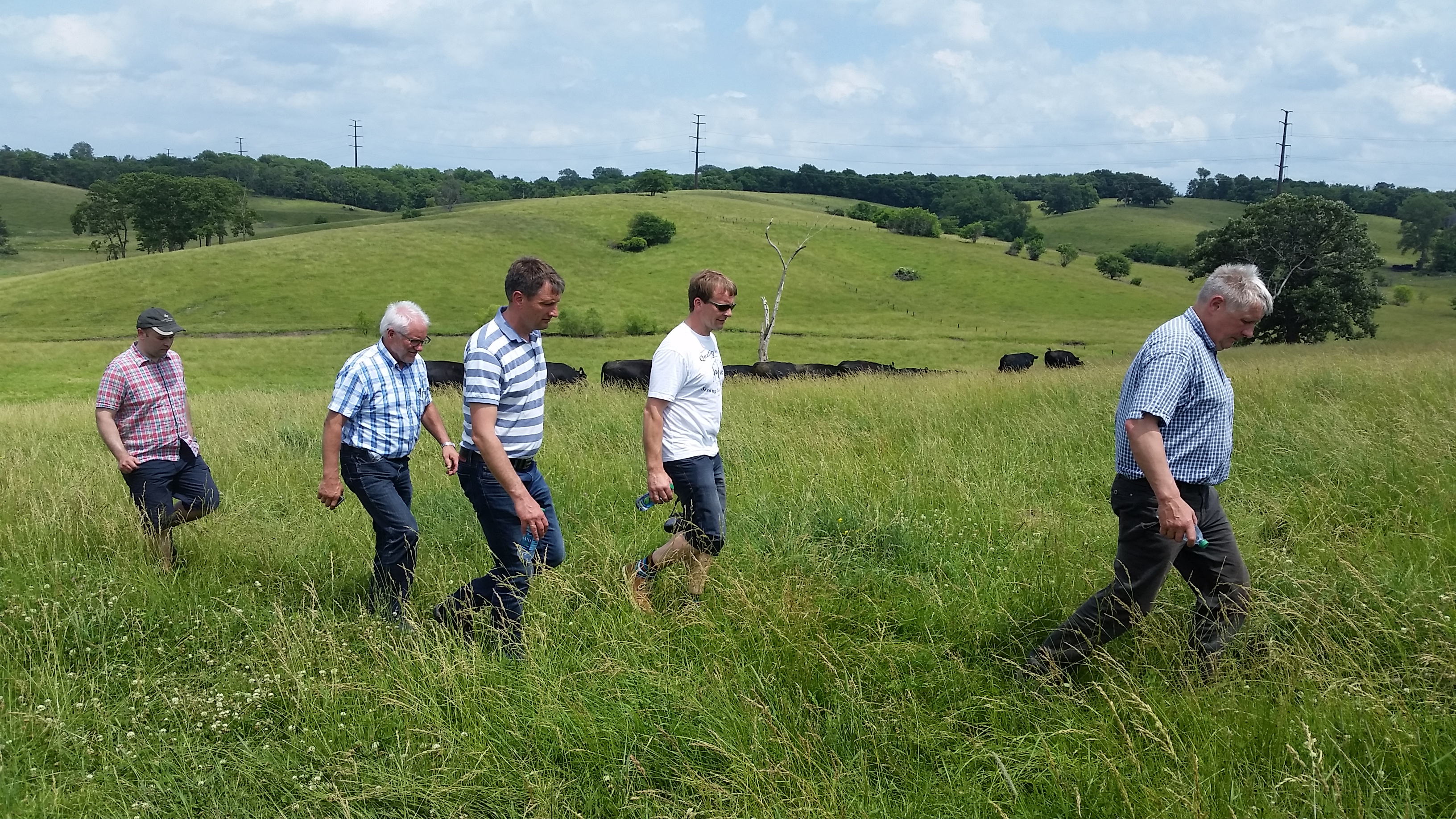
Last Saturday we helped host a group of 25 Danish farmers for part of the day.  I was excited to do so. It seemed like an opportunity to pay back the hospitality I was greeted with a couple of years ago in Ukraine.

Being the oldest of my siblings, I’m particularly predisposed in trying to figure out what others’ expectations are, how I might meet them, and what kind of job I’m doing along the way. Feel free to tell me how, ‘It’s a big world out there.’  It so happened I was with 25 of the rest of them.

We had a farm style lunch for the day, with the county cattlemen grilling steaks and sides and deserts from the Machine Shed Restaurant.  While they were eating it, I was thinking about how much they seemed to enjoy their visit with our neighbors, the rest of the day’s schedule and weather, and whether or not they were enjoying their meal.  As they began excusing themselves to get pie, one returned with a, “Now there’s an American-sized portion.”

He had a slice of lemon meringue, the meringue being twice the thickness of the deep pie and foreign to him.  Another had returned with a slice of the Snicker pie, took one bite, looked at me, and said, “How do you say….that’s rich, yes?”  The sweetness was foreign to them as well.

Lynch's

The Danish group enjoying a taste of typical American farming at the Lynch’s.

My train of thought would have took me through the rest of the afternoon, were it not for a tall, raw-boned young man I was sitting next to.  I would have took him for an American were it not for the accent and his near perfect English.  The Madison County Youth Beef Team had helped serve the meal, and he wanted to know what effect I thought they had on advocating to the local public on behalf of those involved in agriculture.

“What’s the relationship like between those in agriculture and the general public in Denmark?”  I asked him.

“The two groups are very much disconnected.  We are labeled all sorts of things, both good and bad, without any real understanding.  A large part of the public thinks of us as being bad for the environment for instance.”

“In Denmark?  All thought all the European regulations were supposed to have fixed that,” I said with a smirk.

“Yes, yes,” he smiled back.  “The fact is Denmark prides itself on being even more restrictive than the EU.  Everyone is for “less fertilizer,” but no one has any real understanding of what it means beyond the few of us in agriculture.

Here I am amazed at the efficiency your farms operate with.  We use so little nitrogen we are at a fraction of it.   It is so difficult we are now having other countries reject our wheat shipments because the wheat is not high enough in protein.  It is not high enough in protein because it is malnourished.  We import some livestock feed because we can get a higher quality grain elsewhere.”

“Is this making an impact on the people in your country?  Are they seeing the light?”

“No.  They are as convinced as ever that they are doing the right thing.  They don’t understand what they are doing.

I like farming.  I like the lifestyle.  I have two young sons, and I enjoy being able to take them to school in the morning and pick them up.  I wonder what it will look like if they ever want to do what I do.”

Perhaps the world isn’t as big as we make it.  Maybe we don’t know what we think we know.  Perhaps we are never as great as what we think we are.  Maybe someday the public will have the courage to take a look again.

Pasture

The final few Danes leaving our pasture to begin their journey home.

Sustainable Beef and a Lesson in Humility

June 11th was the Iowa Cattlemen’s Association’s Summer Policy Conference. It is an annual effort by the group to identify current issues in the beef community and to educate members about them. The keynote address was given that morning by Dr. Kim Stackhouse, whom has headed up the National Cattlemen’s Beef Association’s look into our industry’s sustainability.

It had been three years since I had made one of these conferences. The last was made when I was part of the Young Cattlemen’s Leadership Program. (I take comfort in the fact that my youth is not more than three years behind me.) As part of that program, we discussed how NCBA was then getting the ball rolling on Stackhouse’s work.

I wrote a little editorial at the time which found its way into an online part of Beef Magazine. Twenty people probably saw it. It was titled “Is Our Use of ‘Sustainability’ Sustainable?” In it I was critical of NCBA’s efforts in chasing a term they seemingly had no control of the definition of.

Activists groups, some of who were intent on putting us out of business, had been so successful in their definition that in 2007 Time Magazine proclaimed “a 16 ounce T-Bone is the equivalent to a Hummer on a plate.” In 2010 San Francisco passed a resolution which made them the first “Meatless Monday City.” Despite the urge of some of us to ‘hunker down,’ NCBA entered into the conversation.

Three years later, hearing Dr. Stackhouse, it was readily evident my bunker mentality had been in error.

Sustainable Beef1

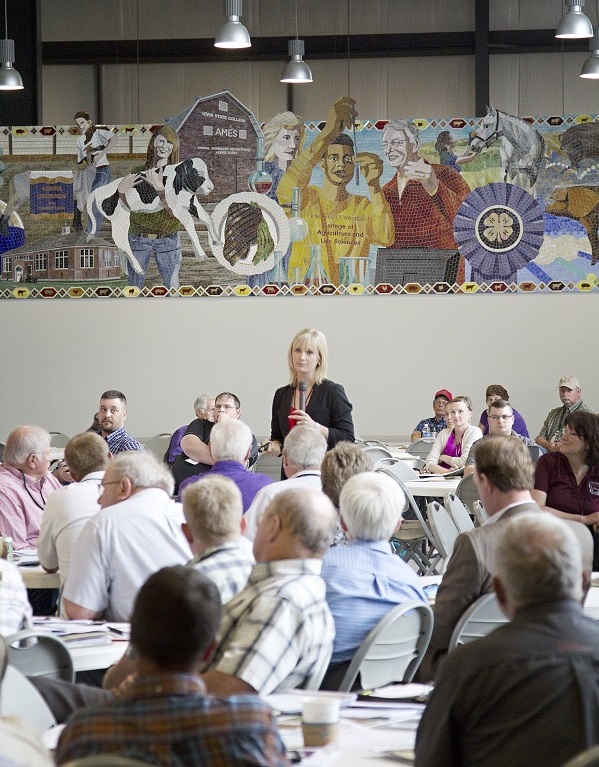
Dr. Stackhouse addresses beef producers from across the state. Photo courtesy of Iowa Cattlemen’s Association.

“We will never have a consistent definition of sustainability,” Dr. Stackhouse said, but taking us step by step through her years of work, it quickly became apparent that thanks to her efforts the beef community will have a fair sized seat at the table as it is being debated, discussed, cussed, and reviewed. The community got this seat by engaging in the argument armed with facts, and these facts came from Stackhouse’s research. She had created a ‘Life Cycle Assessment’ for the entire beef industry, looking at all the system’s inputs (right down to counting rolls of toilet paper a packing plant uses in a year) and weighing them against the system’s outputs. To date I believe it is the only life cycle assessment that has been completed by a major commodity group.

There were two goals in doing the assessment. The first was to establish based on facts where the industry was. The second was to establish based on the same facts what the trend was in beef production. Were we becoming more or less sustainable?

They looked at 2006 to 2011 and found that while there was no organized effort to improve sustainability, it had happened anyway. There had been a 5% improvement over those 6 years. Also notable was the new light shed on how many factors seemingly outside beef production impacted it.

1/3 of all energy use of all energy used in the system is actually used by the consumer in their homes. Believe it or not, your in house refrigerator pales in comparison to the efficiency that a packing plant operates at. The system also has to account for the food the consumer wastes. 1/3 of the world’s food is wasted. If consumers could merely cut their waste of beef in half, we would realize a 10% boost in sustainability overnight.

Acquiring and putting such detailed data to use has allowed NCBA to spearhead roundtable discussions on sustainability that groups like McDonald’s, Walmart, and Costco have sought to be part of. Whether or not Stackhouse is present during these discussions, her voice certainly is. “Zero impact is not possible. There are tradeoffs; always have been and always will be. The questions are what is the trend overtime and is technology part of the solution?” To the latter the data shows it has been, and with a needed 70% increase in food production by 2050 to meet world population growth, it had better continue to be.

Luck placed me behind Dr. Stackhouse in the lunch line. I found her quick witted and a joy to talk to. “It’s a pleasure to be in Iowa where so many of you are so progressive,” she said.

“It’s rare that anyone considers me progressive,” I quipped back.

Somewhere in cyberspace is an editorial which underscores it, but what can I say? I was young then.

The Farmer at the Farmers’ Market

IFFP 2

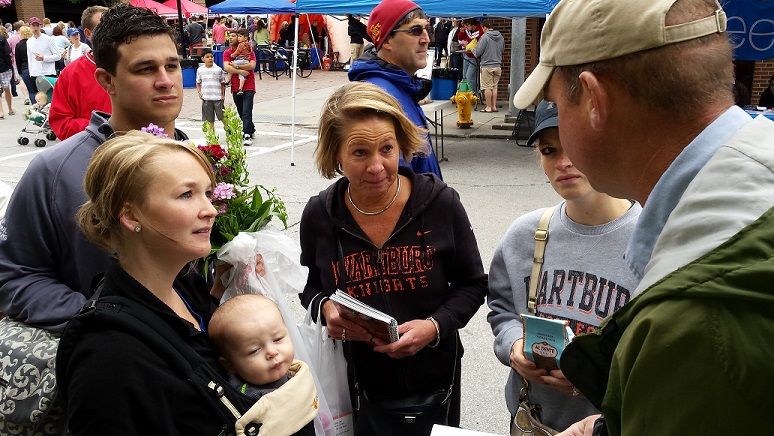
A few weeks ago I got a call from Nancy Degner of the Iowa Beef Industry Council.  A group called The Iowa Food and Family Project was partnering with the Mills Civic Hy-Vee, and they had invited six people and their friends to spend an evening making a week’s worth of meals for their families.

The meals were designed to be taken home, froze, and ready to use when needed.  Since May was Beef Month, they decided on a “beef” theme and wanted a local cow/calf producer to come in and address the group.  Being close to Des Moines, Nancy contacted me.  I was happy to go.  Our local Madison County Cattlemen Association has always been on the lookout to find ways to have a greater footprint with our urban neighbors.

This happens to be the mission of the Iowa Food and Family Project:  Connecting families, farmers, and food.

The evening went well.  I burnt nothing.  The guests had a good time.  Nancy even treated me to supper at Hy-Vee’s in store Chinese Express afterwards.  The only wrinkle was that they were about to close, and their beef options were exhausted.  Later, as the 12 participants filed past us, half of them took time to comment on my choice of Sesame Chicken.

There are at least 10,000 comedians out of work in this country.

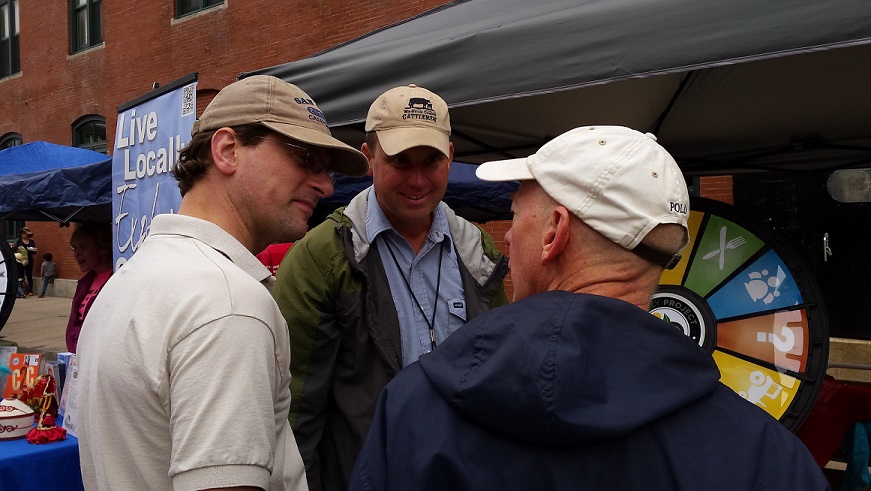
I volunteered additional time if the Iowa Food and Family Project ever needed it, and last Saturday they took me up on my offer.  They had a booth at Des Moines Downtown Farmers’ Market and wanted help staffing it.  I navigated through a parade of runners participating in the annual Dam to Dam race and made my way to Court Avenue.

IFFP features the work of two bloggers, Kristin Porter from Iowa Girl Eats, and Cristen Clark from Food & Swine.  Last Saturday Cristen was on hand, signing copies of the Iowa Food and Family Cookbook we were giving away.  The book contained recipes from both bloggers, as well as additional ones from farm families across the state.  I provided relief for her husband, who had been in charge of spinning a wheel where guests were asked random questions on agriculture in exchange for a free Subway sandwich.

In no time flat my mouth was in gear, and in no time flat, with never a down moment, three hours passed. Somewhere in the process I got a bottle of water.  I never had time to open it.  Cristen had signed so many cookbooks, they gave away 700 that day, I was surprised her hand hadn’t fell off.

They estimated a couple of thousand people went through the booth.  I would call that conservative.

Conversations ranged from the Des Moines Water Works lawsuit, GMOs, organic foods, support of Iowa’s agriculture, animal care, and Fred Hoiberg coaching the Bulls.  For my part, I learned it took 48 hours to get milk from the farm to the grocery store shelf, that Jethro’s restaurants purchase over one million pounds of pork annually (making them the largest independent purchaser of pork in the state), and that 11 million turkeys are raised in Iowa (making us the largest supplier for Subway and Jimmy Johns restaurants).

There were two questions I used particularly for their advocacy.  The first was in detailing what a bioreactor is and it’s role in removing nitrates from agricultural drainage water.  The second was about the inability to find a nutritional difference between organically raised and conventionally raised produce.

In regards to the first question, I got to witness one guest accurately describe to another the Des Moines Water Works lawsuit in 30 seconds.  I was impressed.  With regards the second, I had one boisterous guest take issue on it.  With regards to the cookbooks, I had one turn it down because it didn’t look very vegan.  I think it was the pot roast that gave it away.

Make that 10,001 out of work comedians in this country.

IFFP 1

The cookbook was free. The information about agriculture was free. Putting babies to sleep was a bonus.

 Iowa Food and Family Project:  http://iowafoodandfamily.com/

Food & Swine:  http://foodandswine.com/

Iowa Girl Eats: http://iowagirleats.com/

It Doesn’t Take a Village. It Just Takes a Few.

Youth Beef Team

May is the time of graduations, and graduations are an annual event where the old feel free to give unsolicited advice to the young.  Generally we select the advice we have never taken ourselves.  If we are unaware of this fact, the young are free to look at us and judge us hypocrites. If we are aware of it, however, then may the young look at us and realize we see in them a chance to get it right in the ways we haven’t been able to yet.

May is also Beef Month, and cattle producers celebrate it in the coming of green grass, the growth of this year’s calf crop, and the onset of breeding season.  They hope you celebrate it with the grill on the deck. For the Madison County Cattlemen, however, we are blessed with something more.  We get to celebrate the Madison County Youth Beef Team.

The team has been headed for many years by John LaFratte and his wife Shirley.  As an association we try to help cover expenses, but the vast majority of the expenses are covered by John and Shirley themselves.  The two have an ice cream stand at the county fair, and for most it would turn a good profit.  John and Shirley use it as an engine to propel the county’s youth, either through the purchase of trophies that help to fund local scholarships, their support of the 4-H auction at the fair’s conclusion, or their monthly commitment to the Youth Beef Team.

The team itself boasts 30 youth, which spend time learning about cattle, how they are raised, all things beef, communication and presentation skills, and how to advocate for it all.  Somewhere in the process, the youth also learn about becoming adults.  I suspect they don’t learn about it via John and Shirley’s advice, rather it is by their example.

At Tuesday’s cattlemen’s meeting over 20 directors got a chance to see a small part of what that looks like.  John and four of the youth joined us and gave the same presentation they had recently given to over 270 fifth grade students from around the county.  You might be able to go a day without eating beef, but you cannot go a day without benefiting from it and those who raise it.

In the midst of it all, it was hard not to think about what the future might hold, as the youth from years ago are now returning and putting the skills which John and Shirley worked to give them to use.  May tomorrow’s promise become today’s realization.  They have a much better chance of getting it right.

The Infant Running the Show

Upset people tend to see the world in a way which justifies the continuation of the upset.  At least that is what a guy told me once, and he seemed believable enough.  I was thinking about this as I looked over at Raylan, somewhere in the vicinity of age 3, currently knee deep in a man made creek in the middle of Reiman Gardens in Ames, Iowa.  He had tried to jump on a rock.  He had missed.

I laughed.  Raylan chose a different direction.  I still laughed.  He wasn’t mine after all.

My mother, God bless her, had decided we should celebrate Mother’s Day on Saturday, giving my four younger sisters the chance to spend Sunday with their families.  My mother thought she had done a great thing.  I suspect what she’d really done was give my four brother-in-laws heartburn.

She had picked Reiman Gardens in Ames as part of the way to spend the Saturday.  They were hosting a butterfly and a treehouse exhibit, and she assumed the kids would find both enjoyable.  Two sisters and an assortment of nieces and nephews went with my parents and I.

To get to the butterfly exhibit, you walk into a short hallway.  Either end has a door.  Both can’t be open at the same time.  This is to keep the butterflies from escaping they say, but I would guess it also ensured the lady laying down the law had a captive audience.  She spoke to the kids in the voice most adults use to read to fairytales to them in.  Among the instructions she laid out was, “Don’t touch the butterflies.”

There were three boys in the group, ranging in age from 3-5.  Evidently she thought the boys would try to pet them.  Evidently she hadn’t raised any boys.

I haven’t either, but I knew my own kind well enough to know they were looking to make grease spots of them.  This is exactly what one nephew, Bowen, was intending to do.  I caught him by the arm as he was bending his knees to jump on what was probably a Duke of Burgundy on the sidewalk before him.

“You can’t touch them, Bowen,” his mother said.  Hmmm.  Maybe that woman had raised boys after all.  Mothers view their children in a way which justifies the continued belief of their good motherhood, I suppose, and I am sure it is the same with fathers.

We ventured out into the gardens.  It was similar to a pasture walk without any anxiety that I would find cows out.  Free of such worries, my mind was left to think of how much its stocking rate could be improved with an application of 2 4-D.  I should tell the little old lady about it, I thought.  I’ll try to corner her in the butterfly hallway first.

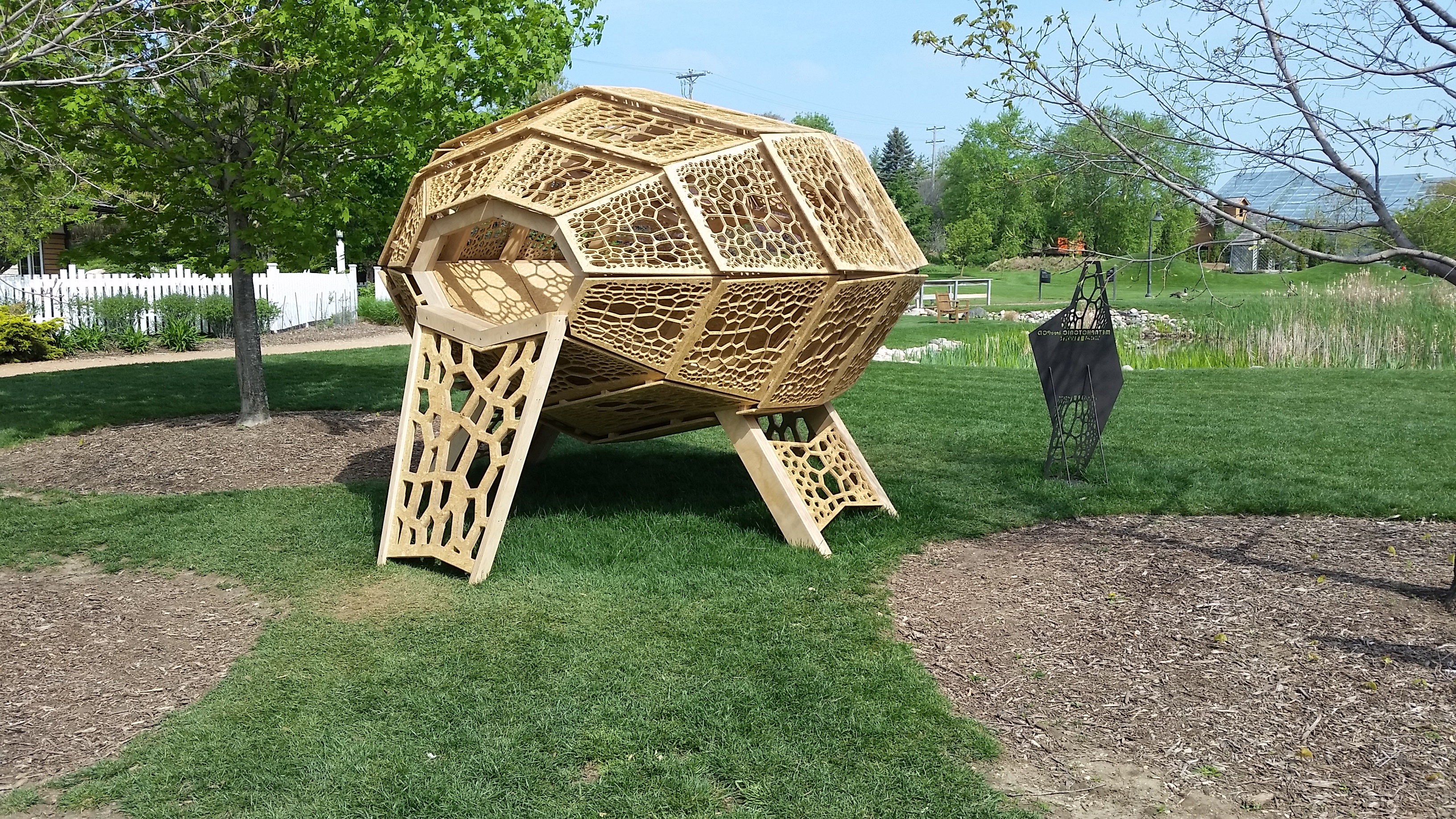
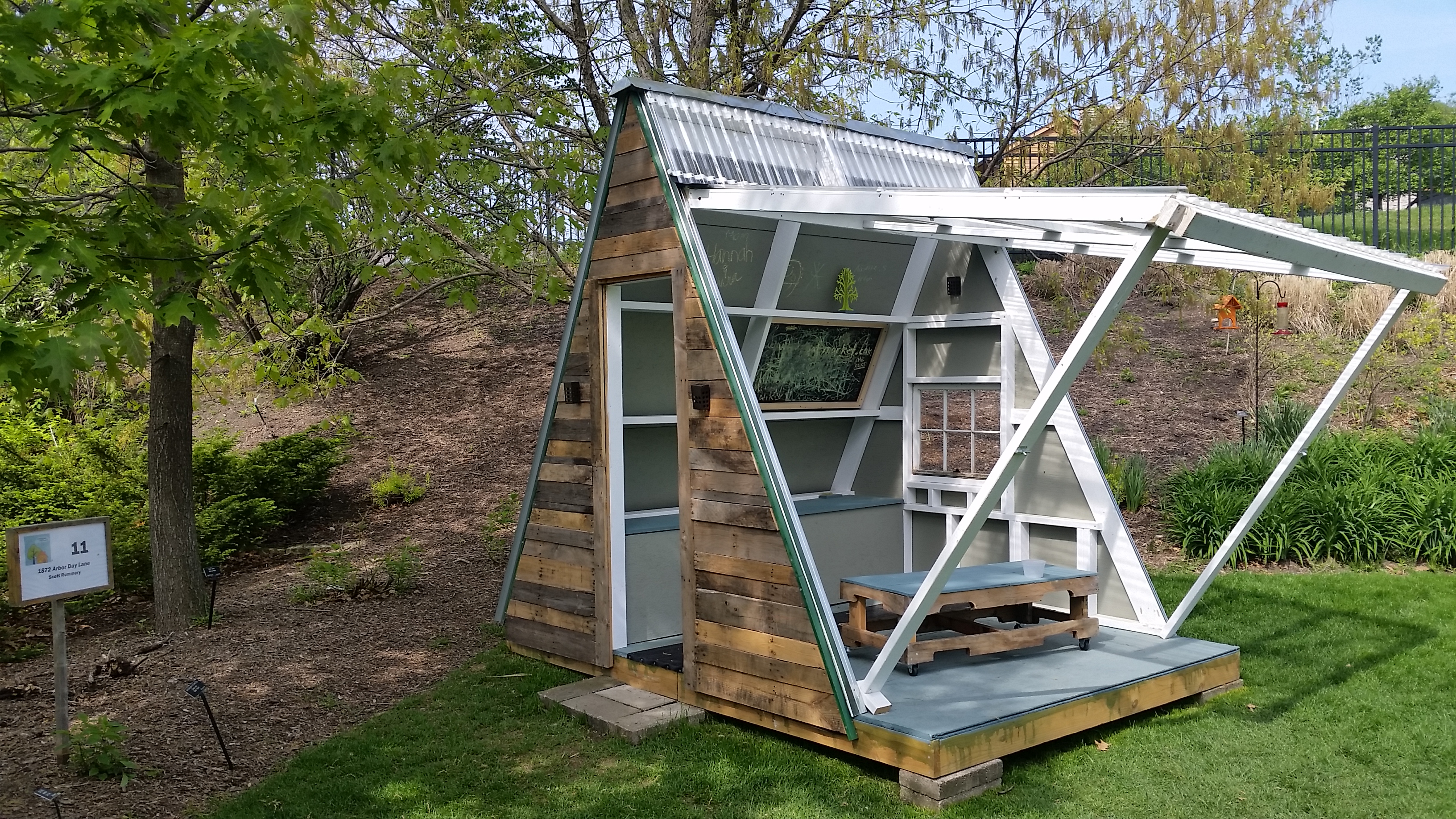
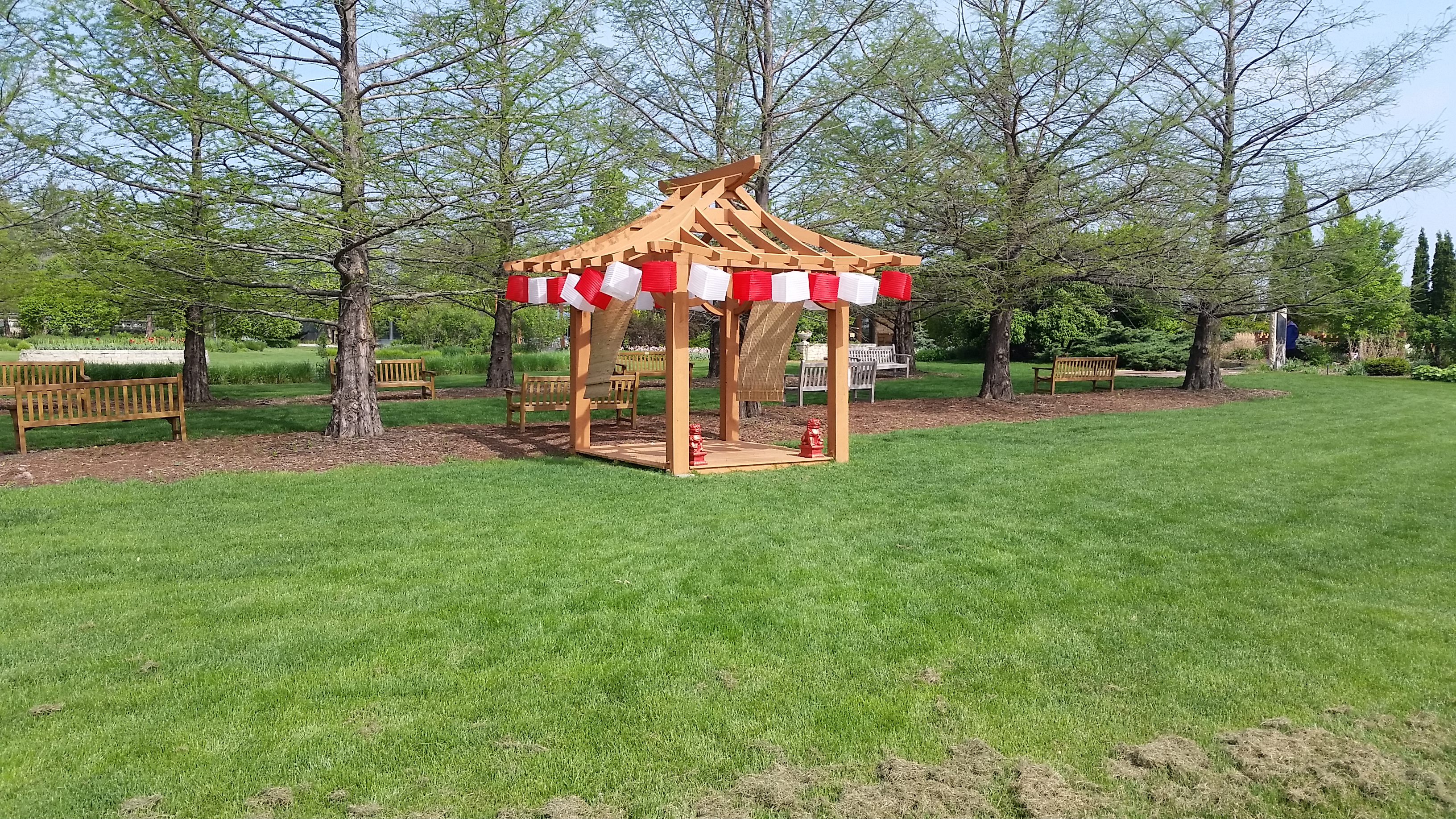
As far as the treehouse exhibit, there were two main problems.  First, not a single one was in a tree.  Second, hardly any of them resembled a house.  Below are some examples.

Egg

The incredible, inhabitable egg

My Dad is a crappy carpenter.

My Dad is a crappy carpenter.

Carptenter2

My dad is a better carpenter than your dad and an engineer.

An outhouse with a view.

An outhouse with a view

I’m sure the adults responsible are quite proud of their contraptions, but they held little enticement for the kids.  Instead they found a green, grassy knob that they could roll themselves down, and here spent more time than with the butterflies and treehouses combined.  A mother brought her daughter over.  I would guess the daughter was 2.  The mother threw herself down the hill.  I would guess she was trying to show her daughter how to do it…or she had been drinking.

Reiman Beer Gardens, now there is an idea for a college town.  Just need to get the bug zapper installed by the butterfly display.

The say we all have an infant inside us, but that infant needn’t run the show.  Raylan was trying hard not to let him, but eventually the infant won out.  They probably do most of the time.

We grow older and think we grow up.  We take pride in that.  Instead our infant has only got more sophisticated.  We still want our mothers, our pant legs dry, someone to listen, to squash any bug we come across, real tree houses, and to be blissfully ignorant of all of it.

If we could grow up, perhaps we would lose our mothers, but might actually know them for the people they really are.  Hell though, now you’ve heard it in my voice too.